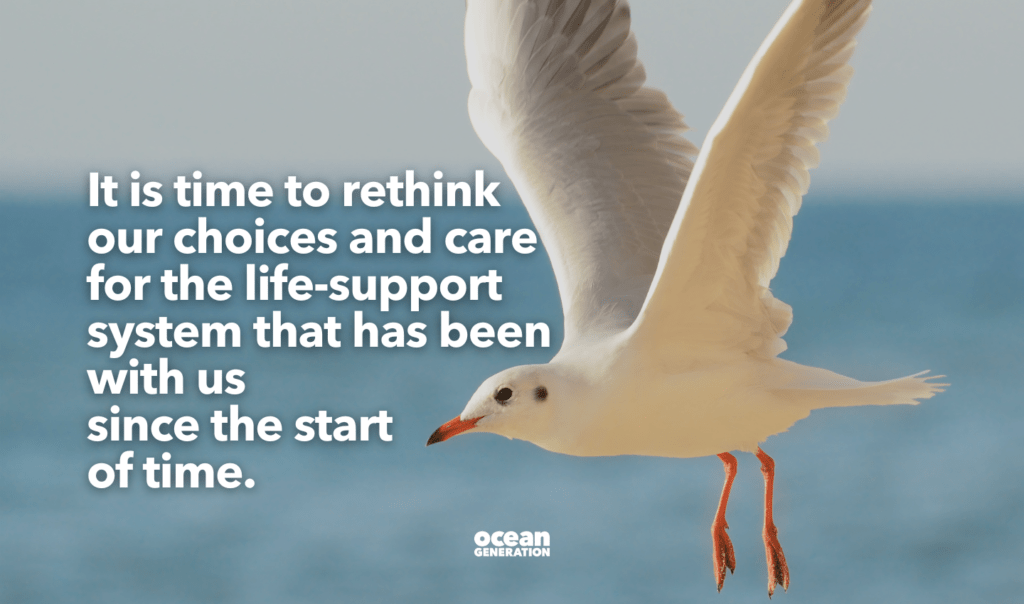
Green tourism and Thailand’s unexpected wildlife revival
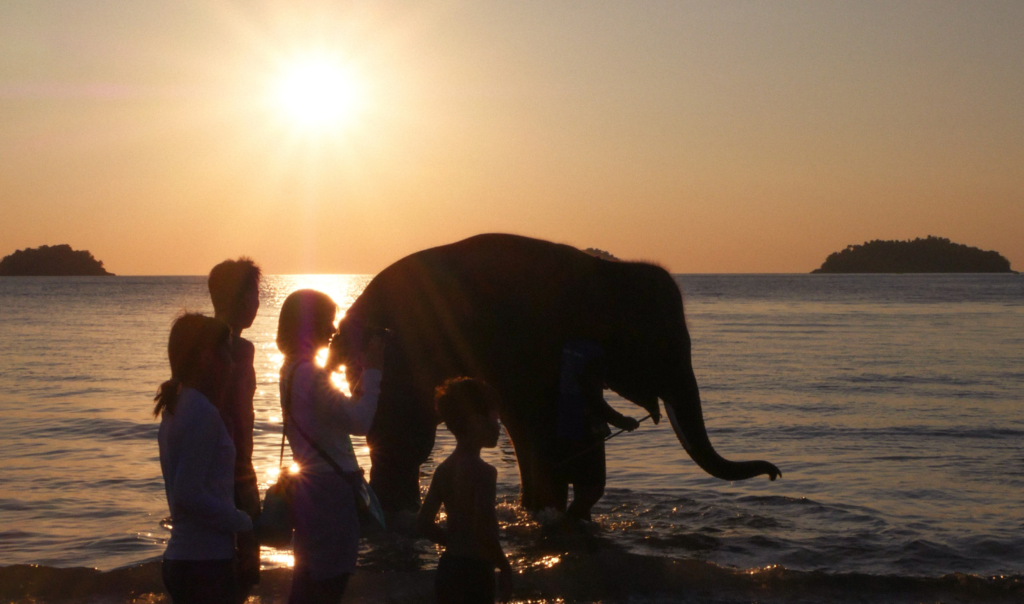
Green tourism and wildlife revival in Thailand. A Wavemaker Story by Ferra, posted by Ocean Generation

Being well into summer, tourism in Thailand is at its very peak again.

It may not be obvious but the beaches that you see today have undergone a significant recovery during the pandemic. Many called it a miracle in disguise. It was a turning point that allowed for a more sustainable path forward to emerge.  

To understand why, let’s go back in time.  

During the pandemic, I took part in a beach clean-up as a high school community service project. When I arrived, I could see that all the beaches were empty, and it was unusual to see them without people as I have always linked the two together.

However, it was peaceful.

There was a lot less litter than I remember from my visit a few years ago, where there was trash every 5 meters along the coast and floating in the sea. I felt relieved for the Ocean and its community โ€“ this was probably the first break it had in a long time. 
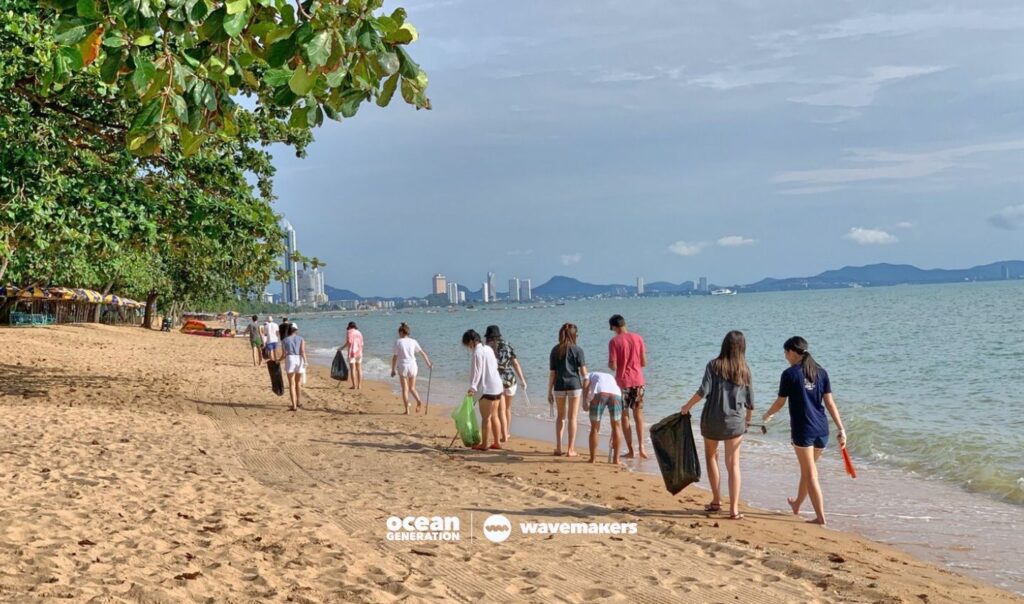
Ferra, a Wavemaker took part in a beach clean in Thailand
Photo by Ferra, a Wavemaker

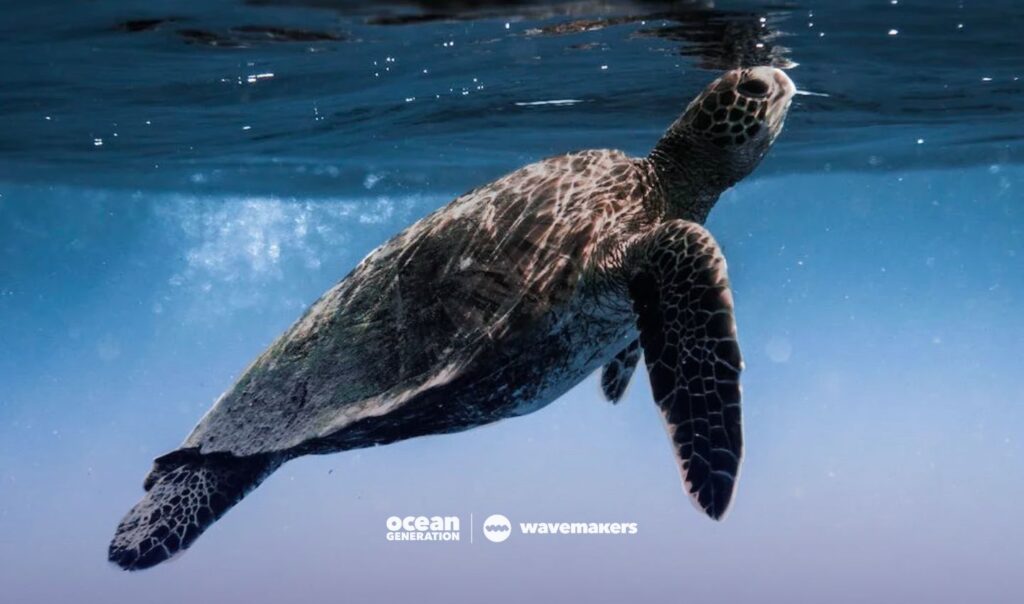
In the south of Thailand, numerous sea creatures such as fish, sharks, turtles and dugongs made unexpected appearances.

There were multiple news reports of localsโ€™ observations of sea life, indicating that there has been a promising recovery of the marine ecosystem. I even saw my first shark in the Ocean at Maya Bay in 2023, a clear and unforgettable sign I witnessed firsthand. 

But it wasn’t always like this.  

As often happens, many of the following problems occur because of us, and our impact.ย 

Pollution can arise from littering, air emissions, noise, or oil and chemicals. The most prominent is litter, ingested by marine animals or accumulating in Ocean gyres. Microplastics are another significant threat which cause toxic chemicals and disrupt food chains.ย ย ย 

In the Mediterranean Sea, marine litter accumulates 4.7 x faster during the high tourist season.ย This mostly happens due to too much waste, from lack of resources, food waste and unfamiliarity with waste systems.ย 

Anchoring and other marine activities damage corals and other marine environments such as seagrass beds. Anchors can impact 7.11% of the coral at popular sites every year. This has severe repercussions as corals are one of the slowest growing creatures โ€“ massive ones grow merely 0.3 to 2 cm per year. ย 
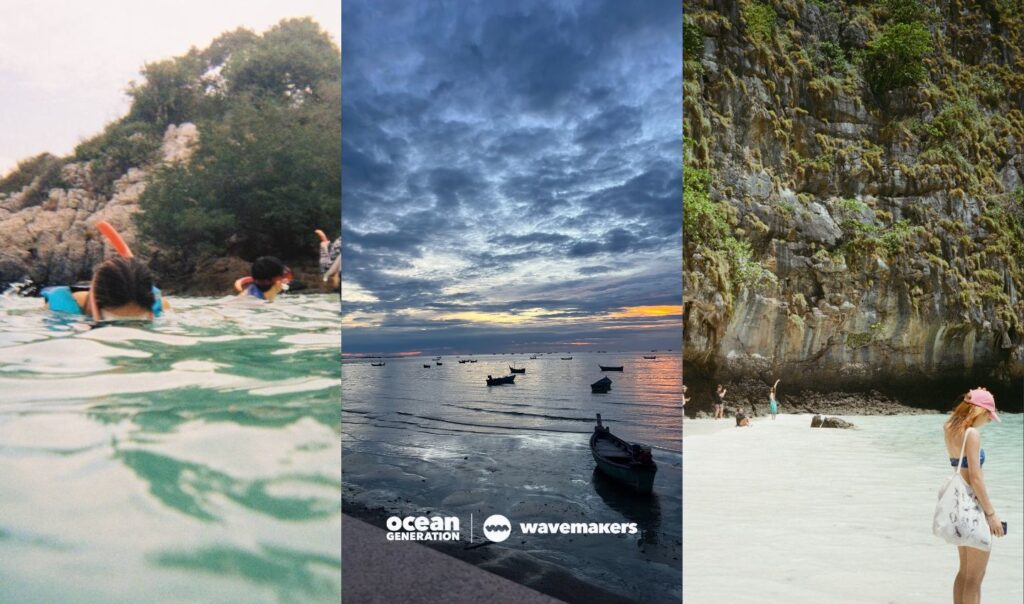
Green tourism in Thailand is the responsible way of travelling
Photo by Ferra, a Wavemaker

How did this crisis turn into opportunity?

With the absence of tourists during the lockdown, conservationists seized the opportunity by repairing 30,000 fragments of coral in Maya Bay, Ko Phi Phi Lee; collecting rubbish and cleaning the beach.  

Moving forward, there will be rules such as limiting the number of tourists per day at popular tourist sites such as Maya Bay, Similan islands and Koh Tachai. Additionally, closing off the island at certain points of the year and increasing the strictness of regulations to move towards a sustainable future. 
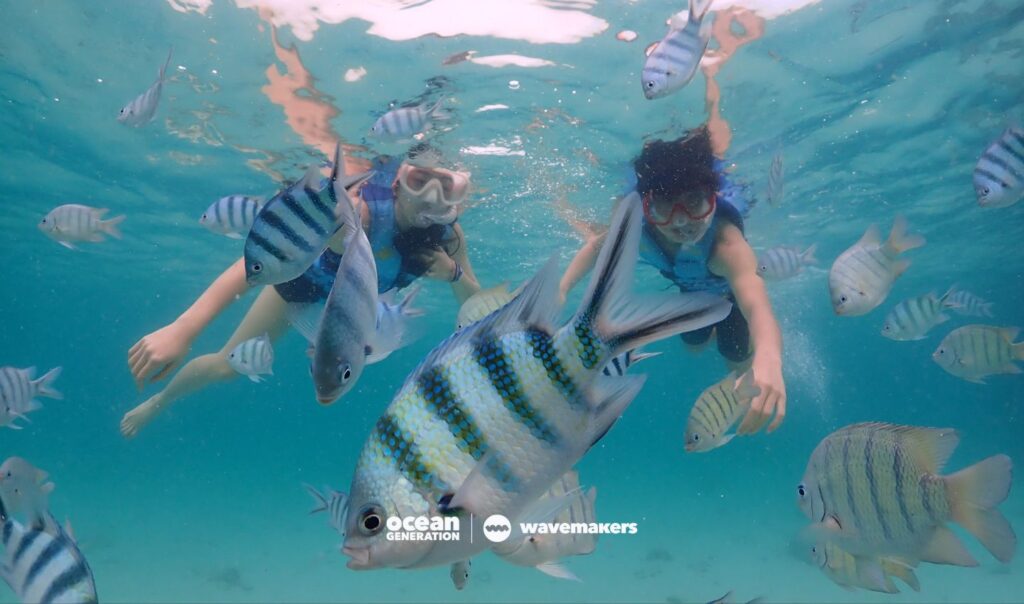
Sea creatures such as sharks have made reappearances in Thailand.
Photo by Ferra, a Wavemaker

What is green tourism?

Green tourism is a more responsible way of travelling. It means being mindful of the destinationโ€™s natural resources and the local community to minimise our environmental impact.

Nowadays, hotels are being more sustainable by eliminating single use amenities and promoting the re-use of products. When travelling, itโ€™s up to us, too, to make a positive impact.

Here are a few tips to be more sustainable when travelling: 

  • Support local businesses & communities 
  • Bring your own refillable water bottle (if there are no refillable stations, I often ask nearby stores/restaurants which may have large containers of water) 
  • Consider traveling during off-peak season 
  • Take public transport, walk or cycle 
  • Stay on path and avoid interacting with wildlife 
  • Avoid collecting seashells and sand 
  • Do your own research on how you can minimise your impact at the destination you plan on visiting 

After seeing the Ocean come back to life, I felt hopeful that we can indeed restore its health

With green tourism, we can reduce our ecological footprint and make sure that the breathtaking destinations will be there for us and future generations to cherish. I believe that the Ocean and people can thrive together, but for that to last, we must appreciate and take care of it.
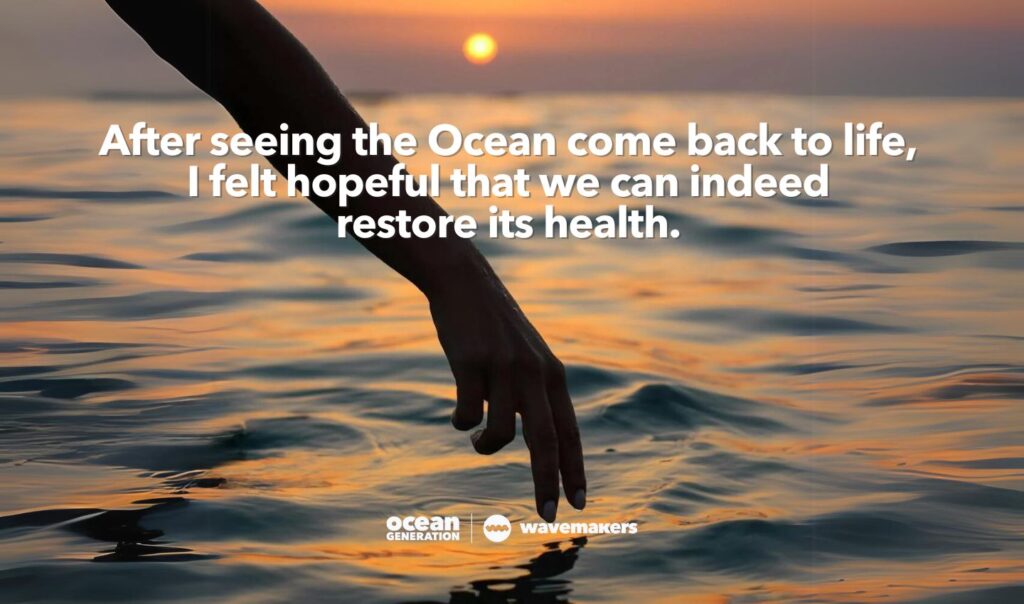
After seeing the Ocean come back to life in Thailand, Ferra felt hopeful.

Cover photo by Prinn Vajrabhaya


Thank you for raising your voice for the Ocean, Ferra!

Connect with Ferra via LinkedIn. Learn about how to submit your own Wavemaker Story here.

Why is the sound of coral reefs important? Explained.ย 

Subscribe

Monthly: Impact in your inbox.

OceanGeneration-Join

Individual actions can change the world: Noah finds a forest in the sea

Individual actions can change the world. A Wavemaker Story, posted by Ocean Generation

Empowered by our Wavemaker workshop, Dala has illustrated a storybook about how our actions can change the world; we canโ€™t wait for you to read it.

We ran a competition around creativity and sustainability at the Arts University Bournemouth, UK. The Green Futures project challenged students to attend our Wavemaker Workshop, learn why the Ocean is so important, and our role in safeguarding it, and submit an artwork in response.

We received 12 artworks โ€“ Dalaโ€™s book being one of them โ€“ answering the question โ€œWhat changes would you like to see to ensure an Ocean positive future?โ€

Often, the Ocean is thought to be impossibly deep and limitless.  

The Ocean is vast, but it has its limits. For decades, we have used the Ocean as a dumping ground, without considering the impact of our actions.

Dalaโ€™s story, written for children, explores the moment when someone comes along and says โ€˜Hey, this isnโ€™t right. We need to do better.โ€™  

These actions can change the world.

They can inspire others to rethink their own choices and make better ones, too. 

Dala, a Wavemaker from the Arts University Bournemouth, chose a unique way of delivering a powerful message about imperfect environmentalism. 

Imperfect environmentalism is when imperfect actions, multiplied by millions change the world. Posted by Ocean Generation

His book addresses cultural and global issues, aiming to make the world better.โ€ฏ 

The illustrated childrenโ€™s book, โ€˜Noah finds a forest in the seaโ€™ tells the story of Noah, a small girl, whose dream is to see the Ocean. 

But when Noah gets there, she discovers that the beach isnโ€™t quite like as she had imagined.  

We wonโ€™t spoil the story for you โ€“ youโ€™ll have to read Dalaโ€™s book, below, to enjoy it โ€“ but weโ€™ll remind you: Little actions, multiplied by millions of people, have the power to change the world. In this book, but in real life, too. 

The inspiration for this story struck Dala five years ago while he was sitting on the beach, enjoying the beauty of the Ocean.  

He observed a little girl collecting empty bottles around her, and her act of kindness stayed with him long after.

Back then, Dala made a promise to himself to create the book someday. He says โ€œI firmly believe that when you make a promise, the universe conspires to help you fulfil it. I could never have imagined that I would end up studying at an art school and illustrating this book.โ€  


Thank you for raising your voice for the Ocean, Dala!

Follow Dalaโ€™s work on his website or portfolio, or get in touch with him via his Instagram page. Learn about how to submit your own Wavemaker Story here.
Why is the sound of coral reefs important? Explained.ย 

Subscribe

Monthly: Impact in your inbox.

OceanGeneration-Join

Citizen science: Monitoring the turtles of the Red Sea

Sea turtle monitoring at the Red Sea, a Wavemaker Story by Serag Heiba. Posted by Ocean Generation, leaders in Ocean education.

The Red Sea is a storied body of water that many have heard of, but few are familiar with.

Its history will bring up names like Hatshepsut and Moses, and its present is fraught with tales of piracy and political unrest.

But thereโ€™s another side to the Red Sea. As the most northern tropical sea, it boasts an incredible biodiversity that makes it both stunningly beautiful and ecologically vital. 

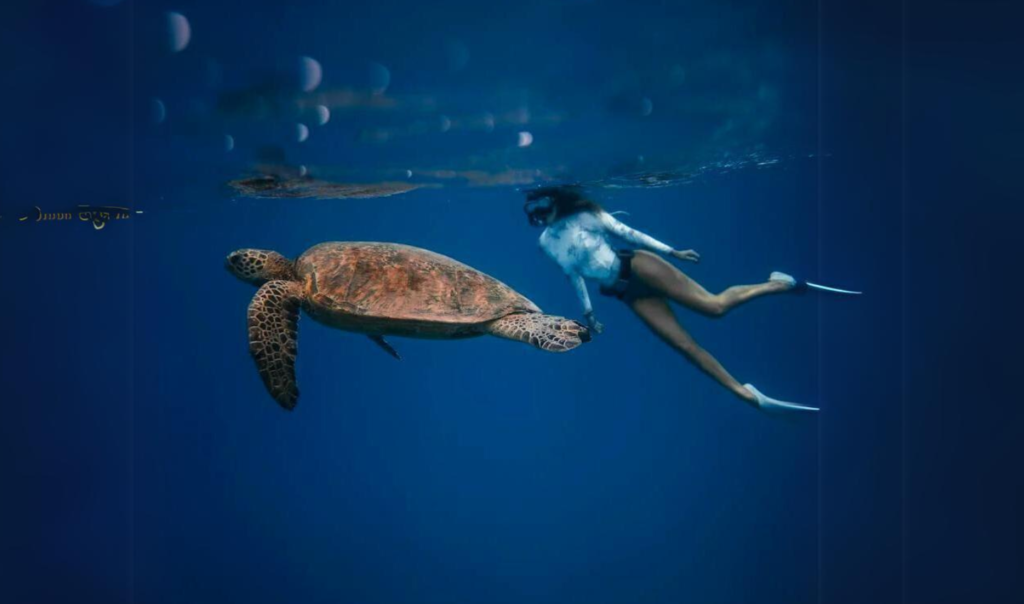
I had the pleasure of spending two weeks with TurtleWatch Egypt 2.0, an organisation dedicated to monitoring the endangered sea turtle populations of Egyptโ€™s Red Sea coast.  

They launched as an initiative in 2011, and registered as an NGO in 2022. I was curious to learn more about marine conservation in my home country. To my luck, TurtleWatch was the perfect place to start. 

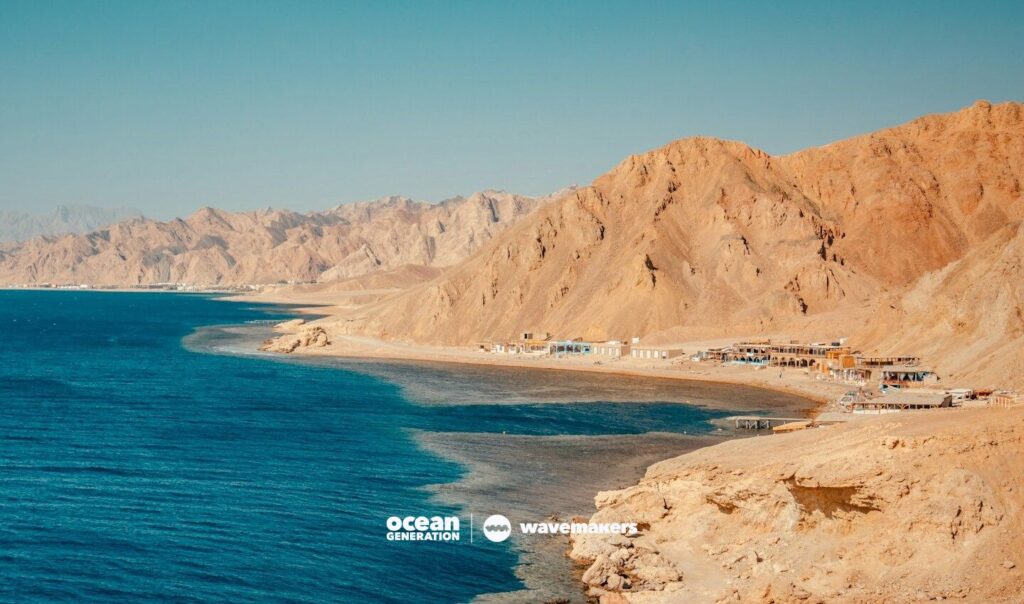
Red Sea coast is a world-renowned spot for diving.
Photo by Raimond Clavins

Based in the small town of Marsa Alam, their day-to-day work may be a dream for many thalassophiles.

Mornings are spent diving in bays rich with seagrass and corals, snapping photos of sea turtles and measuring data like shell length and water temperature.

Of course, their work has less idyllic parts too. Never-ending paperwork, grant applications, and database updates are just as important to the organisationโ€™s functioning.  

A member of the TurtleWatch team photographing a green sea turtle. The photo will later be used to identify the turtle and update their database.
Photo by Micol Montagna

Thereโ€™s one other thing that makes TurtleWatch especially unique: citizen science.  

They were the first initiative in Egypt aimed at involving divers and snorkelers in marine conservation research.

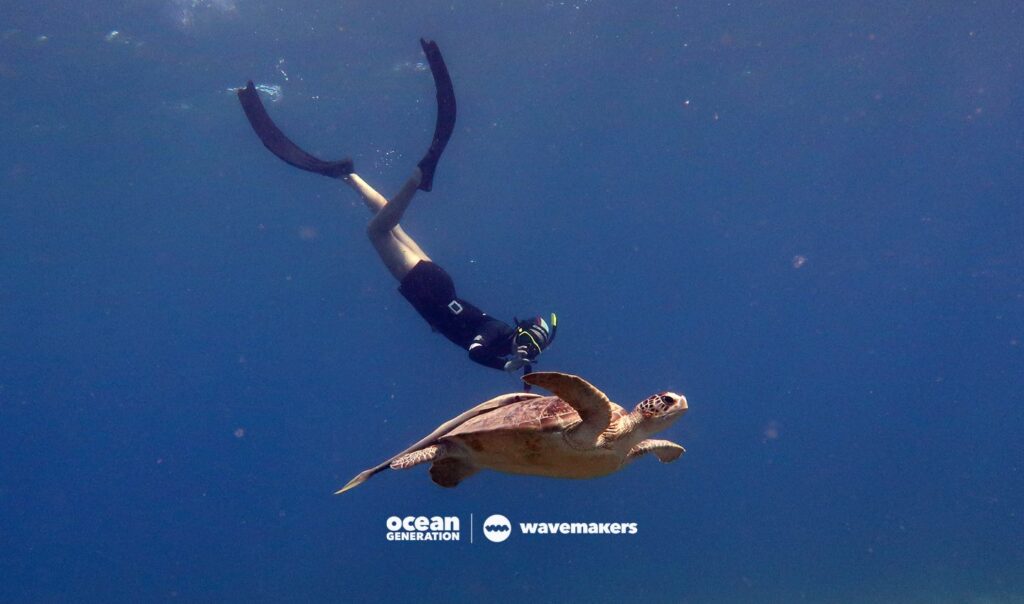
How? By allowing visitors to the Red Sea to upload their own sightings and pictures of sea turtles, TurtleWatch taps into the potential of everyday people to contribute as citizen scientists.  

These contributions help TurtleWatch identify important feeding and gathering sites for sea turtles, and better understand their movements and short-term migrations. It also helps them assess the impacts people have on these endangered animals.

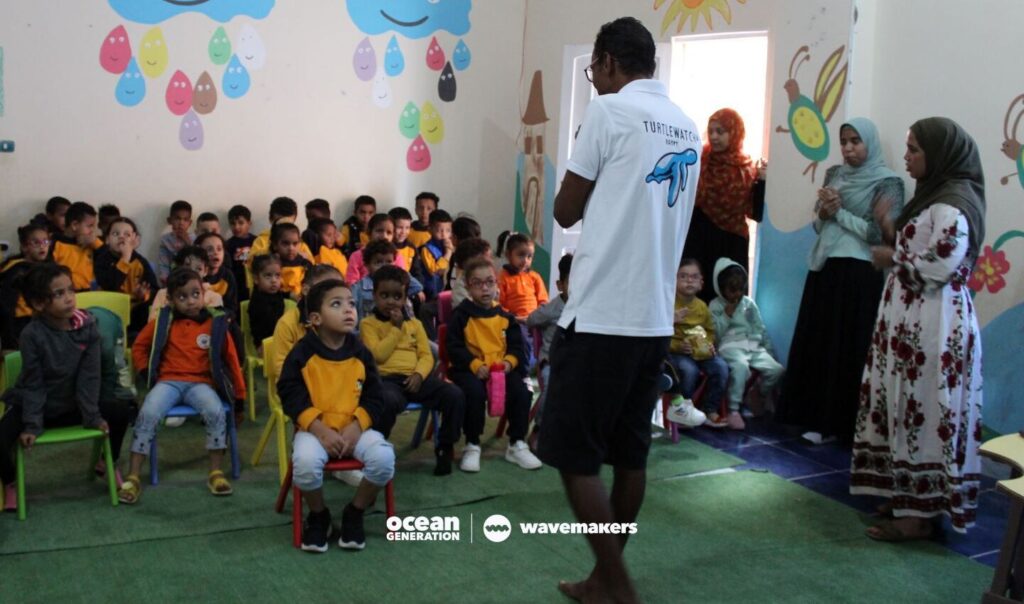
They use this information to not only improve conservation and protection efforts, but to organise training sessions for dive centres and deliver โ€œturtle talksโ€ to young children, students, and tourists. 

TurtleWatch delivering a turtle talk at a local kindergarten, as explained in a Wavemaker Story published by Ocean Generation, leaders in Ocean education.
Photo by Micol Montagna

Citizen science is not a new concept.

It has been used around the world to classify galaxies and track illegal fishing. But in a place like the Red Sea, which is understudied and where data is insufficient, TurtleWatch has managed to greatly extend their eyes and ears beyond their local vicinity.

Sightings come from all over the coast, and in 2023 they received over 1000 sightings.

It makes perfect sense: Egyptโ€™s Red Sea coast is filled with towns and resorts buzzing with snorkelers and divers, so why not involve them in the effort to protect the very marine life theyโ€™ve come here to enjoy? 

Snorllekers help safeguarding sea turtles with the help of citizen science.

As with everywhere else, the Red Sea hasnโ€™t escaped the destructive impacts of people on the natural world.

Coastal development and tourism are polluting the marine environment and leaving physical scars, while warming waters and acidification are harming the Red Seaโ€™s ability to withstand changes.

The good news is that corals in the Red Sea are some of the most resilient on the planet and could help us protect other corals reefs in the future. 

Coastal development and tourism are polluting marine life in Egypt. Wavemaker Story posted by Ocean Generation.

But before thatโ€™s possible, we will need better regulations and more marine protected areas to safeguard the Red Sea.

Organisations like TurtleWatchโ€”with the aid of citizen scienceโ€”are doing their part to provide much-needed data and help protect this beautiful sea for future generations.  


Thank you for raising your voice for the Ocean, Serag!

Connect with Serag Heiba via LinkedIn. Learn about how to submit your own Wavemaker Story here.

Disclaimer:ย Ocean Generation has no official affiliation with TurtleWatch. Mention of or reference to TurtleWatch is not an endorsement or sponsorship by Ocean Generation. The views, opinions, and activities of TurtleWatch are independent of Ocean Generation.

Why is the sound of coral reefs important? Explained.ย 

Subscribe

Monthly: Impact in your inbox.

OceanGeneration-Join

The art of not drifting apart: life lessons from sea ottersย 

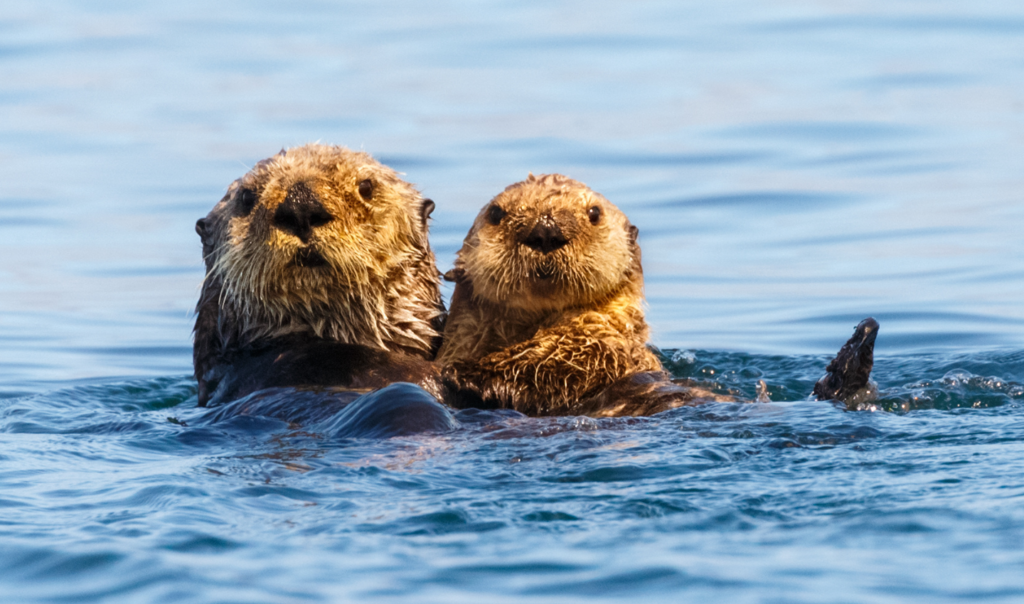
Sea otters hold hands to not drift apart, a Wavemaker Story by Katie.

I took pride in my stubbornness as a young child.  My family can attest to this.

For many years I used to make a point of objecting whenever museums or art exhibitions were suggested as โ€œfunโ€ family activities.

Wandering around such places for hours on end did not exactly line up with my vision of crafting mud pies in the garden to serve to my siblings. 

My exception to this rule was the Seattle Aquarium. Seattle Waterfrontโ€™s Pier 59 is home to habitats with names like Life on the Edge, Crashing Waves, and Window on Washington Waters, showcasing the vast diversity of life in the Ocean.

To this day this aquarium remains an established part of the itinerary whenever Iโ€™m in Seattle.  

The Seattle Aquarium showcases the vast diversity of life in our Ocean. A Wavemaker Story by Katie, posted by Ocean Generation, leaders in Ocean education.

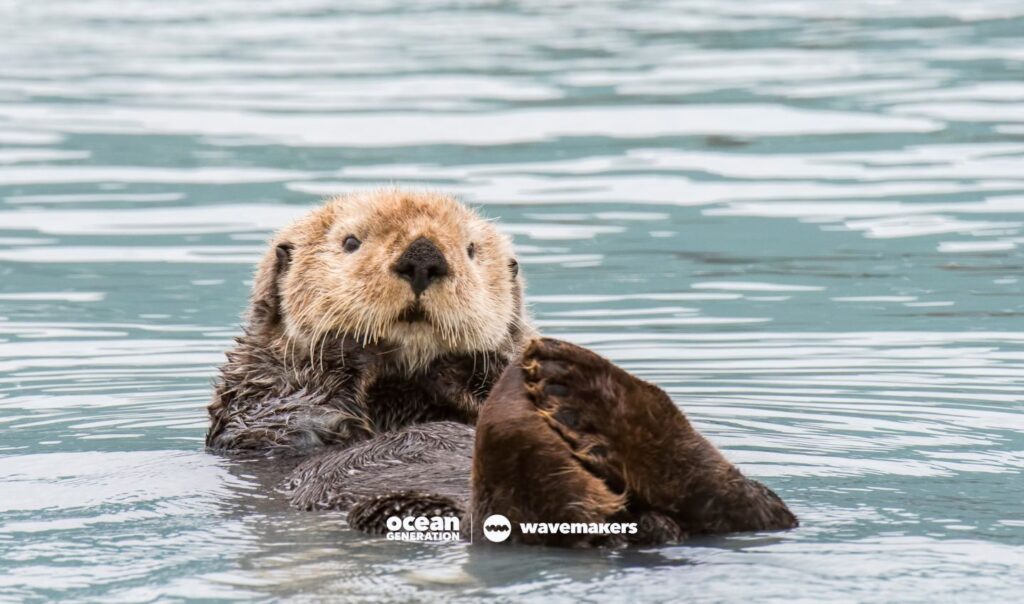
Two current aquarium inhabitants are particularly special to me. Mishka and Sekiu are sea otters who I could watch for hours as they effortlessly glide through the water and playfully twist and turn and bump into each other.

I have a soft spot for this species because it was a sea otter poster that first persuaded me to break my previously steadfast no โ€œfunโ€ family activities rule and step foot in the aquarium.  

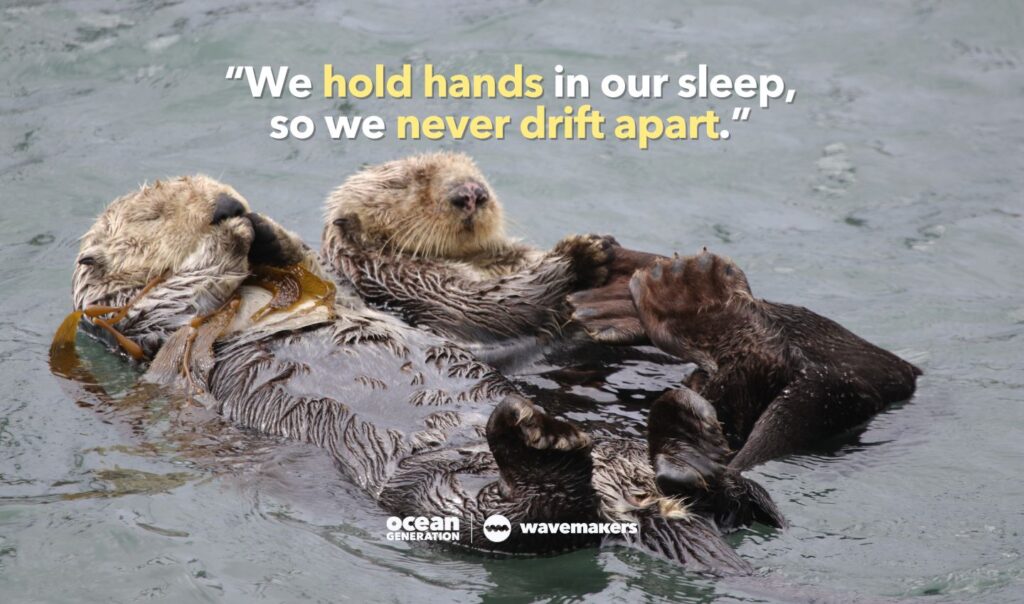
โ€œWe hold hands in our sleep, so we never drift apartโ€ 

These were the words written on that poster. I learnt that this phrase describes the way some sea otters have been observed to hold each otherโ€™s paws while resting in a group (called a โ€˜raftโ€™).  

Since that first aquarium visit, I have gone on to pursue a degree in biology. My days are now filled with learning about the pressing challenges of global biodiversity loss and climate change, alongside uplifting stories of conservation success and awesome cutting-edge research.  

Otters hold hands in their sleep so they never drift apart.

One of my friends asked me recently if I had to choose one takeaway from my degree to share with others, what would it be? Given the breadth of the field of biology I took some time to think about it.  

โ€œWe hold hands in our sleep, so we never drift apartโ€ 

I read these words again, this time printed on a Seattle Aquarium magnet, and now have an answer for her.    

Our actions, big or small, impact our blue planet.

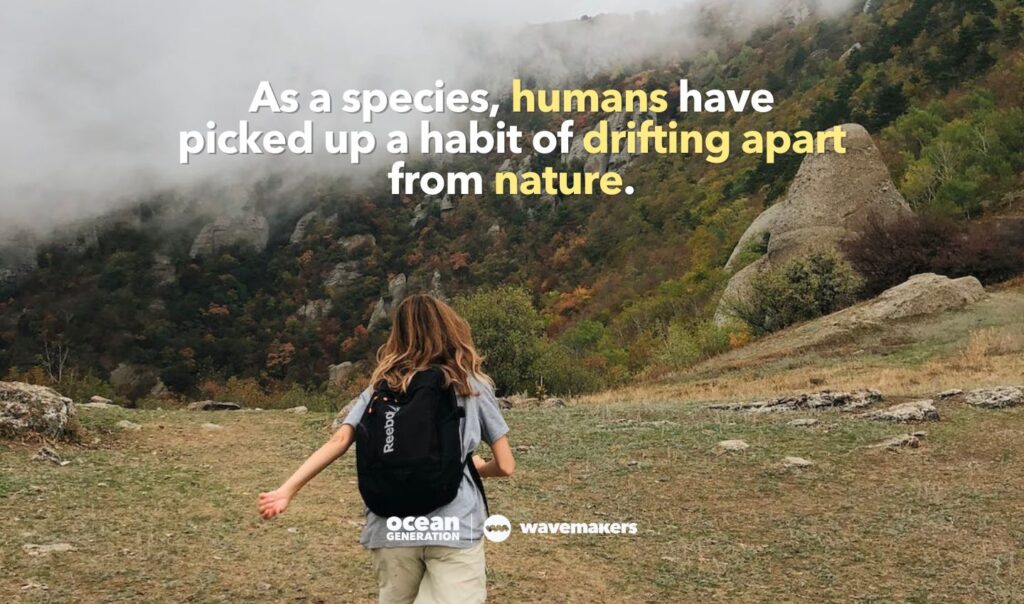
As a species, humans have picked up a habit of drifting apart from nature.

Societies across the world have grown, developed, and flourished. But societal complexity has historically come at the cost of increased disconnect from the wild.

Take a moment to consider where the food that you consume comes from. The journey the coffee beans took to give you that morning brew. The origin of the materials in the clothes that you wear. 

Nature provides these resources that fuel our lives.

Yet for many products, disconnect from nature is a goal. After all, meat encased in neat plastic packaging is more comfortable to consume than the reminder of its origin in nature.

Humans have picked up a habit of drifting apart from nature.

Humans benefit from the natural biological, chemical, and physical processes, such as nutrient cycles and food webs, that occur within ecosystems. Examples of these benefits, known as โ€˜ecosystem servicesโ€™, include resource provision, crop pollination, clean water, and climate regulation.

Recognising ecosystem services is crucial because harm inflicted upon nature diminishes its ability to provide these essential services.  

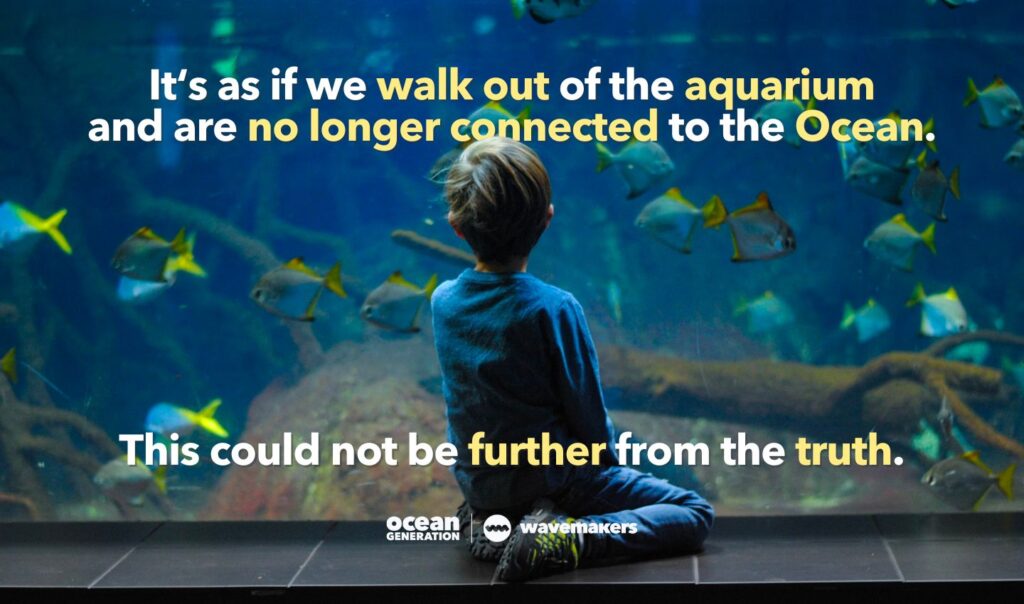
It can be easy to forget that humans are a species too. Our scientific name is Homo sapiens. Humans are an inherent part of nature, and yet we often detach ourselves from it. Itโ€™s as if when we walk out of that aquarium we are no longer connected to the Ocean.  

This could not be further from the truth.  

All our actions, big and small, impact the planet. As is characteristic of human nature, we have the potential for good, bad, and everything in between. For instance, while overconsumption puts pressure on ecosystems and the services that they provide, conservation programs act to preserve and protect the environment.  

It is up to us โ€“ as imperfect human beings โ€“ to try our best, maximise our positive impacts and minimise the negatives.  

So, how can we avoid drifting apart from nature? 

  • Reconnect with nature by spending more time outside  
  • Be a conscious and mindful consumer 
  • Actively educate yourself about the Ocean and the environment 
  • Engage with conservation initiatives 

The connection between people and planet must be acknowledged. We cannot afford to drift apart from the natural world.ย 

As if we walk out of the Aquarium, we're no longer connected to the Ocean.

Thank you for raising your voice for the Ocean, Katie!

Connect with Katie Curtis-Smith via LinkedIn or her Instagram page. Learn about how to submit your own Wavemaker Story here.
Why is the sound of coral reefs important? Explained.ย 

Subscribe

Monthly: Impact in your inbox.

OceanGeneration-Join

Diving into Kalk Bay: Exploring its past, present, futureย 

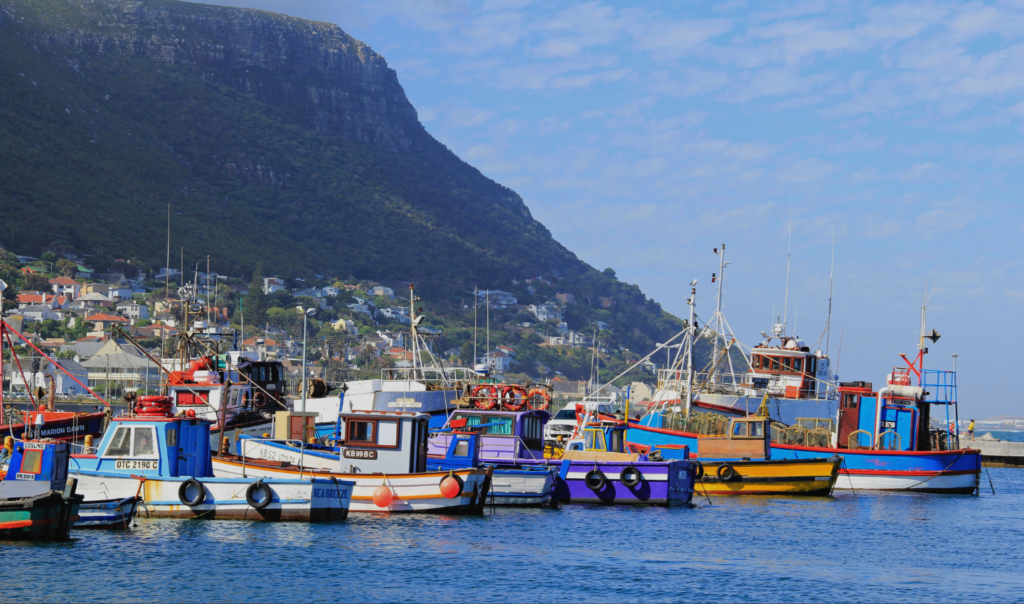
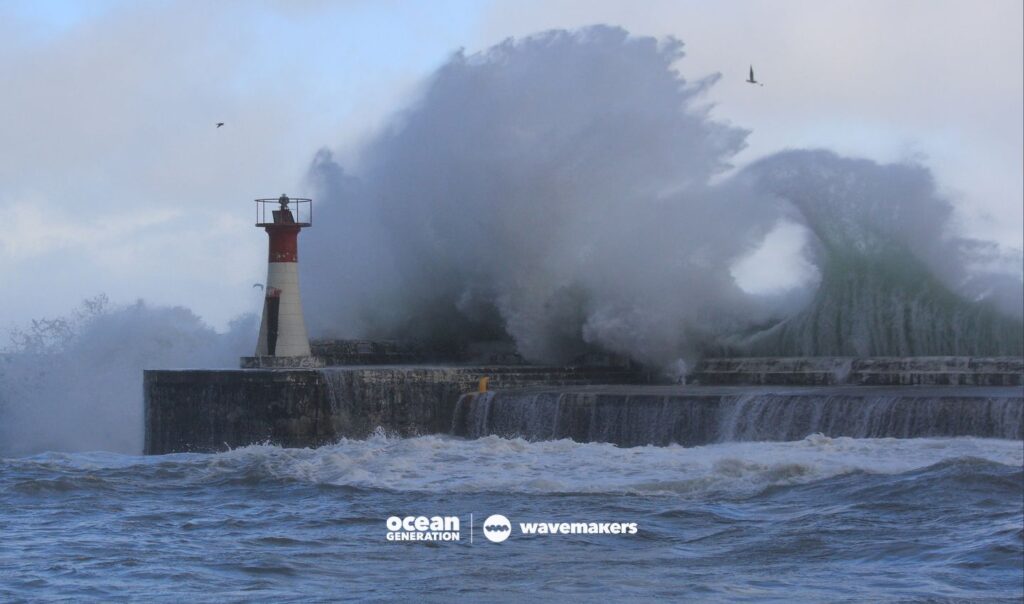
My earliest, enduring memory of the Ocean is a stretch of sea rolling away from a vibrant fishing harbour in Kalk Bay, Cape Town.  

The harbourโ€™s position along the False Bay Coast, as well as its rich marine life, played a crucial role in the cityโ€™s early development and prosperity. Little did I know this place would also play an important role in my own life.ย 

Kalk Bay: A link to my childhood and the last connection to my grandmother.

The colourful fishing boats in the harbour that frame the glorious, shimmering stretch of Ocean in my mind like a postcard, idealised to a point far from reality. Today, with names like Star of the Sea and Lucky Strike, those old wooden boats seem struck in a rapidly receding past.

Change has come in great variety and moved with incredible momentum. All aspects of the scene have been altered – from the oceanography and to the social structures and human dimension surrounding the harbour. 

I find it interesting and unsurprising, that when asked to think of a memory about the Ocean, the one I recall is so entangled with the influence of mankind. These two elements – human and Ocean – have been linked for centuries and seem unable to escape one another.

Wavemaker Story by Katie about Kalk Bay, Cape Town's past, present and future.

I feel this tension reflected in the complex and often contradictory nature of our social and ecological aims moving forwards as a society.

Progression too often comes at the high cost of our marine health, a lack of respect for our past and insufficient foresight for our future. All of this points to the difficulty in honouring and preserving our collective pasts whilst building future horizons in sustainable ways.

New strategies for managing the natural environment and its resources should include integrated approaches with new frameworks, stakeholders and communities. 

Kalk Bay as we see it today  

The Kalk Bay area may be reminiscent of the past, but the issues it faces are very much of the present. The harbour is one of the few still in operation, albeit a far cry from its thriving commercial days. Subsistence fishing (the practice of catching fish for personal consumption and not profit) is carried out with a handful of crayfish boats heading out each day. 

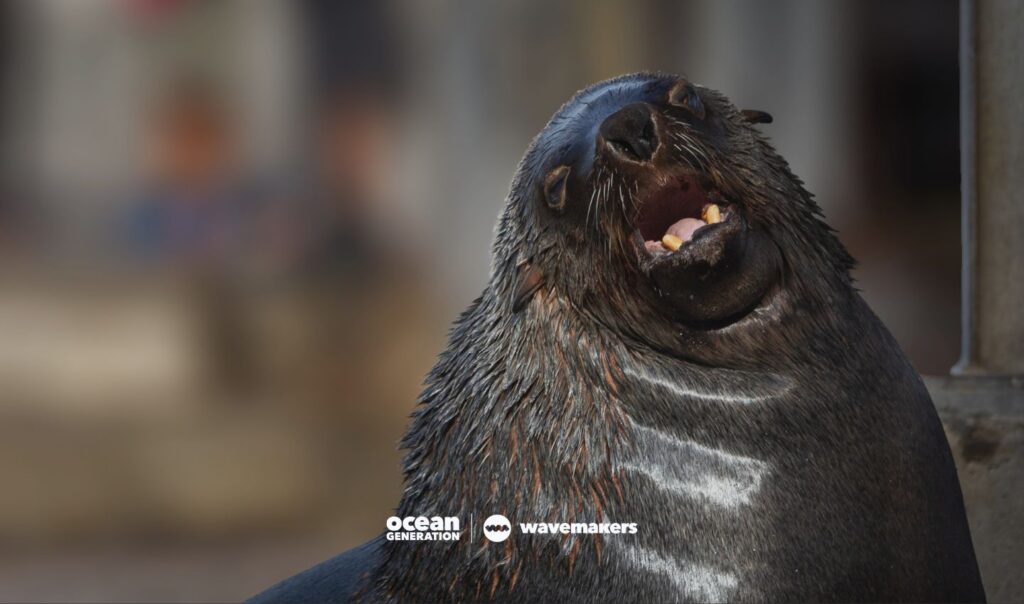
With reduced operation has come tourism and commercialisation. You will find restaurants, pop up stalls selling gimmicks, and seals, who emboldened and adjusted to the crowds, sunbathe on the jetty.     

Seal sunbathing on the jetty at Kalk Bay, Cape Town.

Just as the Ocean below has been altered by rising sea levels and an increased frequency of extreme temperature events, so too has the harbour. Unsurprisingly, the advancements and demands of modern life have been the indirect driving forces behind this change.

All the usual culprits – overfishing, climate change, overpopulation, and coastal development- are part of this problem.  Fish stocks caused by overfishing and the violations of size regulations have impacted marine biodiversity and the livelihoods of local fisherman. 

Coastal development have also contributed significantly to these detrimental changes by increasing pollutant runoff and nutrient loading.

This illustrates just how interrelated Ocean and coastal ecosystems are and how integral they are to both human and aquatic life.

Progression at Kalk Bay, Cape Town too often comes at the high cost of our marine health, a lack of respect for our past and insufficient foresight for our future. Article by Ocean Generation, leaders in Ocean education.

Not all hope is lost for Kalk Bay  

Thankfully, thereโ€™s been a growing awareness of and respect for some of these pressing human-made threats, which has led to the establishment of marine protected areas. Currently, 15 % of South Africaโ€™s total marine areas are protected with 1.7 % of this area fully protected.

Evidently, the South African constitution recognises the need for these conservation efforts and acknowledges the responsibility that the fishing and tourism industries have.

Eco-tourism has emerged as a way of protecting and sustainably using the environment, without negatively impacting economic growth and job security.  

A growing awareness in South Africa has led to the establishment of marine protected areas.

We need solutions that engage local communities living in coastal areas. This would encourage the safeguarding of natural resources, improve the quality of peopleโ€™s lives, and potentially assist in building bridges between sections of South African society that has historically been divided.

Approaches such as these work towards achieving a balance between developmental goals and environmental concerns; itโ€™s of course an ongoing process. Therefore, itโ€™s important to thoroughly research and address the priorities and gaps in this area with input from various stakeholders.

Katie, a Wavemaker tells us: My grandmotherโ€™s childhood saw the days when man could still outrun his actions without stopping to catch his breath and consider the implications.

My grandmotherโ€™s childhood saw the days when man could still outrun his actions without stopping to catch his breath and consider any of the implications. The harmony between human and Ocean that existed was only ever on a short-term loan, one with dangerously high interest.

The future seemed as it always does to those on the shores of the present: An island far away.

Katie, a Wavemaker shares this quote: My faith in the [...] next generation of changemakers gives me hope for the future of our marine and coastal ecosystems.

The generation of young people to which I belong to understand that preservation isnโ€™t about merely respecting the present but also about securing the future. Therefore, my faith in the collective creativity and problem-solving abilities of the next generation of changemakers gives me hope for the future of our marine and coastal ecosystems.


Thank you for raising your voice for the Ocean, Katie!

Connect with Katie Birditt via LinkedIn or her Instagram page. Learn about how to submit your own Wavemaker Story here.
Why is the sound of coral reefs important? Explained.ย 

Subscribe

Monthly: Impact in your inbox.

OceanGeneration-Join

The world was our oyster, when the oysters became our world

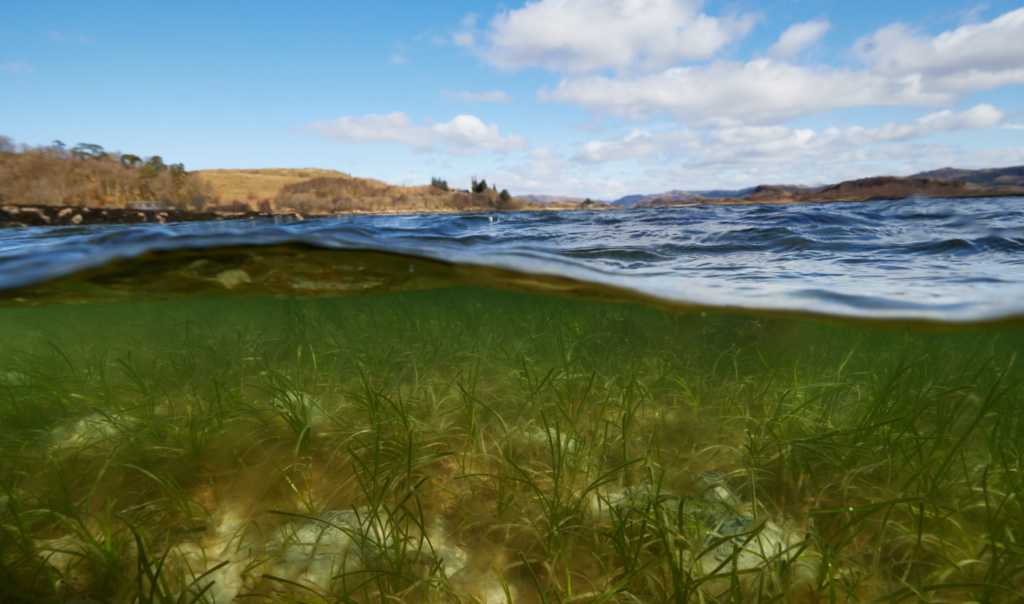
A seagrass meadow in Scotland part of the Seawilding marine conservation project. Image by Philip Price / Seawilding shared via Ocean Generation's Wavemaker Stories.

An experience paving the way for community-led marine conservation. ย 

Like many of us, until recently I had only ever associated oysters with gourmet restaurants and fine dining, an out of reach delicacy plucked from some distant, murky seabed.

After working with oysters, they are now a familiar part of the local marine wildlife, and a hugely important component in the global effort to restore and conserve our Ocean.  

I spent my summer interning with Seawilding, a community-led marine habitat restoration organisation in Scotland. Their mission is to restore seagrass meadows and native oyster reefs, through planting seagrass, growing oysters to form new reefs, and developing successful methods that others can follow, to enable coastal communities across the UK and further afield to take action.  

Woman diving into the Ocean shared by Ocean Generation in a Wavemaker Story. There's a quote that reads: I spent my summer [...] restoring seagrass meadows and native oyster reefs. Photo by Sophie Coxton.
Photo by Wavemaker Story writer Sophie Coxon.

The seascape of Loch Craignishย ย 

Set on the gleaming shores of Loch Craignish, the first time I slipped under the surface was like entering a whole other world.

The salty water enveloped me with an icy embrace, and the seabed materialised below. Vast meadows of seagrass glistened green, with dappled sunlight sparkling through the water column and catching the tails of Goldsinny wrasse and the occasional lonely pipefish.

Snakelock anemones waved like flowers from the grass heads, and red feather stars snaked their arms towards me as I glided past.ย ย 

The fringes of the meadow gave way to soft mudflats, where sparring crabs and dancing prawns entertained passersby. Gobies and flatfish buried themselves in the sand, and large shoals of herring flicked like glassy shards in the distant blue. ย 

Ocean photo.

The oyster reef was by far my favourite; thick layers of oyster shells stacked haphazardly covered the seafloor, carpeted by algae, barnacles and clumps of bladderwrack.

Fish darted in and out of crevices, startled by my shadow, and starfish lay clustered on the rocks, arms splayed as if holding hands. The plethora of animals, and the richness of the life surrounding me was quite literally breathtaking, so much so that I almost choked on the seawater a number of times.

It was inspiring to see so much diversity thriving in Scotlandโ€™s waters.

The work Seawildingโ€™s team has achieved is clearly doing wonders for the wildlife of Loch Craignish, however this is only the tip of the iceberg in the marine conservation and restoration work we need to undertake, not only here in Scotland but across the Ocean.ย ย 

Two images of marine conservation activities: Restoring oyster reefs in Scotland and helping restore sea grass meadows. Images taken by Sophie Coxton and shared by Ocean Generation.
Photos by Wavemaker Story writer Sophie Coxon.

The health of the Ocean is essential to us, not only as societies through its cultural significance, but also through its physical services.

Without healthy marine ecosystems, food stability will crumble, coastal erosion will rapidly creep up on communities, and the impacts of climate change will be less cushioned and more sorely felt.ย ย 

Scotlandโ€™s marine wildlife: Then and nowย 

Scotlandโ€™s coasts were once prolific with wildlife. Historic records speak of rivers โ€œoverflowing with salmon, onto the banksโ€, estuaries that had seemingly endless shellfish stocks, and open Ocean brimming with endless shoals of fish.

Oysters were once the food of the poor, and lobster was a common centerpiece at every dinner table. Lush seagrass meadows flanked the shorelines and wildlife flourished, everywhere.ย 

We must start taking Ocean action to prevent further losses. Quote shared by Ocean Generation in an article about marine conservation programmes in the UK.

Now, there are no natural oyster reefs left off Scotlandโ€™s coast, and more than half of the original seagrass meadows have disappeared.

Dredging (removing sediments from the seabed), overfishing, and pollution threaten our coastlines more than ever before, and with the pressures of climate change increasing with each day, we must start taking action to prevent further losses

Seawildingโ€™s work, enthusiasm and passion for the marine environment is a sparkling example of how communities can come together to create real, positive change โ€“ something we should all strive towards.


Thank you for raising your voice for the Ocean, Sophie!

Connect with Sophie via LinkedIn or her Instagram page.ย Learn about how to submit your own Wavemaker Story here.

Disclaimer:ย Ocean Generation has no official affiliation with Seawildling. Mention of or reference to Seawildling is not an endorsement or sponsorship by Ocean Generation. The views, opinions, and activities of Seawildling are independent of Ocean Generation.

Why is the sound of coral reefs important? Explained.ย 

Subscribe

Monthly: Impact in your inbox.

OceanGeneration-Join

Is it ‘green’ or greenwashing?

Fashionable women and men sitting on wooden chairs in a lush, healthy field. The people are dressed in sustainable neutrals. In this article, Ocean Generation and Lydia Dupree breakdown what greenwashing is and how to spot it.

How to tell the difference between sustainable fashion and false claims like greenwashing 

The fashion industry is swept up in buzzwordsโ€Šโ€”โ€Šespecially when marketing sustainable fashion. โ€œEco-friendlyโ€, โ€œnaturalโ€, โ€œgreenโ€โ€”the list goes on. But what do they mean? Do they have substance, at all? 

Most of them are fluff, jargon to make a brand sound environmentally conscious without any true scientific backing as to their impact on our blue planet. Sustainability is easy to market, but hard to prove.  

Saying that, we can welcome our next buzzy term into the mixโ€Šโ€”greenwashing.

What is greenwashing?

No, greenwashing is not an expensive non-toxic clothing detergent or the latest dry cleaning method. 

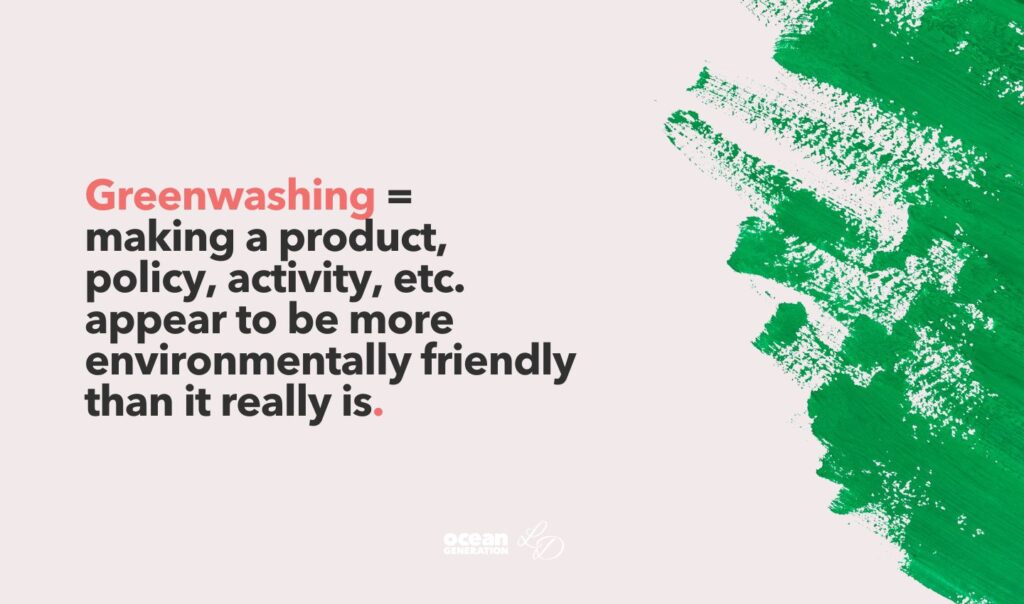
Greenwashing is โ€œthe act or practice of making a product, policy, activity, etc. appear to be more environmentally friendly or less environmentally damaging than it really isโ€.  

Definition of greenwashing by Lydia Dupree and Ocean Generation. Greenwashing =
making a product, 
policy, activity, etc. 
appear to be more environmentally friendly
than it really is.

What is greenwashing in fashion?

Greenwashing in fashion can range from a fast fashion brand debuting a โ€œsustainableโ€ collection that lacks evidence supporting how it is environmentally conscious, to sprinkling eco-friendly terms into marketing without defining what they mean.  

In short, greenwashing is the use of false claims to hop on to the sustainability trend without evidence (if only Legally Blonde had come out now, Elle would be all over this one!). 

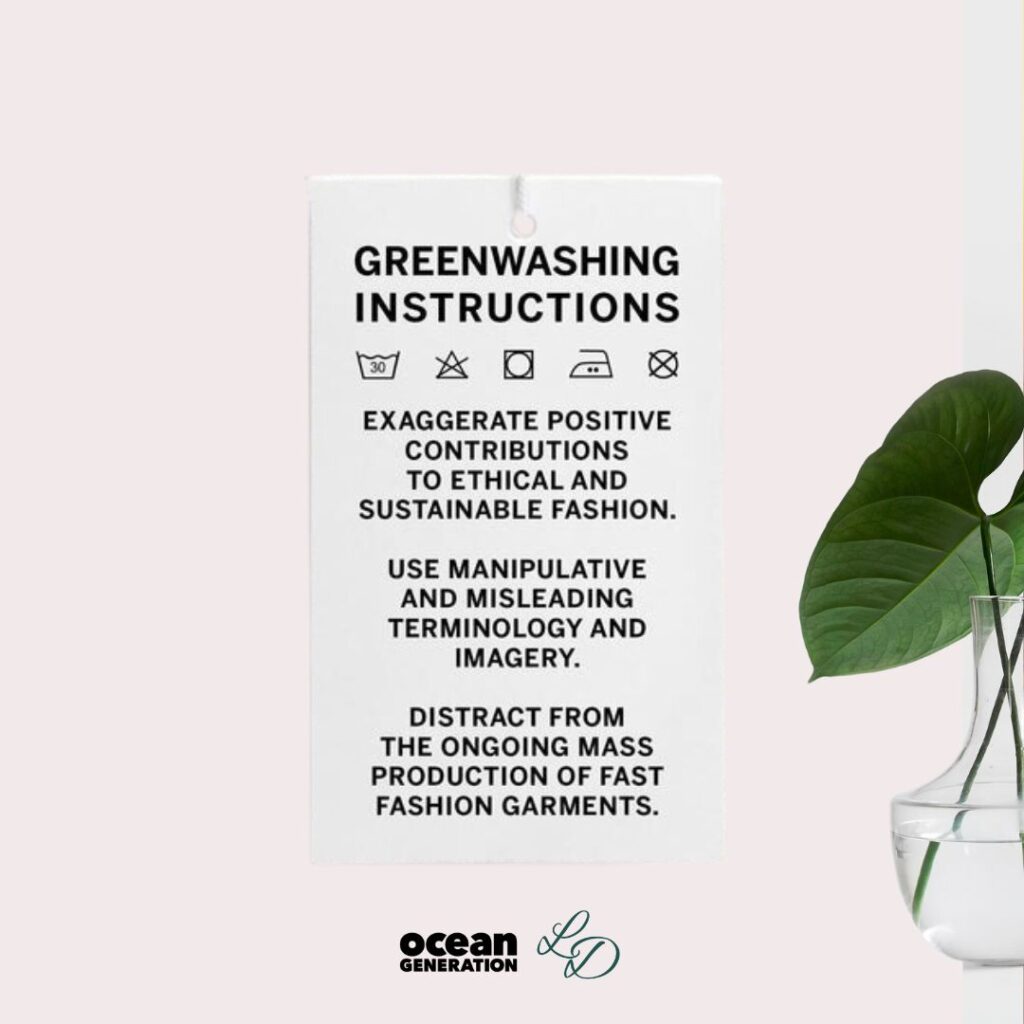
Greenwashing instructions including exaggerating positive contributions to ethical and sustainable fashion and distracting from the ongoing mass of fast fashion garment production. Shared by Ocean Generation and Lydia Dupree. Via Project Stopshop

How can you tell the difference between sustainable fashion and false claims? 

5 ways to identify greenwashing in fashion.ย 

If you see these red flags, run!

  1. The use of sustainability jargon, such as โ€œgreenโ€, โ€œeco-friendlyโ€, โ€œsustainableโ€, and โ€œnaturalโ€ in marketing without a definition explaining what the brand means when using the term.

  2. A fast fashion company that comes out with new items often (think: daily, weekly, monthly, even large numbers released seasonally) markets their new line as โ€œsustainableโ€.

    Releasing large volumes of clothing indicates that the company as a whole is not following an earth-conscious business model and thereby cannot justify one of their lines truly being sustainable.ย 

  3. Claiming fabrics to be โ€œorganicโ€ or โ€œnon-toxicโ€ without certifications to support (see below for more information on certifications to look for).

  4. The lack of scientific reports exploring their sustainability impactโ€Š. If a brand has the data to prove how they are sustainable, they will show it.

  5. Using the term โ€œveganโ€ to make clothing sound like a healthier, cruelty-free alternativeโ€Š, when the fabric is derived from petrochemicals (meaning, they are fossil-fuel derived plastics). ย 

    However, some โ€œveganโ€ fabrics are plant-based materials, which would be a sustainable alternative.ย ย 

    Watch: Lydiaโ€™s short video about how to avoid plastics in clothing.ย 
Women wearing three pairs of sunglasses on her head: One pink, blue and yellow. A tranisiton to slow fashion is needed to safegaurd our planet. This article explores greenwashing red flags.

5 signs of sustainable fashion.ย 

Look for these green flags!

  1. Look for transparency in fashion.

    The brand has sustainability reports backed up by data readily available.

    Sustainability reports can include their efforts towards lowering carbon footprint, reducing water usage and overall waste, treating and paying garment workers fairly, and outlining future sustainability goals.

  2. How traceable is your clothing?

    Clothing is fully traceable back to the source, such as the farm that grew the cotton or the alpaca whose wool you are wearing.

  3. Is your sustainable clothing certified by credible sources?

    Fabrics and processes can be certified by credible sources, such as:ย 

    โžก๏ธ What does a GOTS certification mean?
    Global Organic Textile Standard (GOTS) ensures no pesticides or insecticides are used in farming and all chemistry used by the brand in the production of clothing is in alignment with being truly organic.

    GOTS-certified facilities also adhere to social criteria based on leading social sustainability standards.ย ย 

    โžก๏ธ What is OEKO TEX in the fashion world?
    OEKO-TEXยฎ is all about chemical safety. They have a variety of certifications, but the most popular one is the STANDARD 100 which ensures that the final product was tested to confirm that it is free from over 3,000 different toxic chemicals.ย 

    โžก๏ธ What does bluesign credibility mean?
    bluesignยฎ approved facilities look at the overall chemistry used by a brand from fiber to finished product to ensure safe chemistry practices are used.ย 

    โžก๏ธ What is Fairtrade?
    Fairtrade International and Fair Trade USA follow criteria that support ethical working environments for farmers and garment workers, eco-friendly practices and prioritise fair pay.ย 

    ย 
  4. Are the clothes you’re wearing part of circular fashion?

    โ€œCircularโ€ fashion stops the linear โ€œtake-make-wasteโ€ model of fast fashion and instead closes the loop on production, including responsible manufacturing, use, and recycling for every garment.

    Look for brands that have take-back programs to recycle and reuse garments when they are at the end of life.

  5. Is the clothing you’re wearing from small batch production?

    A brand launches only a few items at a time in a limited supply to combat waste from the fashion industry, such as increasing landfills.ย 
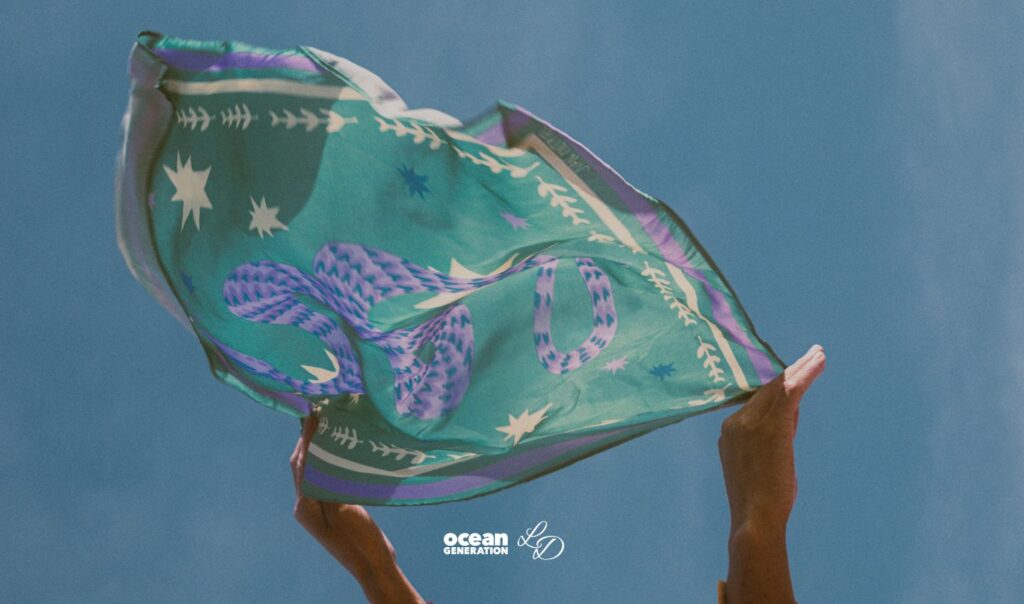
A sustainably made scarf rustles in the wind. It's being held up, by a set of hands. In the background is a blue sky. Shared by Ocean Generation: Experts in Ocean Health.

Now in the know.

Although greenwashing is an indicator that the industry is slowly becoming more conscious of their impact on the environment.

But the only way to truly make a positive difference is to be honest and straightforward in their environmental efforts.ย ย 

Every decision we make โ€“ from what we wear to what we eat and how we move โ€“ has an impact on the future health of our Ocean and planet.  

With these tips to spot greenwashing, youโ€™re now equipped to decipher the sustainability cons from the true conservationists. Go forth with your newfound skill and tell a friend.  

Greenwashing is an indicator that the industry is becoming more conscious of their environmental impact. But to truly make a positive difference they must be honest about their environmental efforts. In this article by Lydia Dupree, Ocean Generation is unpacking what greenwashing is and what red flags to look out for.


Connect with Lydia via herย websiteย orย Instagram page.

Why is the sound of coral reefs important? Explained.ย 

Subscribe

Monthly: Impact in your inbox.

OceanGeneration-Join

How to turn eco-anxiety into eco-agency

To protect Earthโ€™s most precious ecosystem โ€“ our Ocean โ€“ we must first understand its importance. Ourย Wavemaker Programmeย empowers young people between 16 โ€“ 25 to use their voice and talentsย toย make a positive impact on our blue planet. This piece was written by one of our Wavemakers.ย Submit your own story.

Ocean threats don’t just impact the environment and non-human creatures, but our own health and wellbeing too. One key way the environmentโ€™s degradation can impact us is through eco-anxiety.ย 

Shrinking ice caps, disappearing biodiversity,โ€ฏfiercer bushfires, heat wavesโ€ฏ, and flash floods. Theย effects of climate changeย are difficult to ignore.

These disasters not only causeโ€ฏimmense physical destruction – aย growing body of evidenceย shows they’re alsoโ€ฏtaking a toll on our mental health.ย 

What is eco-anxiety anyway?ย 

Eco-anxiety is extreme worry about current and future harm to the environment caused by human activity and climate change.ย 

Eco-anxiety can be caused by the stressful and frightening experience of “watching the slow and seemingly irrevocable impacts of climate change unfold, and worrying about the future for oneself, children and later generations“, according to a 2018ย report.

What is eco anxiety and how can it be turned into eco agency? Ocean Generation explains.

How do I know if I have eco-anxiety?ย 

Eco-anxiety can feel like feelings of loss, helplessness, frustration, and guilt, as the sufferers feel they are unable to stop climate change.

Feeling this anxiety is an emotionally mature state to be in, which shows that you are aware of the crisis that we are all facing.ย 

So, whilst it can be unpleasant, it can show a willingness to face painful truths and facts, and that should be acknowledged and almost (though not quite as simple as this) be celebrated. But how?ย 

When facing eco-anxiety, remember youโ€™re not alone.ย 

First of all, try to recognise your feelings as completely reasonable and necessary, rather than push them away.

Taking time to acknowledge my feelings helps me maintain a healthy relationship with them, and often motivates my work and activism.ย ย 

Finding your place inย a communityย can also be a huge help with feelings of despair and anxiety. There are a lot of support and activist groups you can joinย (read on to the tips section to see some example groups).ย 

Shared belonging and concern can be a great support and working towards tangible solutions can give a much greater sense of control in overwhelming circumstances.ย 

Know whenย to seek professional help:ย 

If your eco-anxiety is so severe that it causes you to be unable to function, or feels unbearable, you could consider seeking professional help. Try to bring empathetic understanding and connectionย to, ideally, find meaning in this experience.ย 

It is often the loss of meaning that causes people the most suffering.

Understanding that these feelings have meaning can be comforting. The ideal is to find balance between feeling these emotions, and then using them in different ways to create meaningful change, better relationships with your family and friends, maybe even more meaningful work and activism of some kind.

At least know that you are not alone with your fears.ย 

Eco-Agency: Steps toย tackle eco-anxietyย ย 

Since 2017, and especially since autumn 2018, there has beenย increasing coverageย about eco-anxiety and climate anxiety in various media.ย ย 

One focal point in this discussion has been the young climate activist Greta Thunberg, who has openly spoken ofย her climate change anxiety.

Climate anxiety became perhaps the most discussed form of eco-anxiety, and it was often discussed in relation to the children, youth, and young adults who participated in climate action.ย ย 

Greta Thunberg on why we all need to make daily changes to protect our planet, shared by Ocean Generation

More studies on theย mental health impacts of climate changeย have been published.ย In 2020, books for the general public began to appear, providing suggestions for self-help and social action in order to alleviate eco-anxiety and especially climate anxiety.

Book recommendations to learn more about eco-anxiety and how to deal with it:

A guide to eco-anxiety: How to protect the planet and your mental health.
A field guide to climate anxiety: How to keep your cool on a warming planet.ย 
Turn the tide on climate anxiety: sustainable action for your mental health and the planet.
Why has nobody told me this before?

Book recommendations about eco anxiety, shared by Ocean Generation and Mia Celment

Acknowledging that there are many people feeling this anxiety and looking at options of how you could help yourself and others, helps you move from an eco-anxious mindset to an eco-agent perspective.ย ย 

Eco-agency is being proactive in looking after yourself and your wellness within your environmental actions.

It means ensuring you are mindful of your mental health and keeping fit and healthy. The next couple of tips are ways I found have helped me move from eco-anxiety to eco-agency.ย 

Tips to deal with eco-anxietyย 

Here are five steps I find have helped me live, cope with and overcome eco-anxiety.ย 

1. Try and live in alignment with your valuesย 

The impact of individual actions can be very small, but psychotherapistย Mary-Jayne Rustย suggests that changing your lifestyle to be more compatible with your values can help with eco-anxiety.

Researchers fromย Imperial College Londonโ€™s Grantham Instituteย offered several ways to do this: eat less meat and dairy, drive less and stop buying and disposing of so many items.ย 

2. Donโ€™t feel ashamedย about feeling anxious

For example, environment writer and activistย Emma Marrisย noted thatย billions of people fly.

โ€œMy individual actions are not actually capable of solving climate change,โ€ย she said.

While changing how you live and travel may help you by letting you live more closely in accordance with your values, you shouldnโ€™t feel ashamed for not being fully able to comply with these.

โ€œThe systems in which we are all enmeshed essentially force us to harm the planet, and yet we put all that shame on our own shoulders,โ€ย said Marris.ย โ€œThe shame is not helping anybody.โ€ย 

3. Focus your efforts on changing systems, not yourselfย 

Marris argues that we canโ€™t get where we want to be through individual action, and that accepting this has therapeutic benefits.

โ€œI donโ€™t think a complete narcissistic focus on the self is healthy,โ€ย she points out. Instead, Marris suggests you can have a much more meaningful impact by working with others to lobby governments.

The Grantham Institute advises letting your MP, local councillors and mayor know that you think action on climate change is important and writing to your bank or pension provider to ask if you can opt out of funds that invest in fossil fuels.ย 

4. Find like-minded peopleย 

Finding a community of like-minded individuals can help you express and share your feelings of eco-anxiety. You canโ€™t solve climate change on your own. Joining a group of some kind will enable you to make friends.ย 

Iโ€™m not an expert on mental health but I feel like making friends is helpful โ€“ giving you a space to share your thoughts and feelings.ย ย 

Organisations that address eco-anxiety:ย 

Eco-anxiety support group with Waterspirit
Force of Nature community
Take Climate Action
Climate Psychologists
Climate & Mind
The Climate Dreams Project
Climate Journal Project
EcoAnxious Stories
The Mental Health and Climate Change Alliance

– Talk about the changes you makeย 

The importance of talking about your experiences โ€“ the challenges as well as the positives โ€“ and bringing other people along with you.ย 

Talking about the practical things you can do in their day-to-day lives can give you some sense of control back and empowers you to take ownership of your choices and agency.ย 

I’d be lying if I said that there wasn’t a lot of time when you think, โ€˜Why do we bother?โ€™ But, when you sit down, chat to other activists or advocates and have a bit of a think about it, you realise that there’s a huge amount that we can still do.

Yes, our planet and Ocean are in trouble. But it’s in our power to protect what’s left and make a meaningful difference.
And that’s why we do this.
That’s why we carry on.ย 

If youโ€™d like a chance to meet others, learn more about ourย Wavemaker Programme. And if you’d like to submit your own Wavemaker Story, do so here.

Why is the sound of coral reefs important? Explained.ย 

Subscribe

Monthly: Impact in your inbox.

OceanGeneration-Join

Dear Ocean, sorry we didn’t write back

Seagull flying over the Ocean against the backdrop of an orange sunset shared by ocean Generation: experts in Ocean health since 2009.

To protect Earth’s most precious ecosystem – our Ocean – we must first understand its importance. Our Wavemaker Programme empowers young people between 16 – 25 to use their voice and talents to make a positive impact on our blue planet. This piece was written by one of our Wavemakers. Submit your own story.

The Ocean is the world’s most shared resource.

Social, economic and environmental sharing is caring

The Ocean is the world’s most shared resource. The vitality of the Ocean is necessary to support and sustain Earth and here’s why.

Covering over 70% of the planet, our Ocean takes responsibility for regulating our climate and weather from the poles to the equator.

As if her generosity wasnโ€™t enough, the Oceanโ€™s environmental benefits have continued to protect and conserve biodiversity and create global sources of natural carbon sinks. It does this by providing services to ecosystems, including coastal wetlands, mangroves and coral reefs.

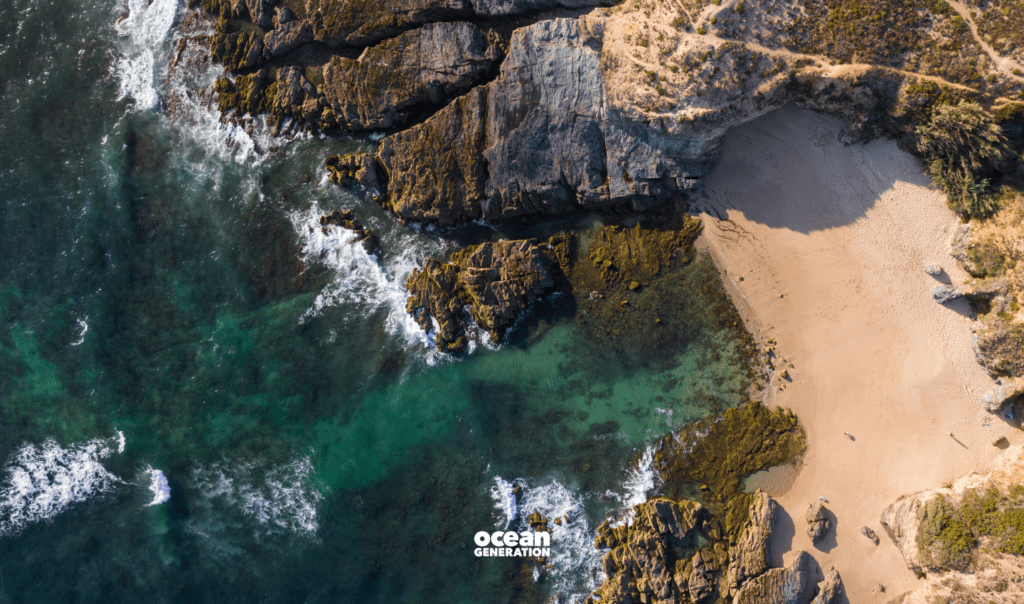
Aerial view of a beach and the Ocean shared by Ocean Generation - experts in Ocean health since 2009.

Human health and Ocean health are connected

The health of our Ocean is intimately tied to our health. No, reallyโ€ฆwith every breath we take, with every drop we drink, we’re connected to her.

Not just physically, but emotionally. When we take a step back to enjoy the magnificent view of our Ocean (whilst adding her to our IG stories #SoGrateful), it welcomes a sense of calmness, for how life can be so gentle and beautiful.

But to take this mentality forward with how we care for her every day is the next essential step.

Why?

Well for one, the Ocean provides us with over 50% of the worldโ€™s oxygen.

No matter her physical forms, whether stormy and rough, warm and clear or frigid and cold, she, the Ocean, has always helped us breathe during our time on Earth and should never be gone unnoticed.

What resources does our Ocean provides us with?

The Ocean continues to provide a vast number of economic and social benefits, including: jobs, food, medicine, recreation and wonderment โ€“ to name a few.

Our Ocean boosts sustainable economic growth in some of the worldโ€™s poorest countries, which supports the well-being of coastal communities.

“[A healthy Ocean is] critical for combatting rural poverty, ensuring food security, improving nutrition and achieving zero hunger.”

Josรฉ Graziano da Silva

Economically, about 38 million people rely on the fishing and fish-farming industry, 95% of whom live in Asia, Africa and Latin America.

The economic benefits the Ocean provides has sparked several positive domino effects for many communities, including: food security, job security, sustainable trade in Ocean -based goods and services, sustainable shipping, and an attraction to sustainable tourism.

In addition, OECD confirmed that over 90% of the worldโ€™s trade uses sea routes thereby making the Ocean a heavily reliant agent to access essential resources and necessities, including food, medical supplies and drugs, and fuel.

It is important that we not only take notice but also speak about how many communities around the world have learnt to grapple and adapt to the Oceanโ€™s gifts โ€“ as opposed to altering the Ocean to fit their needs, they learnt to navigate their lifestyles with the Ocean.

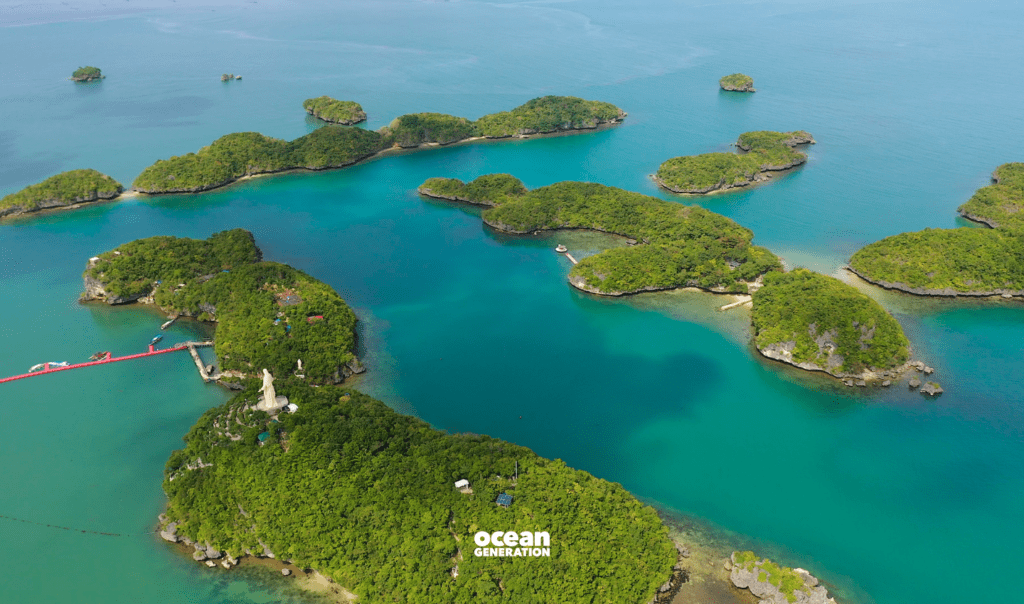
Island communities depend on the Ocean for their livelihoods. Image shows a scattering of islands in the Ocean with lush green trees and blue water/

The impact of our Ocean on communities:

Sri Lankaโ€™s Ocean wealth

The island we know today as Sri Lanka has thrived on the Oceanโ€™s economic resources as it has made remarkable contributions to the countryโ€™s economy.

Sri Lankaโ€™s coastal zone hosts 1/3 of the countryโ€™s population, accommodates over 2/3 of all industrial facilities, and over 80% of tourism infrastructure.

As the Ocean provides social benefits for many communities, the wellbeing dependency on the Ocean is clear. These communities have been able to cultivate a sense of stability and economic growth, through fishing and aquatic agriculture. Moreover, the little island is well known for its touristic cities, from mountain tops to the clear, blue Ocean with its golden sand.

The tropical countryโ€™s sandy coast lines continue to attract many tourists to the Ocean, to soak in the sunsets and fresh air โ€“ reflecting again on the wonder and wellness the Ocean provides us.

Economic exploitation: The new high school bad boy

Unfortunately, utilising the Oceanโ€˜s resources and services have come at a cost โ€“ exploitation and economic dominance.

The Blue Economy was a concept initiated with the goal of sustainably sourcing the Oceanโ€™s resources for economic growth, improved livelihoods, and healthy ecosystems.

However, this goal became somewhat of a fever dream when humans started to deteriorate marine ecosystems, resulting in widespread biodiversity loss and habitat damage โ€“ sort of like when we were content with the High School Musical trilogy, but Disney thought we needed another version which ended up disappointing usโ€ฆ

Although the exploitation of marine resources was apparent in the 17th-19th century โ€“ where the Caribbean coral reefs, faced a massive loss of fish and sharks โ€“ the consequences are more distinct now.

How is our Ocean’s health today?

Today, overfishing, destructive fishing practices, and pollution are some of the major enemies facing the long-term nature of our Ocean. To add to the chaos, deep-sea mining is having a detrimental impact on her physical nature, and hindering on the Oceanโ€™s health and societal benefits.

The power of our Ocean only continues to weaken as it loses its harness over the Earthโ€™s environmental and climate systems due to climate change.

A spike in unprecedented environmental conditions, such as acidification, deoxygenation, more frequent marine heat-waves, and El Niรฑo, and La Niรฑa events are predicted to have severe negative impacts on marine ecosystems and species โ€“ and we thought the Kardashians carried all the drama.

While these major shifts in Ocean health may appear to feel โ€˜far offโ€™ and โ€˜manageableโ€™, our reliability on the Ocean is having greater deep-rooted effects on different demographics and societies than we know.

With over 3 billion livelihoods depending on the Ocean for jobs, 680 million living in low-lying coastal zones, and food security at risk (noticeably after COVID-19 hit), we need to emphasise, now more than ever, that without our Ocean’s wellbeing looked after, our survival is at stake.

Quote shared by Zayna - an Ocean generation Wavemaker. It says: It is time to rethink our choices and care for the life-support system that has been with us since the start of time.
Zayna is talking about the Ocean. On the image is a seagull against the backdrop of the Ocean.

Our apology to her will not be enough this time. It is time we take accountability and action to restore our Ocean.

Why is the sound of coral reefs important? Explained.ย 

Subscribe

Monthly: Impact in your inbox.

OceanGeneration-Join

How to take the fast out of fast fashion

Fast fashion: The pursuit of more

The fashion industry pushes the idea that more is betterโ€Šโ€”โ€Šmore trends, more products, more shopping; but who benefits from this? Certainly not consumers who feel the pressure to constantly stay on trend, or the environment struggling to keep up with the growing landfills and increased plastic count in our Ocean.

So, how do we break free from this craze? We slow down. 

A mindfulย approach to fashion

What is โ€œslow fashionโ€?

Slow fashion is a mindful look at clothing from environmental factors to health implications and ethical working conditions for those that make the clothing. It is bringing fashion in harmony with our world.

Five simple ways to transition from fast fashion to a slow fashion wardrobe

1. Check the labels

Credit: Clothing label byย Lydia Dupree.

Opt for natural, plant-based fibersโ€Š

When selecting new pieces of clothing, look for products made out of fibers such as cotton or linenโ€Š.

Many times, brands will claim their items are natural, but in fact are mostly synthetic with only a small percentage of natural fibers.

The tag on the inside of the item is the place to go to confirm what the fabric is made ofโ€Šโ€”โ€Šthink of it as the garment’s ingredient label. Choose pieces that are a majority naturalโ€Šโ€”โ€Šthe closer to 100% the better!

Which fabrics should we be wearing?ย Here’s a list.

2. Support certified brands

In addition to fabric type, look forย GOTSย (Global Organic Textile Standard),ย OEKOTEXยฎ, andย bluesignยฎย certifications to be sure that the all-natural clothing is truly organic and not processed with toxic chemicals and dyes.ย 

How to choose clothing created in ethical working environments:

Beyond fabric composition, there are certifications indicative of a sustainable brand.ย 

Fairtradeย certified brands follow criteria that create ethical working environments for farmers and garment workers, support eco-friendly practices and prioritise fair pay.

B Corporationsย adhere to levels of transparency, ensure ethical employee treatment and charitable giving, and demonstrate positive environmental impacts. Look for these when shopping to support brands that support their workers and the environment.ย 

3. Build a capsule wardrobe

Clothing line with sustainable fashion and capsule wardrobe pieces
Credit: Photo byย piotr szulawskiย onย Unsplash

Building a sustainable wardrobe starts with investing in quality pieces for everyday wear based on your style, known as aย capsule wardrobe.

Think of the 3โ€“5 items that you wear most often and feel the best in. Then, invest in all-natural items that will complement the staples you already own.

The goal is to have a closet that can be paired countless ways without having to own a lot of clothing.ย 

4. Buy less, wear more

This brings us to the mantra,ย buy less, wear more. When you need to shop for something new, ask yourself these questions:

  1. Will this pair well with what I already own?
  2. Will I wear this for more than just one occasion? 

Sometimes an outfit is specific to an event, such as a party, graduation, or a wedding. But, if more often than not you are making the most of your wardrobe, then you are participating in this more mindful approach to fashion.

Be a proud outfit repeater, Lizzie McGuire!

5. Re-love clothing

Woman in a second-hand clothing store looking at sustainable fashion pieces.
Credit: Photo byย Cam Morinย onย Unsplash

When you feel that an item no longer fits in your wardrobe but is still in good shape, donating to a shelter is a great option.

Many brands offer buy-back programs where you can send back your pre-loved item from their brand, and they will recycle it properly for you.

Try thrifting or renting wardrobe items

Thrifting and renting clothing have become popular options, thrifting for its lower cost point and unique finds, and renting for when you need an outfit for a specific occasion.

Do your friends also have clothes they are bored with? Hold a clothes swap where you each bring a few pieces and trade off.ย 

There are endless ways to extend the lifetime of clothing and bring mindfulness into fashion – which all contribute to better caring for our Ocean and planet. Have fun with it!

Connect with Lydia via her website or Instagram page.

Why is the sound of coral reefs important? Explained.ย 

Subscribe

Monthly: Impact in your inbox.

OceanGeneration-Join