11 of the best Ocean books

Man reading a book on a rocky coast with waves crashing nearby.

The best Ocean books: recommended by the Ocean Generation team

The Ocean is simply magnificent. In celebration of its importance and the wonder the sea invokes, weโ€™re sharing 10 of our favourite Ocean books. 

Our Ocean has been inspiring authors for centuries. Whether youโ€™re an avid bookworm, just want to learn more about the Ocean or dipping your toes into Ocean literacy, these reads are sure to educate, empower and connect you more deeply to the Ocean.

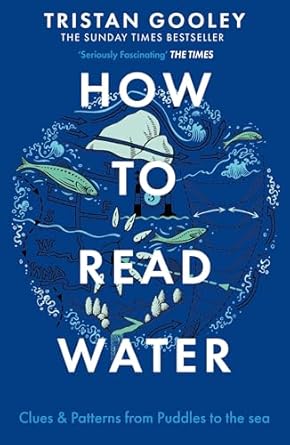
1) How to Read Water by Tristan Gooley

Suggested by: Lucy, Fundraising and Partnerships team 

About the book:ย 

An accessible guide that teaches you to decode the signs of rivers, lakes, puddles, and the Ocean (from ripple patterns to the colour of water). ย 

In Lucyโ€™s words: โ€œI enjoy this book because anyone can read it. Tristan Gooley encourages his readers to get to know your local landscapes better by reading its signs and patterns. He’s an advocate for connecting with nature from a deeper perspective โ€“ in ways our ancestors did.โ€ย 

Cover of "How to Read Water" by Tristan Gooley โ€“ a guide to reading water signs in nature.

Why Lucy chose it:ย 

โ€œIt gives you the power to be more present when in nature.โ€

2) Blue Mind by Wallace J. Nichols

Suggested by: Nadia (Fundraising and Partnerships) and Gemma (Youth Engagement) and…pretty much everyone else. We love this book!ย 

About the book

Blue Mind explores the science behind how being near, in, on, or under water can improve our mood, performance, and overall wellbeing. This Ocean book is a powerful blend of neuroscience, psychology, and personal stories.
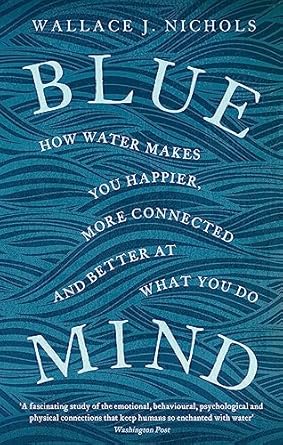
Cover of "Blue Mind" by Wallace J. Nichols โ€“ a book about the mental health benefits of being near water.

Why Nadia chose it:ย 

โ€œI read it when I first joined Ocean Generation. It’s a compelling exploration of our mental health and how it is impacted by our connection to the water and nature.โ€ย 

Why Gemma chose it:ย 

โ€œIt really shows just how important water and the Ocean are to all of us, particularly to our mental health.โ€

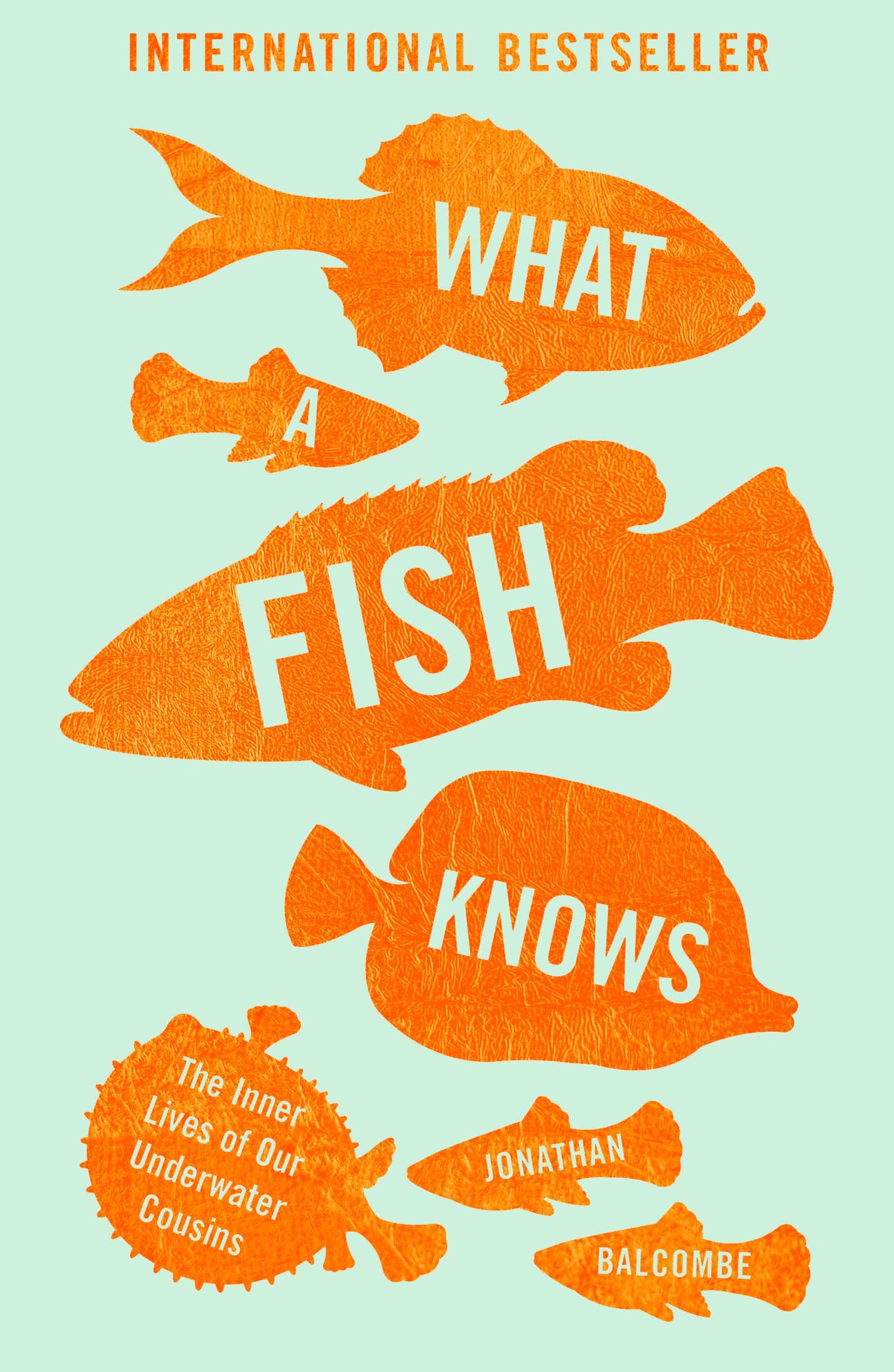
3) What A Fish Knows by Jonathan Balcombe

Suggested by: Will, Science teamย 

About the book

This Ocean book challenges what we think we know about fish. Balcombe uses scientific research to prove that fish are not just swimming creatures โ€“ they feel pain, communicate, play, and have personalities. This is a must-read for anyone who wants to dive deeper into marine life.ย 

Cover of "What A Fish Knows" โ€“ a science book revealing surprising facts about fish behaviour. Shared by Ocean Generation in an article of Ocean books.

Why Will chose it:ย 

โ€œConsistently one of my favourite fishy books!โ€

4) The Sea Around Us by Rachel Carson

Suggested by: Jo Ruxton, founderย 

About the book

Written in the 1950s, this award-winning book is lyrical and scientific. It paints a picture of the Ocean before plastic pollution and climate breakdown. It offers a historical baseline to help us understand how much has changed โ€” and how much we still have to protect. ย 
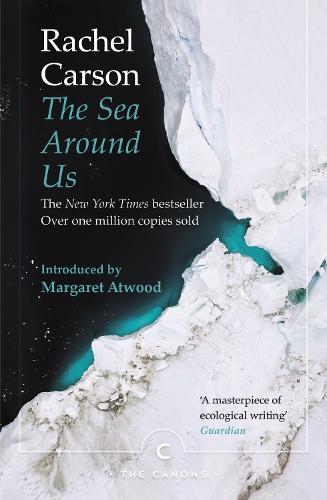
Cover of "The Sea Around Us" โ€“ Rachel Carsonโ€™s classic Ocean science book.

Why Jo chose it:ย 

โ€œThis book is a snapshot of how the Ocean used to be, all in balance, before human destruction.โ€

5) The Brilliant Abyss by Helen Scales

Suggested by: Storm, Comms teamย 

About the book

In this book, Helen Scales dives into the darkest parts of the Ocean to show how life thrives in extremes. And how these little-known deep-sea regions are vital to the health of our entire planet.
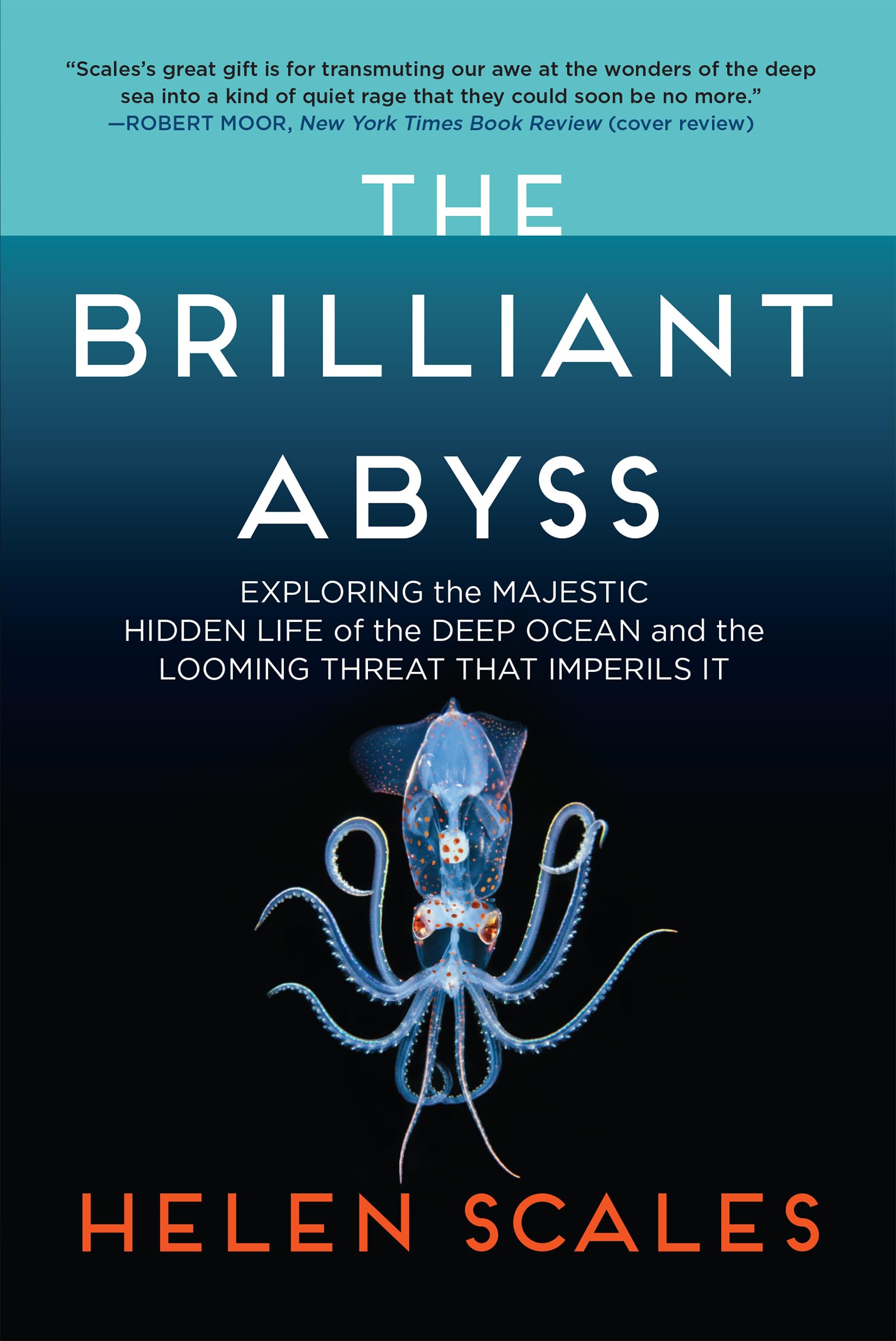
Cover of "The Brilliant Abyss" by Helen Scales โ€“ a book about the deep Ocean's mysteries.

Why Storm chose it:ย 

โ€œI love this book because it lifts the veil on the deep sea, a place most of us will never visit. The deep Ocean holds some of the greatest mysteries of our planet and I find it fascinating! This book balances scientific discovery with Ocean wonder really well, too.โ€  

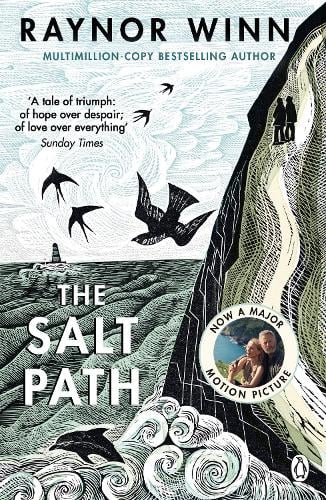
6) The Salt Path by Raynor Winn

Suggested by: Kavina, Youth Engagement teamย 

About the book

A memoir of loss, resilience, and wild places. The Salt Path follows a couple who trek 1013km/ 630 miles along the Ocean-swept South West Coast Path of England. Itโ€™s about their journey and the healing power of nature (particularly the Ocean).ย ย 

Cover of "The Salt Path" โ€“ a coastal memoir about healing and walking the South West Coast.

Why Kavina chose it:ย 

โ€œIt weaves together the incredibly challenging and healing relationship we have with water as a couple take on the South West Coast Path whilst coming to terms with loss.โ€

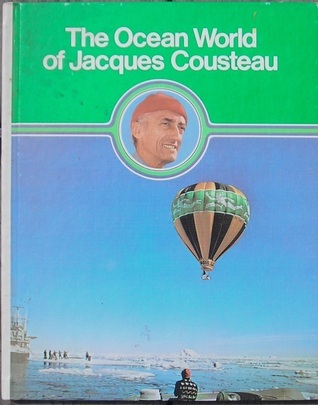
7) White Caps by Jacques Cousteau

Suggested by: Victoria, CEO of Ocean Generationย 

About the book

White Caps is a classic! It was written by legendary explorer, Jacques Cousteau. Readers get a first-hand view of the Oceanโ€™s mystery and magnificence, from his perspective. Itโ€™s part adventure, part love letter to our Ocean, and full of curiosity.ย 

Cover of "White Caps" by Jacques Cousteau โ€“ a legendary Ocean explorerโ€™s memoir.

Why Victoria chose it:ย 

โ€œIt was the first book I was given about the Ocean. I wanted to be him when I grew up. It’s taken me 50 years since then to finally reach the Ocean in my career, so I guess the moral of that story is โ€˜Never Give Up!โ€™โ€

8) What The Wild Sea Can Be by Helen Scales

Suggested by: Will, Science teamย 

About the book

Marine biologist, Helen Scales, takes us on a journey across marine ecosystems: seagrass meadows, deep-sea trenches, and coral reefs. The book shares stories of resilience, adaptation, and hope. Itโ€™s a beautifully written call to action, urging us to protect the wild heart of our blue planet. ย ย 
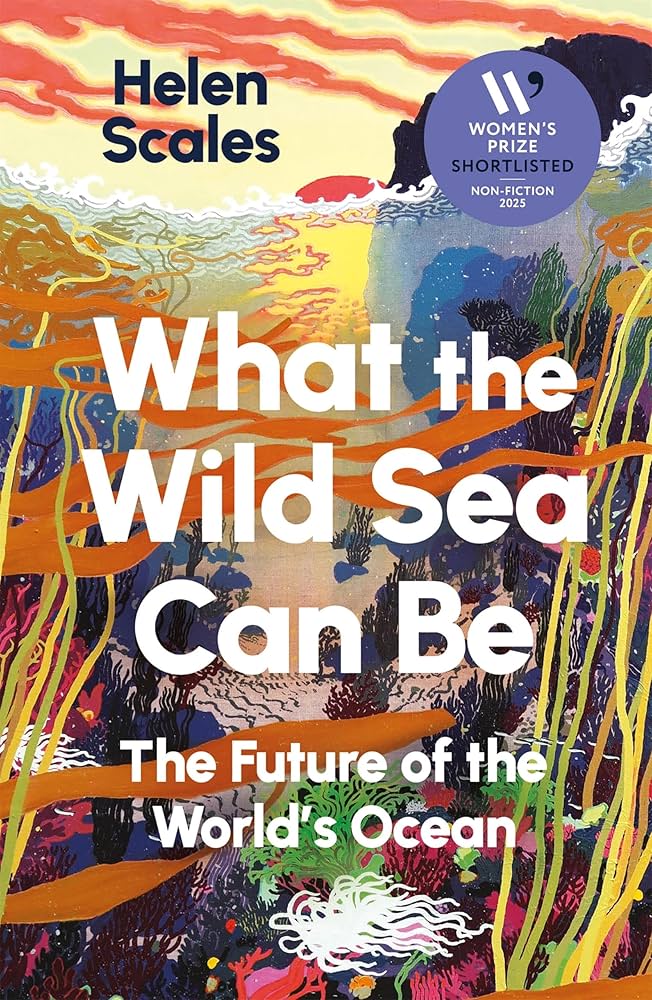
Cover of "What The Wild Sea Can Be" โ€“ Helen Scalesโ€™ book about Ocean resilience.

Why Will chose it:ย 

โ€œIt is an honest representation of the state of our Ocean, with an Ocean Generation flavour of optimism looking forward.โ€

9) The Blue Machine: How the Ocean Works by Helen Czerski

Suggested by: Storm, Comms teamย 

About the book:ย 

Oceanpgrapher and physicist, Helen Czerski, connects the Ocean’s complex systems to climate and biodiversity impacts. This book makes Oceanography accessible and highlights the Ocean’s role in Earth’s climate and ecosystems. 
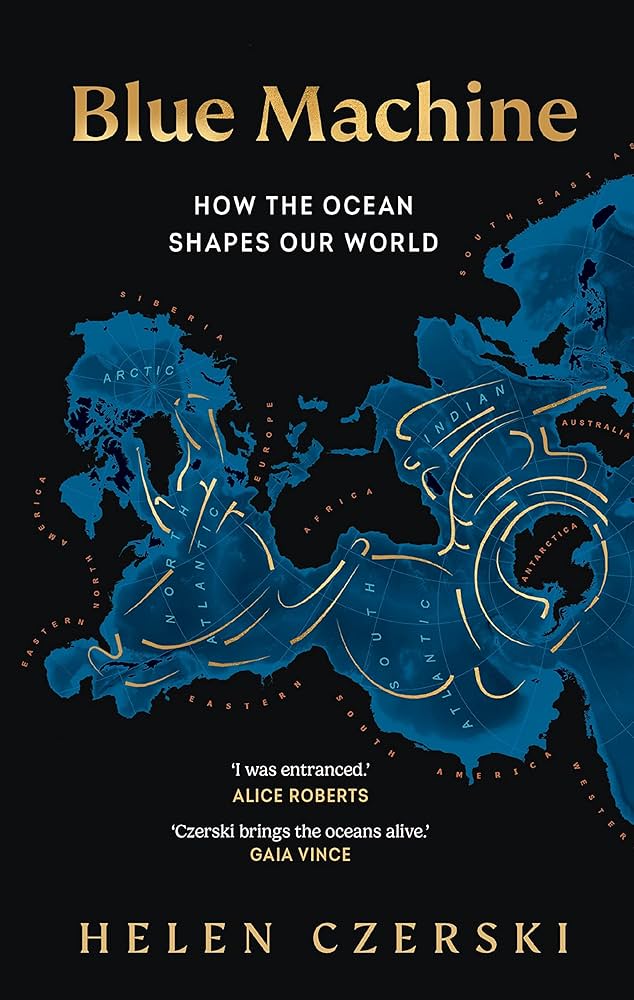
Cover of "The Blue Machine" by Helen Czerski โ€“ explaining how the Ocean system works.

Why Storm chose it:ย 

โ€œThe Ocean is more than a body of water. This book shows us just that: how the Ocean is a powerful, living system that shapes our whole planet. Itโ€™s a beautiful example of science meets rich, textured storytelling.โ€ 

10) Whale Fall by Elizabeth Oโ€™Connor

Suggested by: Agnes, Comms teamย 

About the book

Set in a remote coastal village, in the UK, this novel follows a woman grappling with her past while surrounded by the wild, untamed Ocean. Itโ€™s atmospheric, almost poetic, and perfect for readers who love storytelling where the natural world is deeply felt.
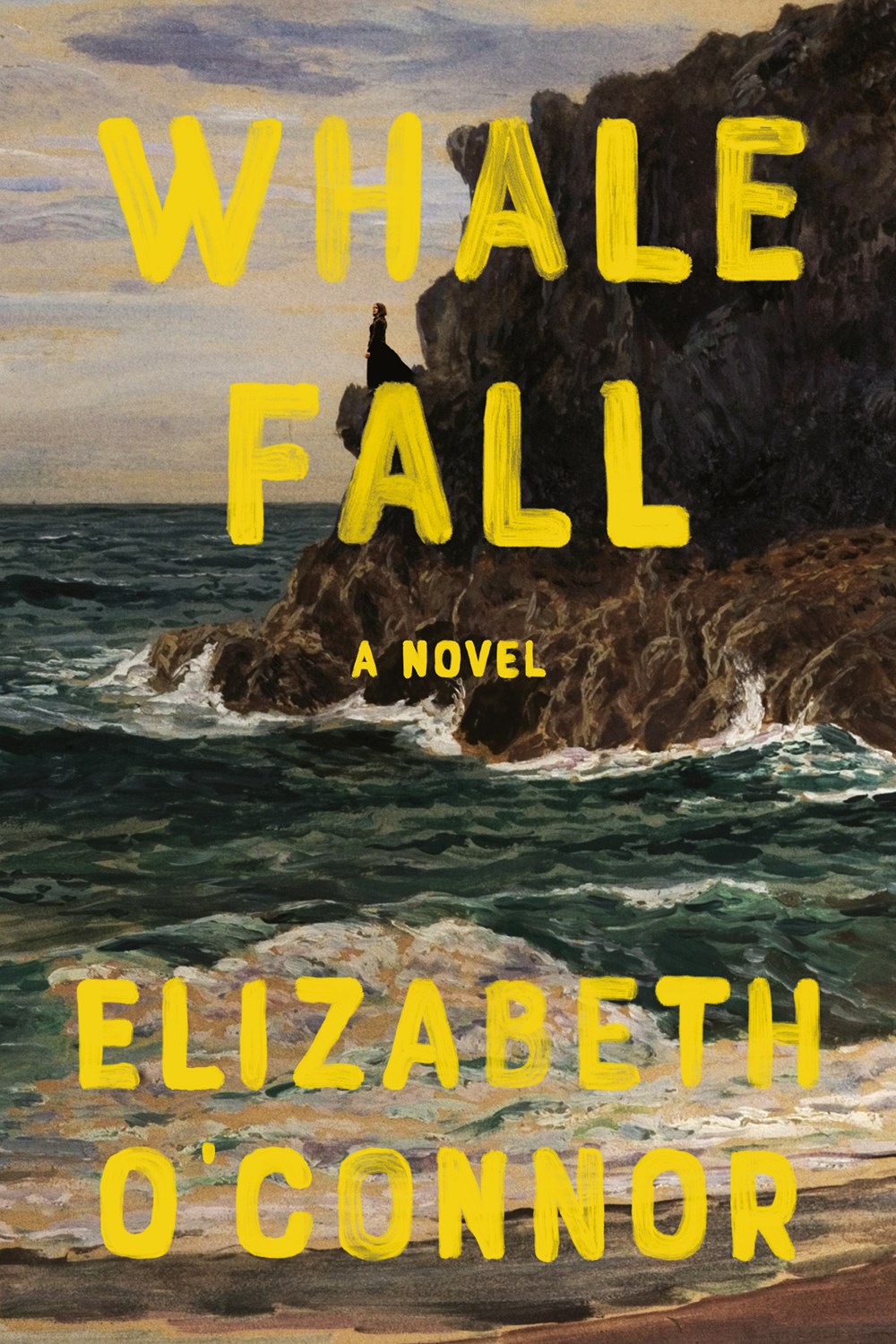
Cover of "Whale Fall" by Elizabeth Oโ€™Connor โ€“ a literary novel set in a coastal Ocean village.

Why Agnes chose it:ย 

โ€œI enjoyed the book because it shows the connection between the Ocean and the inhabitants of a remote island, but without romanticising it. This sort of lifestyle rarely exists today so it was really interesting to learn about it through the story of a young Welsh woman, a whale, and some English researchers.โ€

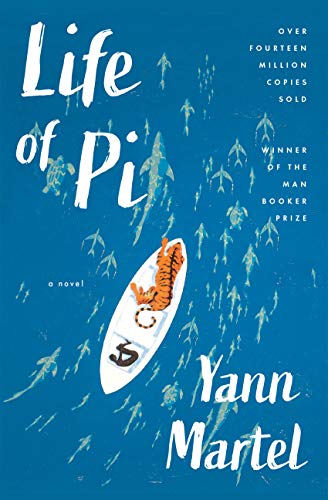
11) Life of Pi by Yann Martel

About the book

While this isnโ€™t a science book, weโ€™ve added it to the list for our fiction lovers. Life of Pi is an award-winning novel about survival at sea. It explores faith and the majesty (and brutality) of the Ocean. ย 

Piโ€™s deep respect for the Ocean and its creatures makes this quite a philosophical read for Ocean lovers.ย 

Cover of "Life of Pi" โ€“ a fiction novel about survival at sea and Ocean reverence.

What are your favourite Ocean books?

When we understand the Ocean, we care for it. And when we care, we take action. 

In their own ways, each of these books reminds us why take action to protect the Ocean.  

If weโ€™ve missed one of your favourites, share it with us on social media. Weโ€™re @OceanGeneration everywhere.  

Why is the sound of coral reefs important? Explained.ย 

Subscribe

Monthly: Impact in your inbox.

OceanGeneration-Join

From Trends to Timeless Choices: Embracing Sustainable Living

From trends to timeless choices: A Wavemaker Story, published by Ocean Generation.

Why weโ€™re buying more โ€” And why it mattersย 

As children, we go through countless items such as clothes, pencil cases, water bottles, phones and more. We grow out of our clothes and our phases, making the pace of change incredibly fast. As we get older, the rise of microtrends and the convenience of online shopping makes buying new items easier than ever.ย ย 

Globally, on average each person wastes 1.7kg of garments post-production. Even though a report in 2021 has shown that eco-efficiency has improved, its output has doubled this century. This cycle of rapid consumption satisfies our short-term desires but carries long-term consequences, impacting the economy, the environment including our Ocean as well as affecting our own sense of satisfaction.ย 

But thereโ€™s good news: small changes in our buying habits can significantly reduce waste and protect marine ecosystems. By embracing mindful consumption, we can care for our planet while still enjoying the items we love.ย 

Memories in the things we ownย 

In my view, the items I own tell a story of different stages in my life. For example, when I was a teenager, I had a large pink thermal water bottle that accompanied me to every training session, competition, whether it was football, basketball or swimming and even trips. It wasnโ€™t just a bottleโ€”but it reflected that time in my life. Like that bottle, I have always tried to use my belongings to their maximum.ย ย 

But in recent years, Iโ€™ve noticed how it has become easier to replace items instead of cherishing what we already have. This throwaway mindset has an environmental cost. Every year, over 8 million tonnes of plastic waste enter our Ocean, much of it linked to single-use items and unsustainable consumption patterns.ย 

When trends inspire change

In 2019, the VSCO girl trend became a cultural momentโ€”characterised by oversized T-shirts, scrunchies and the hydroflask. While some saw this as a fleeting fashion statement, it introduced many young people to eco-friendly habits. The phrase โ€˜Save the Turtlesโ€™ became popular, encouraging the use of metal straws and reusable bottles.ย 

Trends like the VSCO girl trend sometimes inspire change. A Wavemaker Story, posted by Ocean Generation.

Since then, Iโ€™ve continued to carry my reusable bottle everywhereโ€”not just for the environment, but because it’s become a meaningful habit that I know makes a difference. Iโ€™ve also introduced the use of metal straws for my family which we still use to this day.ย ย 

Incentives have also encouraged sustainable behaviour. Many coffee shops now offer discounts for bringing your own cupโ€”a simple yet effective way to promote eco-conscious choices. By switching to reusable cups, it can reduce carbon emissions threefold, demonstrating how a small action can have a big difference. ย 

The power of role modelsย 

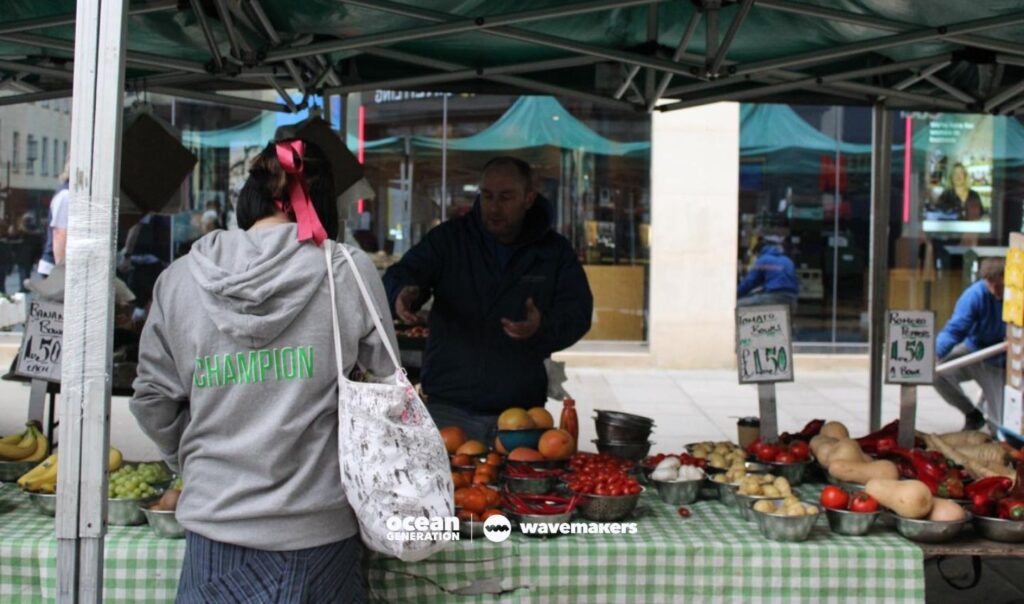
For some, sustainable habits are inspired not by trends but by values. My mum, for example, has always brought her own containers to the local markets in Bangkok, where plastic bags and foam boxes are the norm. Although unconventional, all the shop owners did not have a huge reaction and simply used the box as normal, showing their appreciation through a smile. Her quiet commitment to sustainability and her ability to act outside the norm without making it seem like a burden has shaped my own mindset.

The power of role models in sustainability. Posted by Ocean Generation.
Local markets in Bangkok. Photo credit: Gaia Luengvoraphan

Because of her influence, Iโ€™ve adopted many small habits that I do without even thinking, such as:ย 

  • Collecting parcel packaging to reuse, which has been very useful for selling things on Vintedย 
  • Collecting wrapping paper and ribbons from presents (although I used to tear them up to shreds as a child)ย 
  • Bringing a reusable cup to a coffee shop, even when Iโ€™m using another promotion that doesnโ€™t give an extra discount for itย 
  • Collecting plastic bottles for recycling, especially in places where recycling bins are uncommonย 
  • Using delivery apps that tackle food waste such as Too Good To Go (Iโ€™m on my 9th bag and I will be getting a discount for my 10th! )ย 
  • I try to repair my clothes as much as I can but if Iโ€™m unable to or donโ€™t have the tools, I just ask around and most of the time there is someone who is happy to help. A clothing longevity research from 2013 states that repairing clothes can extend its lifespan by 1.3 years ย 

Sometimes, all it takes is one person leading by example. My mum’s actions have shaped my approach to sustainability and shown me that small steps can create lasting change.ย 

My sustainable journeyย 

I now shop mostly from markets and charity stores, where I enjoy finding unique pre-owned pieces while reducing my environmental footprint. From my experience of moving cities frequently, embracing minimalism helped me focus on owning less but choosing better. My rule of thumb is to only buy a piece if I know that it will become a staple and that Iโ€™ll still like it in a few yearsโ€™ time.ย ย 

At university, I joined the Climate Action Team at the University of Bath, where I helped promote sustainable initiatives amongst students. I also joined the Sustainable Fashion Society, which aligns with my interest in slow fashion and reducing waste.ย 

Sustainable living, one action at a time. Posted by Ocean Generation.
Ferra, Wavemaker, joined the Climate Action Team at her university. Photo credit: Aditi Thayyur

Protecting our Ocean, one choice at a time

Our choices as consumers ripple outwards. The products we buy, how long we keep them, and the waste we create all impact our environmentโ€”especially our Ocean. By embracing mindful habits like reusing items, supporting sustainable brands and making thoughtful purchases, we can reduce plastic pollution and contribute to healthier ecosystems.ย 

Whether inspired by trends, incentives or role models, every step toward sustainability matters.ย ย 

As my mumโ€™s example has taught me, small changes can leave a lasting impactโ€”one refillable bottle, reusable bag or packed lunch at a time.ย 


Thank you for raising your voice for the Ocean, Ferra!

Connect with Ferra via LinkedIn. Learn about how to submit your own Wavemaker Story here.
test

Lorem ipsum dolor sit amet consectetur adipiscing elit conubia nam, imperdiet fermentum sodales faucibus bibendum nascetur tincidunt aptent ligula integer, dignissim euismod luctus curae etiam penatibus massa facilisi. Convallis ante elementum scelerisque in pulvinar bibendum dignissim, penatibus nisi maecenas eleifend orci platea, dictum venenatis aptent morbi nibh feugiat. Morbi cubilia at torquent ad pulvinar mi sagittis ultricies fringilla nulla convallis nisl quisque diam, porttitor rutrum auctor iaculis hendrerit scelerisque etiam cum risus gravida velit netus. Tellus senectus netus nibh sociis, sapien curae parturient tristique risus, non donec blandit. Taciti volutpat at scelerisque tincidunt morbi platea ultrices bibendum in, luctus quis porta nullam habitasse accumsan conubia ante eros, cursus eu rhoncus magna vestibulum erat donec tellus. Sollicitudin ultrices convallis primis tincidunt blandit penatibus odio pellentesque tellus, eros morbi arcu eget rutrum in pulvinar senectus ornare justo, ligula pretium vitae potenti elementum nibh fusce iaculis. Praesent nisi quis sollicitudin neque semper bibendum, maecenas posuere nisl fermentum felis, porttitor hac interdum mus leo. Nunc iaculis massa pretium imperdiet curae suscipit tempus, per placerat natoque porttitor pulvinar faucibus montes condimentum, accumsan fringilla lectus vitae ultricies lobortis.

Lorem ipsum dolor sit amet consectetur adipiscing elit conubia nam, imperdiet fermentum sodales faucibus bibendum nascetur tincidunt aptent ligula integer, dignissim euismod luctus curae etiam penatibus massa facilisi. Convallis ante elementum scelerisque in pulvinar bibendum dignissim, penatibus nisi maecenas eleifend orci platea, dictum venenatis aptent morbi nibh feugiat. Morbi cubilia at torquent ad pulvinar mi sagittis ultricies fringilla nulla convallis nisl quisque diam, porttitor rutrum auctor iaculis hendrerit scelerisque etiam cum risus gravida velit netus. Tellus senectus netus nibh sociis, sapien curae parturient tristique risus, non donec blandit. Taciti volutpat at scelerisque tincidunt morbi platea ultrices bibendum in, luctus quis porta nullam habitasse accumsan conubia ante eros, cursus eu rhoncus magna vestibulum erat donec tellus. Sollicitudin ultrices convallis primis tincidunt blandit penatibus odio pellentesque tellus, eros morbi arcu eget rutrum in pulvinar senectus ornare justo, ligula pretium vitae potenti elementum nibh fusce iaculis. Praesent nisi quis sollicitudin neque semper bibendum, maecenas posuere nisl fermentum felis, porttitor hac interdum mus leo. Nunc iaculis massa pretium imperdiet curae suscipit tempus, per placerat natoque porttitor pulvinar faucibus montes condimentum, accumsan fringilla lectus vitae ultricies lobortis.

Why is the sound of coral reefs important? Explained.ย 

Subscribe

Monthly: Impact in your inbox.

OceanGeneration-Join

Why doing what you can for the environment is enough

Why doing what we can for the environment is enough? A Wavemaker Story.

Whilst the term โ€˜doing what we canโ€™ is ambiguous, it is the argument that people do not know what they โ€˜canโ€™ do to make a difference that is contributing toward a negative impact on our planet. Educating people on what they can do is the way forward.ย 

As Ocean Generation have said before, โ€˜you cannot do all the good the Ocean needs. But the Ocean needs all the good you โ€˜canโ€™ do. This short piece will delve into the responsibilities of us as individuals to make a difference in order to support the beauty of the Oceans ecosystem for it to thrive for years to come. 

Turning eco-anxiety into action

One major challenge facing younger generations today is the overwhelming sense of responsibility they feel for the climate crisis. Unfortunately, the climate change crisis has been developing for decades, and simply being aware of it cannot undo the damage that has already occurred.  

A 2021 study found that 60% of 16โ€“25-year-olds surveyed experienced climate anxiety and feared for the future of the planet due to climate change. It is evident that people want to make a positive change to help reduce the climate crisis, but the question is whether people know what they can do to benefit the environment. 

The Ocean needs all the good we can do. A Wavemaker Story, posted by Ocean Generation.

I have always felt a deep connection to the Ocean and its breathtakingly diverse wildlifeย ย 

I have been fortunate to dive and work along the edge of the Great Barrier Reef while also exploring reefs in Thailand, Indonesia, Malaysia and even the UK. The sheer abundance and variety of marine life in these regions is truly astonishing, seeing these places on a daily basis filled me with immense joy and passion for this underwater ecosystem that sustains our planet.  

The more time I spent in these beautiful environments, the stronger my desire became to give something back. However, I soon hit a wallโ€” I found it incredibly difficult to make a meaningful impact when I was totally overwhelmed with information on what I can do as an individual to reduce my negative impact on the Ocean environment.

This led me to explore the route of focusing on what I can control to reduce my impact rather than focusing on the more complex matters that require more than just my individual effort.  

Now this is not to say that larger matters that require multiple people as well as charities and support from NGOโ€™s is not important. But the focus of this piece is to promote small changes that individuals can adopt which will ultimately lead to a small ripple of change turning into a big wave.  

Turning eco-anxiety into action. A Wavemaker Story by Ocean Generation

The power of individual action: What we can do to make a differenceย 

From this perspective I came to focus on 3 core ideas: 

1.Reduce plastic usage:
Many people have a negative association with the use of plastics. Millennials and Generation Z in particular, possess a greater awareness of the adverse environmental impacts associated with the use of single-use plastics. Educating people further on the impact that single use plastic usage can have is an easy method of encouraging change in individuals in order to reduce waste in our Ocean.ย 

Reducing expenditure on single use plastics and instead reusing shopping bags, purchasing reusable water bottles and unpackaged goods will decrease the amount of rubbish going in landfill and subsequently our Ocean.ย ย 

We hear too many stories of our aquatic wildlife mistaking a piece of plastic as food or a home or food. By purchasing less of these plastics this will reduce the risks faced by the animals in our Ocean.

2.Take part in waste collection:
Secondly, we have a responsibility to care for our environment. By collecting litter on our beaches, we can significantly reduce the amount of waste that ends up in our Ocean. Simply bringing a bag on your walk to collect litter can make a meaningful difference.

Regular beach clean-ups happen worldwide, checking social media or local websites will help you to find how you can get involved. Itโ€™s also believed that people who take part experience more hedonic values increasing positive emotion and thus decreasing climate anxiety.

3.Reduce unnecessary electricity usage:
Reducing our electricity usage is a crucial step in lowering our individual carbon footprint. A study conducted in 2011 focused on improving energy efficiency by adopting smart power management by turning off TV screens and lighting whilst not in use. While it may seem small, these efforts are essential in driving significant change.ย ย 

What we can do to make a difference? Posted by Ocean Generation

Incorporating these small changes into our daily lives can have a profound global impact.ย 

Just like a ripple that grows into a wave, individual actions can inspire widespread change. I want people to understand that every effort is incredibly important in sustaining our planet. 

Simply focusing on what we โ€˜canโ€™ do will make a huge difference. When you act, you not only contribute to a healthier world but also inspire others to do the same.

For more reading on how to reduce and reuse plastic read this article from Ocean Generation.  


Thank you for raising your voice for the Ocean, Rossy!

Connect with Rossy on Instagram. Learn about how to submit your own Wavemaker Story here.
Why is the sound of coral reefs important? Explained.ย 

Subscribe

Monthly: Impact in your inbox.

OceanGeneration-Join

The river that could not breathe: Would you throw trash into your drinking water?ย 

Wavemaker Story: The river that could not breathe. Posted by Ocean Generation

That question might sound unbelievable, who would willingly harm the very thing that keeps them alive? But Iโ€™ve watched an entire community do just that.  

I grew up in Nigeria, in a house that backed onto a river. It was once a flowing, living thing, meant to bring life to our community. But instead, it became a dumping ground for pollution. 

Plastic bags. Broken furniture. Rotting food. People threw their waste into the river, believing the rain would wash it all away. But thatโ€™s a misconception, one that came back to haunt us. 

A river turned landfill 

The logic was simple: when the rain came, the flood would wash it all away. But where did โ€œawayโ€ really mean?  

The truth is waste doesnโ€™t just disappear. When it rains, the water doesnโ€™t remove the pollution, it redistributes it. The river became clogged, struggling to flow. Eventually, the river by my home wasnโ€™t a river anymore. It was a landfill disguised as water.   
And then came the floods. 

When the river fought back 

In Nigeria, rainfall isnโ€™t a gentle drizzle, itโ€™s an unforgiving downpour. I remember a storm so fierce that it tore the roofs off seven houses and stacked them onto an eighth. Water surged through the streets, carrying waste, bacteria, and destruction. Homes were lost. People were displaced. 

And yet, after the floodwaters receded, the cycle continued. The dumping didnโ€™t stop. 

At the time, I didnโ€™t fully understand why this was happening. Now, I do. 

In Nigeria, rainfall isn't gentle downpour. Wavemaker Story posted by Ocean Generation.

The United Nations Environment Programme (UNEP) estimates that 80% of Ocean plastic pollution comes from land-based sources, often through rivers like mine. This means that every bottle, every plastic bag, every discarded item that clogs local waterways doesnโ€™t just cause floods, it travels further, affecting marine life and ecosystems far beyond what we can see.

And the consequences are far-reaching.

  • Marine animals in the Ocean mistake plastic for food, leading to starvation or poisoning.
  • Microplastics enter the food chain, affecting human health.
  • Fisheries and coastal economies suffer, impacting livelihoods worldwide.

The power of small actions 

Itโ€™s easy to forget but every small action counts. 

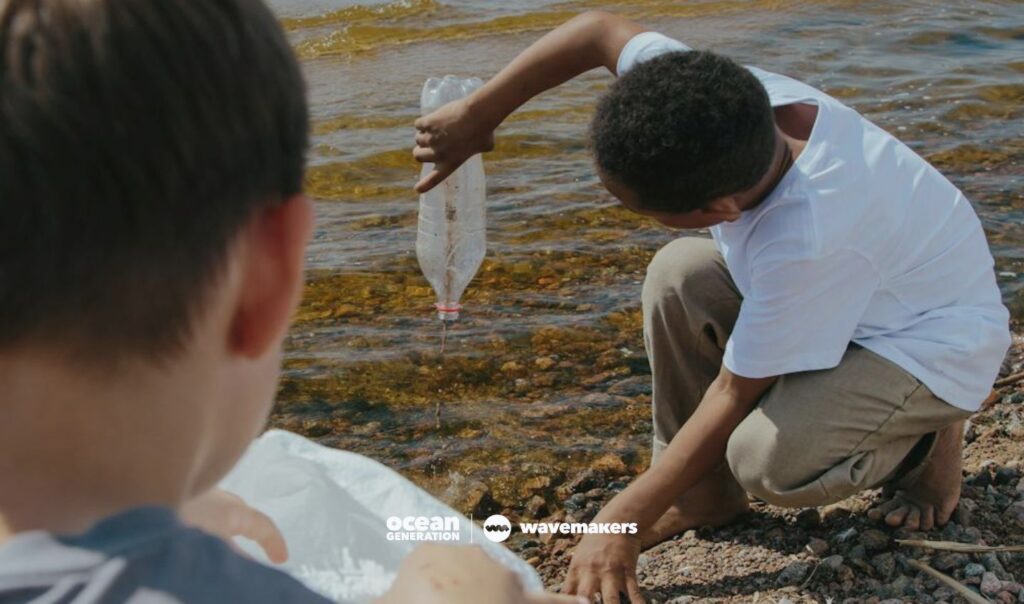
Cleaning one gutter. Removing one plastic bottle. Stopping one person from littering. Thatโ€™s how change begins. The river behind my grandparentsโ€™ house taught me a lesson I will never forget when we take care of our environment, it takes care of us in return. And the best part? It is not too late.  

The question is: What small action will you take today? 

Waterways like the one behind my grandparentsโ€™ house are part of a much larger system. What happens to small rivers affects bigger ones. And ultimately, all rivers lead to the Ocean.  

Studies show that over 75% of marine plastic litter items are accumulated from land-based sources. Land-based sources, including beach littler, contribute about 80% of the plastic debris. 

The effects are devastating. Beyond the impacts already mentioned, like microplastics entering the food chain and marine animals ending up entangled, coastal communities also suffer. Polluted waters affect fishing, local economies and tourism. 

And to think, it all starts with a single piece of plastic, tossed carelessly into a river. 

Sometimes a start is all we need. Wavemaker Story, posted by Ocean Generation.

Taking back the river 

Every Thursday, my grandfather made sure we fought back. 

Armed with gloves, bags, and sheer determination, my cousins and I waded through the muck, pulling out waste that shouldnโ€™t have been there in the first place. It was exhausting, endless work. Some weeks, it felt like our efforts were just a drop in the Ocean; we were making no difference at all. 

But then, something changed. 

People noticed. Some stopped dumping their trash. A few even joined us. It wasnโ€™t a massive movement, but it was proof that small actions matter. 

The more I learned about environmental science, the more I understood that local efforts ripple outward. Cleaning one river may not fix the entire Ocean, but itโ€™s a start. And sometimes, a start is all we need. 

How you can take action. Posted by Ocean Generation.

Hereโ€™s how you can take action 

People often assume that environmental action requires large-scale efforts. But if a few young people cleaning up a river could make a difference, imagine what we could do if we all worked together. 

  • Reduce your plastic use: Avoid single-use plastics like bags, straws, and bottles. Switch to reusable alternatives.
  • Proper waste disposal: If you donโ€™t see a bin nearby, hold onto your trash until you do. Small decisions prevent large-scale pollution.ย 
  • Community cleanups: Organise or join a local cleanup effort. Even one event can remove hundreds of pounds of waste from the environment.ย 
  • Educate and inspire: Share knowledge about the impact of pollution. Encourage friends, family, and neighbours to be mindful of their waste.ย 
  • Support policies that protect waterways: Advocate for stronger waste management and plastic reduction policies in your community.ย 

Thank you for raising your voice for the Ocean, Rodiah!

Learn about how to submit your own Wavemaker Story here.

Why is the sound of coral reefs important? Explained.ย 

Subscribe

Monthly: Impact in your inbox.

OceanGeneration-Join

The Filmmaking Industryโ€™s Path to Sustainability

The filmmaking industry and sustainability. Posted by Ocean Generation.

Whether we realise it or not, watching movies shapes our views. Movies may transport us to other worlds, but creating them has left an environmental footprint on this one.

In recent years the film industry has been undergoing a green transformation. In this article, Iโ€™ll dive into that with examples from popular films to share along the way. 

How did movies shape my view of the environment growing up?ย 

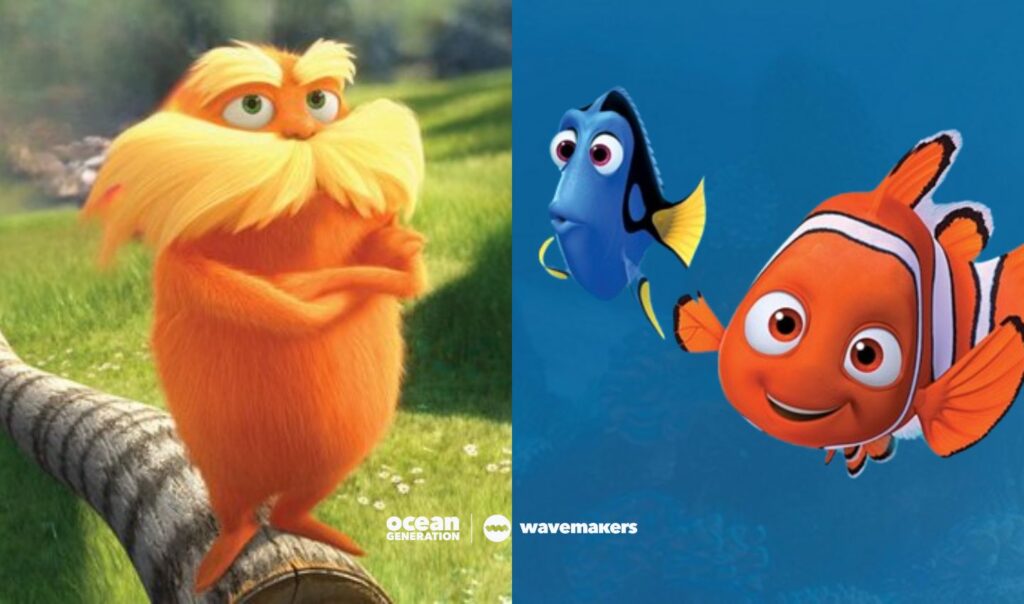
I vividly remember watching The Lorax and growing passionate about the cotton candied trees. The songs were catchy and meaningful, my personal favourite being โ€˜Let it Growโ€™ where the entire city celebrates Ted planting a seed, marking a new beginning. In the song, there was one line which really stuck with me.  

โ€˜Itโ€™s just one tiny seed, but itโ€™s all we really needโ€™.   

At the time, I didnโ€™t realise it, but that message planted a seed in meโ€”an understanding that small actions can spark big changes. 

Another unforgettable movie I watched growing up was Finding Nemo. It was one of the reasons I first fell in love with the Ocean and marine life. I learnt about different species of animals, the food chain and the importance of marine conservation. 

Wavemaker Story about the he film industry's path to sustainability, posted by Ocean Generation.

Now, seeing the film industry actively start to implement sustainable practices is incredibly inspiring. Stories we tell on screen can extend beyond entertainmentโ€”they can raise awareness on important issues and inspire real-world action.  

Sustainable filmmaking in actionย 

The green set of โ€˜Avatar: The Way of the Waterโ€™  

Having the opportunity to watch the film in 4D, I was captivated by the visuals, especially the underwater scenes, but what impressed me even more was finding out how the filmโ€™s environmental message was reflected in its production. 

Most of the film was shot in Manhattan Beach Studios, where the sound stages were powered entirely with solar energy. The production also implemented water conservation measures, saving over 108 million litres (29 million gallons) of water, and was the first Hollywood blockbuster to serve only plant-based food on set.

By considering every aspect of their impact, big and small, the team ensured that sustainability wasnโ€™t just a theme in the movie but a practice behind the scenes.

Sustainable filmmaking in action. A Wavemaker Story, posted by Ocean Generation.

The most sustainable blockbuster in Sony Pictures: The Amazing Spiderman 2 

Spider-Man is my favourite heroes because of his charming humour and how he saves the day by avoiding unnecessary destruction (unlike, say, the Hulk). But what makes The Amazing Spider-Man 2 truly stand out isnโ€™t just the action-packed web-slinging. 

This movie production embraced the circular economy where the set design team took in over 49 tonnes of recovered or donated raw materials and the wardrobe department implemented a textile recycling program.  

For special effects, the snow was biodegradable, and the atmospheric smoke was water based instead of the traditional oil-based smoke.

The eco manager has emphasised the importance of sustainability in film production because โ€œthe entertainment industry is one of the most influential industries in our societyโ€

With that being said, I believe that her message is loud and clear: With great power comes great eco-responsibility.

The film industry's journey to sustainability: A Wavemaker Story

How you can take actionย 

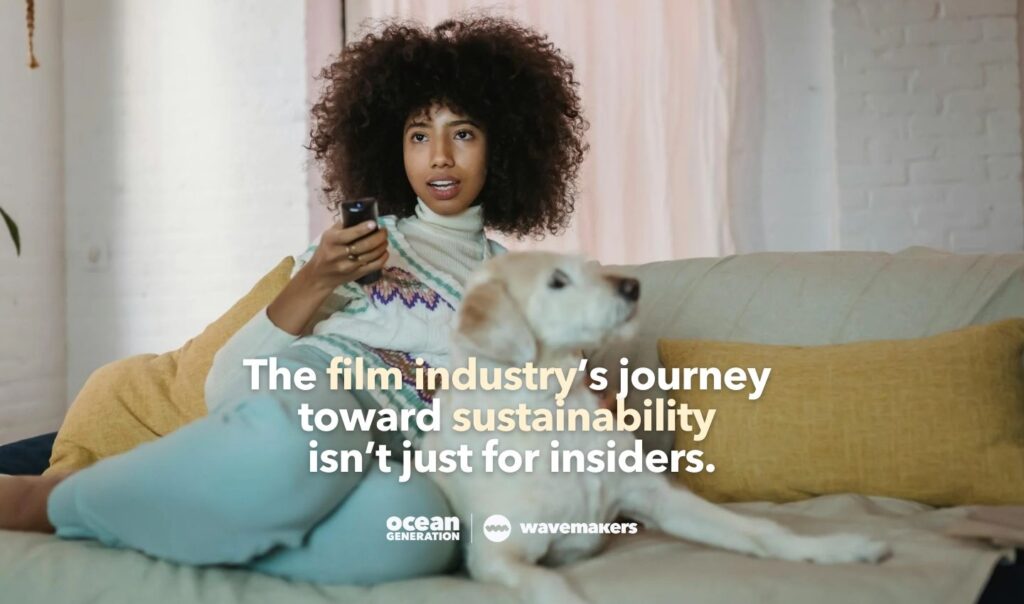
The film industryโ€™s journey toward sustainability isnโ€™t just for insiders, and it still has a long way to go. But as an audience member, you have more influence than you think. Hereโ€™s how you can make a difference: 

  • Stream wisely: Streaming platforms consume massive amounts of energy. Avoid leaving content running when you’re not actively watching.ย 
  • Support green films: Choose to watch movies and series that prioritise eco-friendly production. Some of my favourites include Seaspiracy (2021) and My Octopus Teacher (2020), which highlight environmental issues.ย 
  • Get involved creatively: If youโ€™re an aspiring filmmaker, adopt sustainable practices in your projects. Use local resources, minimise travel, and reduce single-use materials.ย 
  • Look for green filmmaking standards: Certifications like Albert (a leading UK-based initiative) help productions track and lower their carbon footprint. Learning about these can inspire sustainable choices in your own creative work.

Filmmakers are not just storytellers; they are influential voices who can shape public perception and inspire action.  

By embracing sustainable practices behind the scenes and embedding environmental messages within their narratives, they have the power to drive real change. 

As audience members, we also have a role to play. By supporting eco-conscious films and making mindful choices about how we consume media, we can contribute to a more sustainable future. After all, the most compelling story is the one where we all play a part in creating a better world. 


Thank you for raising your voice for the Ocean, Ferra!

Connect with Ferra via LinkedIn. Learn about how to submit your own Wavemaker Story here.

Why is the sound of coral reefs important? Explained.ย 

Subscribe

Monthly: Impact in your inbox.

OceanGeneration-Join

Ethical adventures โ€“ Why choose eco-tourism?

Ethical Adventures: Why Choose Eco-Tourism? Posted by Ocean Generation

Thereโ€™s a whole world out there waiting to be explored. Itโ€™s only natural that more people, like myself, want to go and experience everything our planet has to offer.

Whilst some may see tourists flocking to an area as a positive for the local economy, the impact on local wildlife is often forgotten.  

When I travelled across Australia and New Zealand, I was excited to immerse myself in the wonderful array of wildlife they have to offer. I wanted to be able to experience these places without harming the environment or exploiting wildlife. Choosing ethical tours was important to me, supporting conservation, local communities, and the delicate ecosystems that make these places special. 

In this article, Iโ€™ll be sharing insights about how eco-tourism can have a positive impact on marine life and offering helpful hints to help you make informed choices on your next trip of a lifetime.

What is eco-tourism?

Eco-tourism is all about traveling in a way that respects and benefits both the natural environment and local communities. Itโ€™s about making meaningful connections with the world around us while ensuring we leave a positive impact.

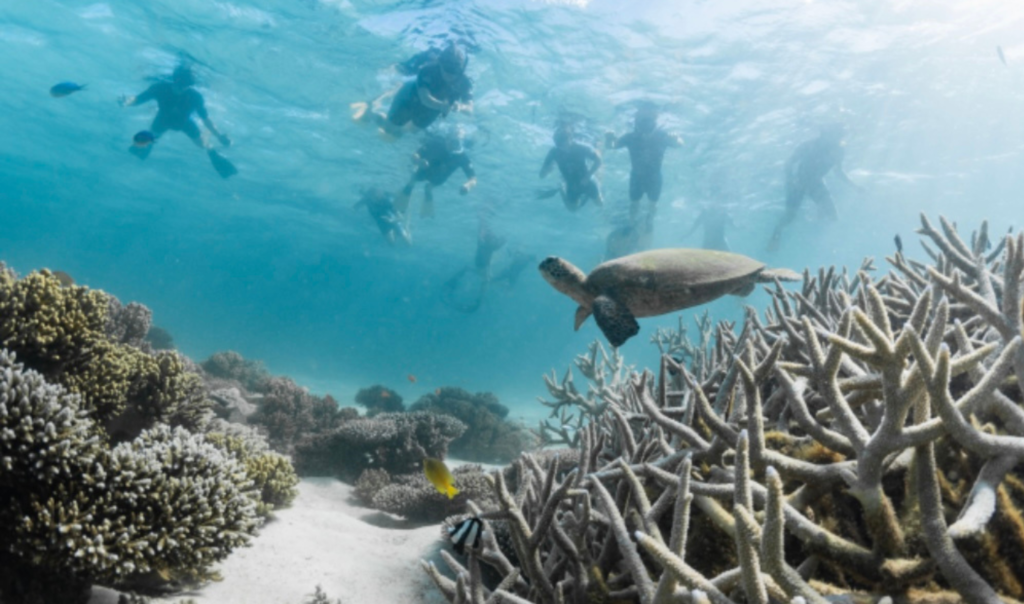
Whether itโ€™s visiting conservation areas, participating in wildlife tours like snorkeling trips, or choosing eco-friendly accommodation, eco-tourism opens up opportunities to experience the planet in a sustainable and enriching way. 

Eco-tourism is also a fantastic way to spread awareness of conservation issues. People tend to care more about issues they witness first hand. Educating travelers while theyโ€™re immersed in the environment helps break down barriers and inspires them to actively support conservation efforts. 

What is eco-tourism? Wavemaker Story, posted by Ocean Generation.
Photographer: Will Nolan

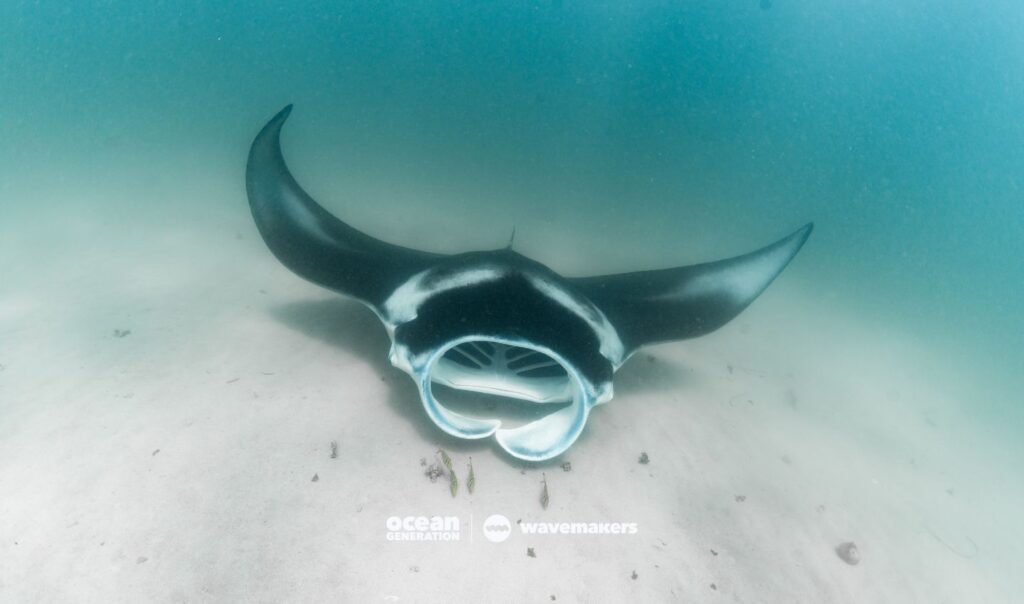
One of my most memorable experiences was going snorkelling with manta rays in Ningaloo reef – an experience I will never forget. Swimming with such majestic creatures in their natural habitat was a true privilege, made even more meaningful by being guided by locals who prioritised the safety and well-being of all the wildlife we were lucky enough to encounter.  

The locals ensured we followed respectful practices, like maintaining a safe distance from the mantas and avoiding swimming directly over them to prevent undue stress.

The local guides shared their knowledge of wildlife and conservation efforts in the area, something that has inspired my own journey into the world of marine conservation. Since my travels, I have volunteered with various charities, from boat surveys collecting vital data to running educational talks helping spread awareness and inspire others.

Why does choosing ethical tourism matter?

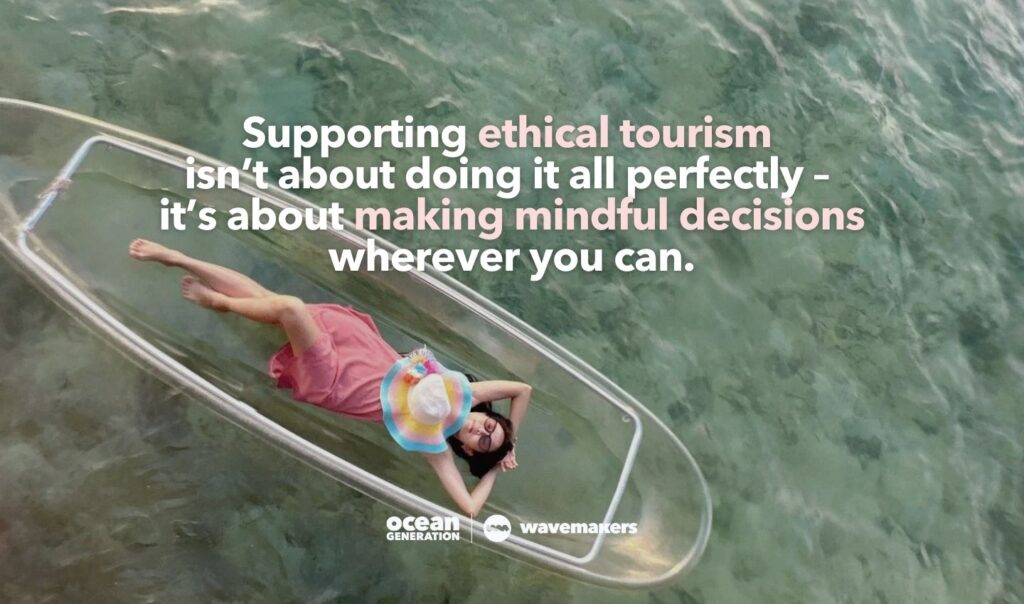
Supporting ethical tourism isnโ€™t about doing things perfectly – itโ€™s about making mindful decisions. Many local tour operators work tirelessly to preserve wildlife and protect the planet. By choosing them you can contribute to conservation and sustainable livelihoods all while having unforgettable experiences in nature. 

Why supporting ethical tourism matters. Posted by Ocean Generation.

What I learned about mindful travel: Tips to travel with purpose

Thereโ€™s no one-size fits all approach to eco-tourism, but here are a few tips that have helped me: 

1.Researching local operators โ€“ Looking for local tour operators was a great place to start when I was searching for eco-friendly trips. Choosing local companies gave me the confidence that they truly valued and cared about the local community and environment often with a key emphasis on conservation. Checking reviews, certifications, and the companyโ€™s values was a helpful way to decide their practices align my own.  

2. Trust your instincts – Nobody is perfect, despite your best efforts. I experienced this when I visited a wildlife park, that wasnโ€™t what I expected. If something feels off, whether itโ€™s overcrowding, unethical practices, or harm to wildlife, donโ€™t feel embarrassed to walk away. You wonโ€™t always get it right, and thatโ€™s okay. The key is to learn from experience. 

3. Support local business โ€“ I found choosing locally owned accommodation, restaurants, and tour operators a great choice. You get the best locally sourced food and the best travel tips. They are the people who care deeply about the area, and this allows you to support them directly. If you’re lucky, they often offer deals on local excursions, which is invaluable when traveling on a budget, like I was.

Every small step we take adds up. A Wavemaker Story, posted by Ocean Generation.

Leaving a positive footprint

Every small step we take to travel more sustainably adds up. While social media is a great tool for discovering inspiration and opportunity, itโ€™s equally important to do your own research. Learning about wildlife and ecosystems through documentaries, books, or reputable online sources helps you understand what feels right and what to watch out for. 

By making informed choices, we can ensure that the places we visit remain beautiful and thriving for generations to come. 

Leaving a positive footprint while travelling. Posted by Ocean Generation.
Photographer: Will Nolan

Thank you for raising your voice for the Ocean, Amelia!

Connect with Amelia on LinkedIn, follow her on Instagram or learn about how toย submit your own Wavemaker Story here.
Cover image by Will Nolan.

Why is the sound of coral reefs important? Explained.ย 

Subscribe

Monthly: Impact in your inbox.

OceanGeneration-Join

We asked artists to showcase imperfect environmentalism

Peaceful man in the forest, surrounded by trees. Image via Ocean Generation in an article about imperfect environmentalism.

What does imperfect environmentalism look like to you?

At Ocean Generation, we recognise that the world doesnโ€™t need a handful of perfect environmentalists. Our Ocean โ€“ our planet โ€“ needs millions of imperfect people, taking daily action, learning as they go and always striving to do better.  

Hands holding up the planet carefully shared by Ocean Generation: an Ocean conservation charity in the UK.

We set a creative challenge for university students: Create something that embodies imperfect environmentalism.

It was April 2024 and our Youth Engagement Lead, Gemma, was in Bournemouth, UK to launch an exciting project with the AUB Futures Team at the Arts University Bournemouth.  

First, she delivered a bespoke Wavemaker workshop to the students. 

โ€œBuilding an Ocean Intelligent Creative Business or Practiceโ€ was specifically aimed at the array of emerging artists studying at AUB. Focusing on case studies of visual and performing artists who have responded to the threats facing our Ocean through creativity, we then set the students a challenge. 

The brief: Create artwork that highlights what โ€œimperfect environmentalismโ€ means to you. 

We had submissions from a wide variety of artists. Painters, photographers and others working with textiles and illustration.  

A panel of judges from Ocean Generation and AUB decided on an overall winner โ€“ the artist who responded to the brief most effectively. But we were so impressed with the submissions that we wanted to offer some of them other opportunities as well.  

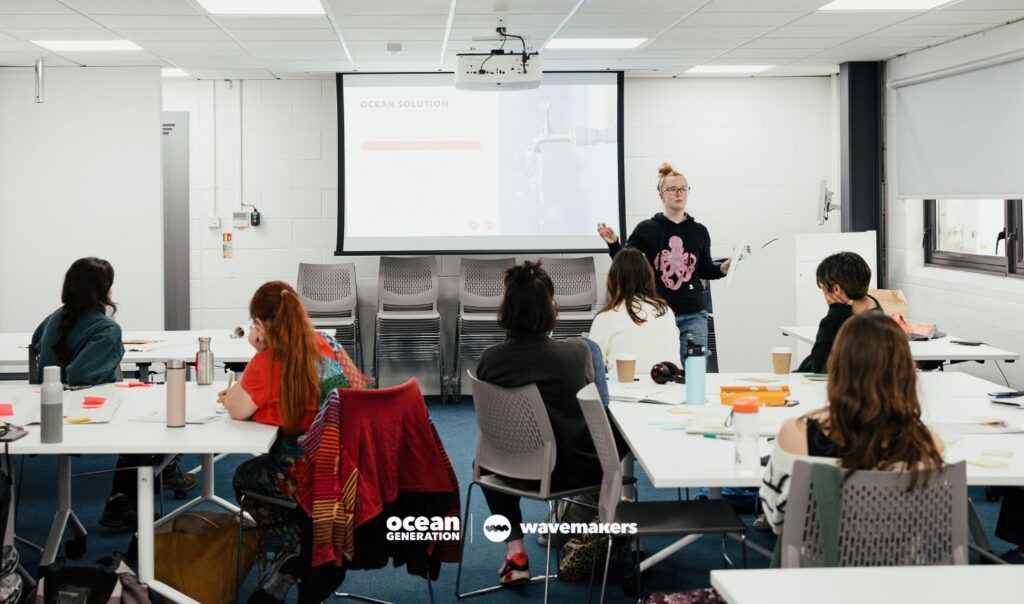
Woman presenting an Ocean education workshop to classroom of students. Image by Ocean Generation. Image by Olivia Herring
Wavemaker workshop being delivered. Image by Olivia Herring

Hereโ€™s the winning art, and the artists behind it:

From fashion to an entire illustrated storybook and thought-provoking posters, hereโ€™s a look at some of the submissions we received. 

1. A costume made entirely of discarded plastic. 

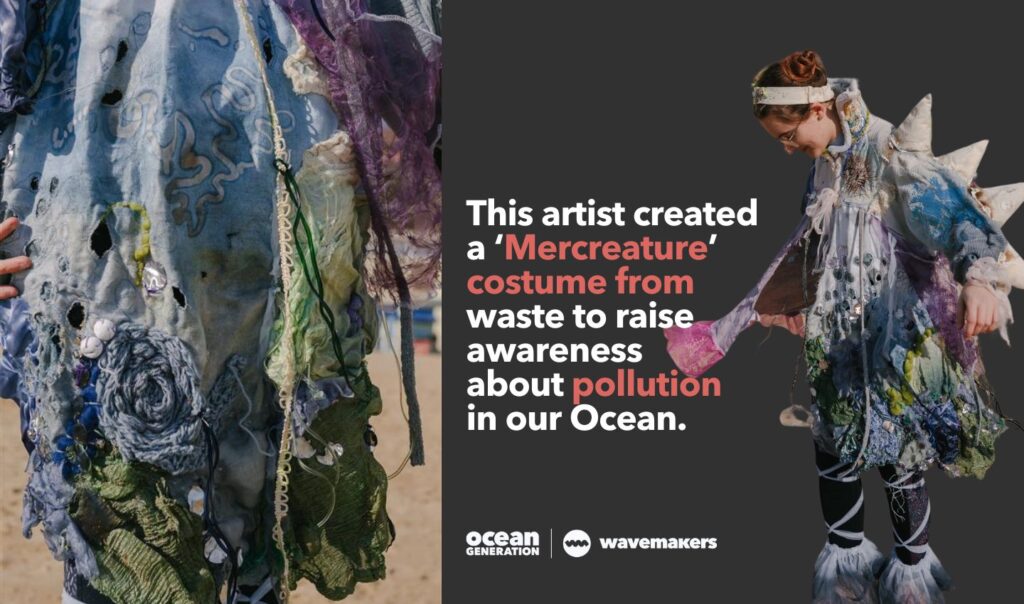
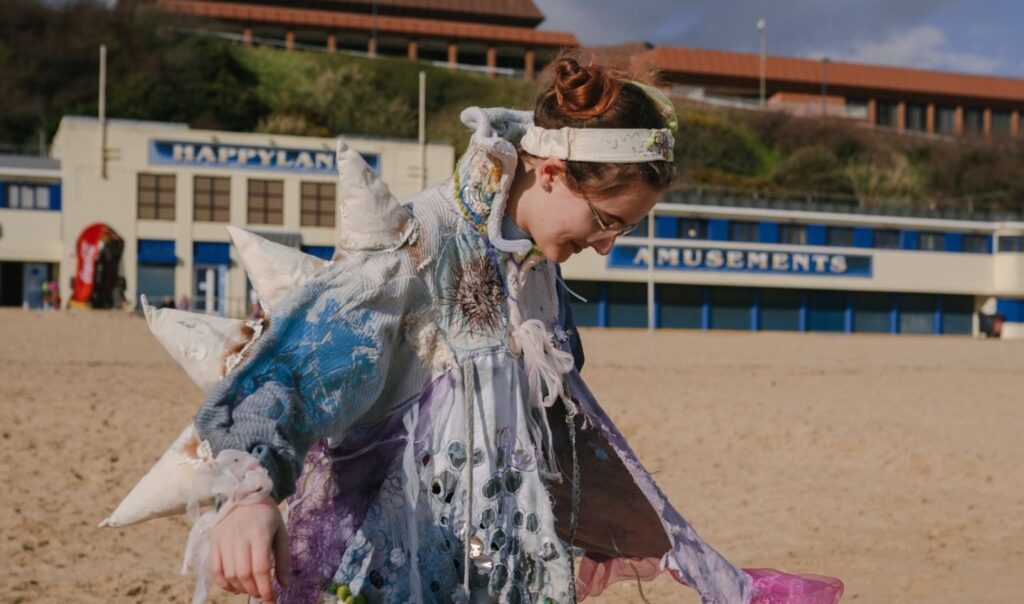
Our overall winner was Beverley Baker, who created a beautiful costume to raise awareness about pollution in our Ocean. We had a little chat with Beverley about her work and how she was inspired to create this design of the AUB Green Futures Live Brief.   

Fashion student created 
a mermaid creature 
costume from 
trash to raise 
awareness 
about pollution 
in our Ocean. Shared by Ocean Generation charity.

Beverley, who are you and what are you studying?ย 

Beverley: Iโ€™m a multi-disciplined artist creating between Somerset and Arts University Bournemouth where Iโ€™ve just completed my second year studying Performance Design and Film Costume.ย ย 

I am exploring costume and set design for film and theatre and I also keep up my fine art practice alongside my studies, enjoying primarily self-portraiture as well as traditional painting and drawing in a mixed media style. Iโ€™m passionate about details and colour, utilising colour theory to tell stories.ย 

Do you remember the first time you saw the Ocean?ย 

Beverly: I donโ€™t remember the first time, probably because in Somerset, UK where I grew up I was relatively close to the coast so lucky enough to see the Ocean often.ย ย 

My family and I would visit places like Lyme Regis, Kilve, Weston-Super-Mare, Burnham-on-Sea and Brean, all beautiful beaches of the South West of England.

As a child the Ocean felt magical, it seemed like it went on forever and made me feel I was the only one in the world just for a second โ€“ the coast felt made-up, like I’d just walked into a book.

Mermaid creature 
costume from 
pollution to raise 
awareness 
about pollution 
in our Ocean. Shared by Ocean Generation charity.

What inspired you to create this piece for the AUB Green Futures Brief with Ocean Generation?ย 

Beverly: Alongside 7 team members for the second project of second year, our group was briefed by SISATA, an outdoor theatre company, to create a โ€˜Mercreatureโ€™ costume each for aโ€ฏtouring production of Peter Pan twisted to fit the folklore of Portland, Dorset.โ€ฏย ย 

Inspired by oil spills and the presence of micro-plastics in our seas, my costume loosely takes the shape of the โ€˜Veastaโ€™, a half fish half seahorse creature that is said to lurk off the coasts of Dorset.

A visit to Portland influenced the textures and techniques I used, incorporating 15 techniques: free machine embroidery, hand embroidery, tie-dye, dip-dye, applique, reverse applique, trapunto, form-fixing, finger knitting, puff binder, foiling, batik, heat gun, eyeleting and hand painting.ย 

What is the number one thing you wish everyone knew about the Ocean?ย 

Beverly: Less than 5% of the world’s Ocean is protected which needs drastic change right now; many human-made problems have impacted the Ocean including coral reef bleaching, oil spills and plastic pollution. Iย think many people are unaware of the impact of the fishing industry; discarded fishing gear makes up a significant proportion of Ocean pollution.ย 

Find out more about Beverleyโ€™s work here.ย ย 

Watch: How we bring our Ocean education workshops to students, during design challenges like theseย 

YouTube player

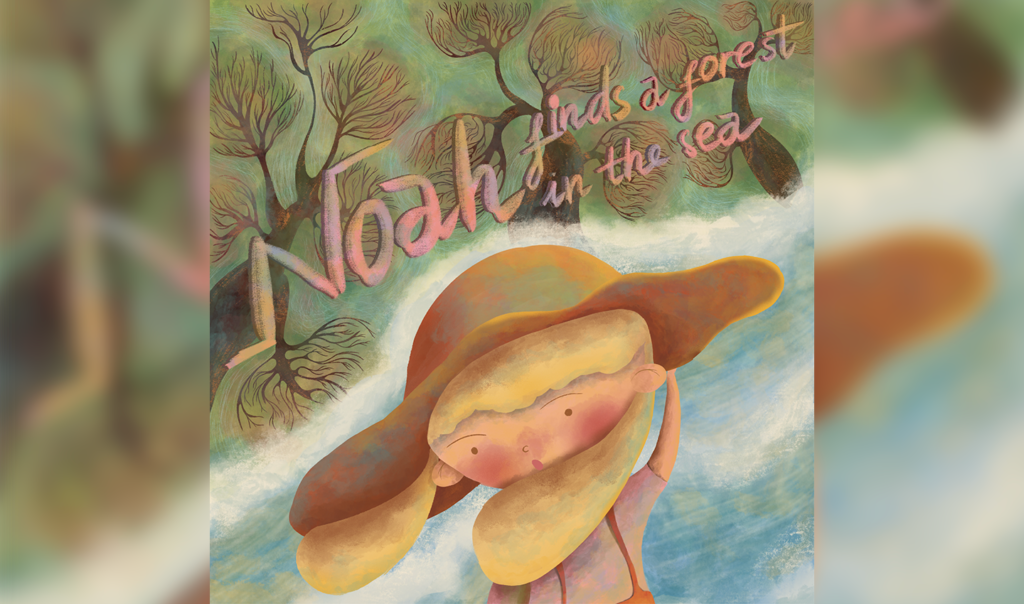
2. An illustrated storybook teaching children about the importance of the Ocean. 

One of the submissions to the AUB Green Futures Brief really felt like it had a story to tell, and so we asked Dala to work with us on generating a Wavemaker Story about his submission.  

Empowered by our Wavemaker Workshop, Dala illustrated a storybook about how our actions can change the world. Dalaโ€™s story, written for children, explores the moment when someone comes along and says โ€˜Hey, this isnโ€™t right. We need to do better.โ€™ 

Read Dalaโ€™s Wavemaker Story and download the book here.   

Noah finds a forest in the sea is an illustrated storybook for children about plastic pollution. Shared as A Wavemaker Story by Ocean Generation

3. Two impactful posters, now incorporated into our workshops, will go on to educate hundreds of young people 

Finally, we had a very interesting submission that we decided to do something a little different with.  

Lucy Coble (they/them) is a non-binary designer and illustrator based in Bournemouth, UK. They are passionate about creating work that leaves a lasting impression, and love to work with like-minded creatives. Lucyโ€™s interests lie inโ€ฏLGBTQIA+ advocacy, advertisement work and illustration aimed at a young adult audience. They have worked with clients such as Scribbler UK, the Plum Agency and many other independent projects. 

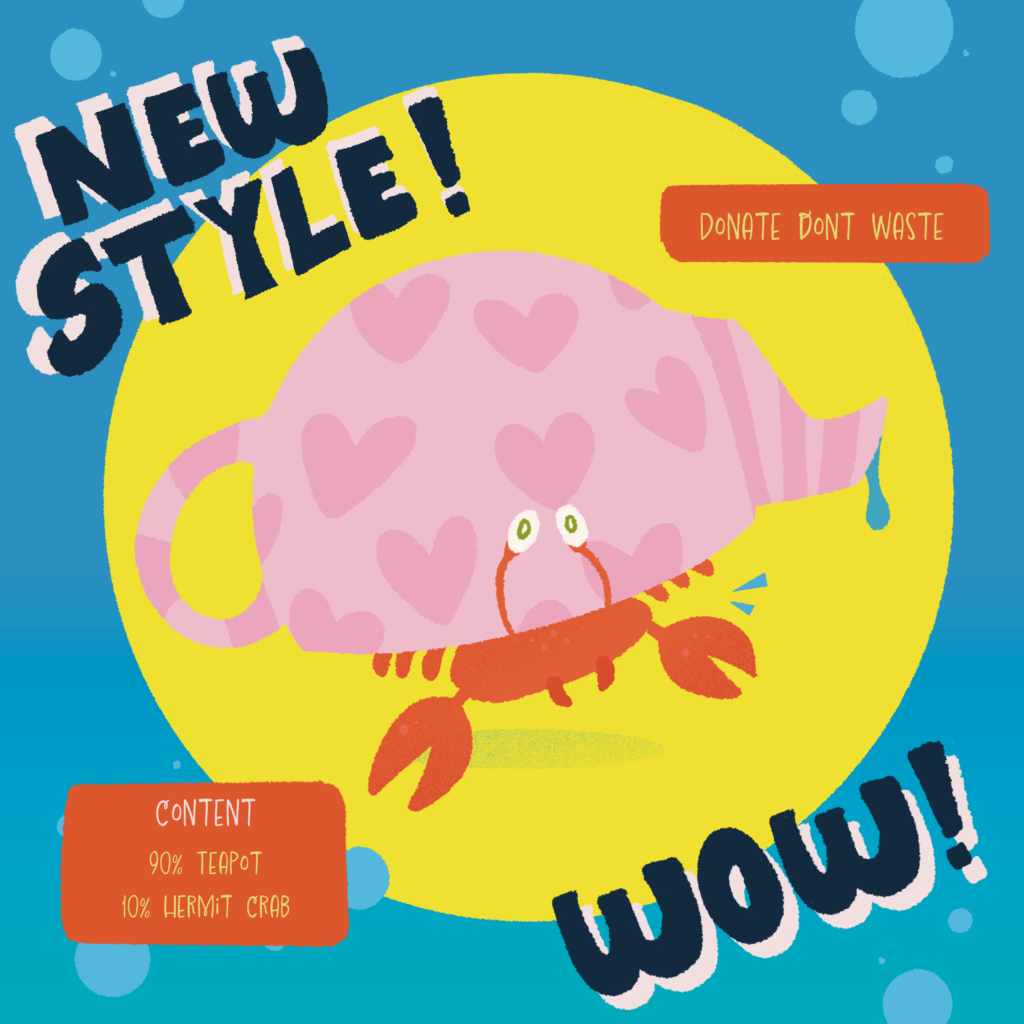
For this brief, Lucy submitted two illustrations:  a pair of hermit crabs using mismatched items as shells – one a soda can and the other a teapot.  

These designs were centred around the idea of taking the initiative in recycling and reusing items we might consider waste – actively taking responsibility for recycling, reusing and re-loving old items is essential for helping the Ocean heal. 

Through their work, Lucy asks us to consider charity shops and donation bins. The idea for these images came to them during their own house move last year, where they spent an entire day back and forth on the bus with bags and bags of clothes to donate that simply didnโ€™t fit or that theyโ€™d never worn. 

So much of our waste is items that could have been recycled or perfectly good stuff someone else might have loved!”  

Lucyโ€™s work will now be used as a case study of how to create a great visual campaign in our visual arts and โ€œHow to be an Ocean Storytellerโ€ Wavemaker Workshops.  

Find out more about Lucy and their work here.   

Book Ocean Generation to deliver a project like this ย 

We offer live briefs in various creative pursuits across the UK, from illustration to theatre and filmmaking to game design.

If you are interested in bringing an experience like this one to your college, university or youth group, please get in touch here.

Why is the sound of coral reefs important? Explained.ย 

Subscribe

Monthly: Impact in your inbox.

OceanGeneration-Join

The way of the water

The way of the water: Wavemaker Story, posted by Ocean Generation.

The first time I felt the water wrap around me, I knew I had found something special.

It was a crisp morning when I approached the Ocean, the sun barely peeking over the horizon, casting a golden hue over everything it touched. I had always loved waterโ€”its ebb and flow, the way it seemed to have a life of its ownโ€”but that day was different. 

As I slid into the Ocean, the cool water enveloped my body, instantly washing away the heaviness that clung to me like a second skin. The weight of my disability, the constant ache in my joints, and the ever-present strain of daily life seemed to dissolve, leaving only the sensation of being cradled by the gentle waves. 

Phoebe, a Wavemaker shared her inspiring story about how the Ocean became her sanctuary. Posted by Ocean Generation.

Despite my inability to swim, I felt a profound sense of autonomy in the water.  

I could maneuver myself, floating with the gentle currents that brushed against me, guiding me wherever they wished. I had often felt confined to my wheelchair, limited in movement and opportunities, but here, I was liberated. I was in control of my own body in a way I hadnโ€™t experienced on land. Each push and pull of the water felt like a dance, a rhythm that allowed me to glide, sway, and spin in a graceful ballet, even if I wasnโ€™t swimming in the traditional sense. 

Floating on my back, I gazed up at the sky, the clouds shifting and morphing into fantastical shapes. It felt as if the Ocean was whispering to me, reminding me of a freedom I often forgot existed. Each ripple that passed over me was like a hand brushing away my worries, the pressure in my body gradually releasing with every gentle movement of the water. 

It reminded me of the hydrotherapy sessions Iโ€™d attended, where the water was meant to heal, yet those moments had always been tinged with the stinging scent of chlorine and the sounds of shouting voices. Here, those distractions were removed. The Ocean was pure and unadulterated, a sanctuary where I could truly appreciate water in the way it had been intendedโ€”soft, soothing, and enveloping. There was no urgency, no pressure to perform or meet expectations; just the serene rhythm of nature and my own breathing. 

Wavemaker Story by Phoebe about how the Ocean made her feel free. Posted by Ocean Generation.

I took a deep breath and sank beneath the surface, feeling the coolness surround me like a protective cloak.  

In the quiet depths, I found a serenity I craved. It was just me and the water, the world above muted and distant. I closed my eyes and listened to the soft thrumming of my heartbeat, the rhythm syncing with the gentle lapping of waves against my skin. In those moments, I was no longer defined by my disability; I was simply a part of the Ocean, a drop in an endless sea. 

With each visit, the Ocean became my sanctuary 

I would return time and again, ready to release the pressures of the outside world. The water was more than a refuge; it was a partner in my journey, granting me a sense of autonomy that I struggled to find on land. I could move freely, guided by the water’s embrace, discovering the possibilities that lay within me. It taught me that sometimes, to find solace, I simply needed to surrender to the flow. 

How the Ocean became Phoebe's sanctuary: A Wavemaker Story, shared by Ocean Generation.

Thank you for raising your voice for the Ocean, Phoebe!

Connect with Phoebe on LinkedIn, or learn about how to submit your own Wavemaker Story here.

Why is the sound of coral reefs important? Explained.ย 

Subscribe

Monthly: Impact in your inbox.

OceanGeneration-Join

Coconut for the Sea: What an Ancient Tradition Teaches Us About Ocean Conservationย 

What an ancient tradition teaches us about Ocean conservation. A Wavemaker Story, posted by Ocean Generation.

โ€œAs we offer the sea our prayers and coconuts, we remember our bond with her, for she gives and we take, a balance we strive to keep.โ€

– Poonam Keni from Koli Community, Ratnagiri, India 

My journey with Ocean conservation has been a winding road, and perhaps its most meaningful turn happened not with science or activism, but through tradition. Specifically, by witnessing the age-old festival of Narali Purnima with the Koli fishing community in Mumbai.

This festival, dedicated to Varuna, the god of the Ocean, is a humble, and powerful expression of respect for the sea, its drama, and its bounty. 

Growing up, my approach to Ocean conservation was straightforward: remove waste, reduce damage, respect marine life.  

But stepping into the celebrations of Narali Purnima added layers of understanding I hadnโ€™t anticipated. Narali Purnima, observed each year as the monsoon season draws to a close, signals the beginning of the Koliโ€™s fishing season.  

The festivalโ€™s name is derived from โ€œnaral,โ€ or coconut, which the community offers to the Ocean in gratitude and as a request for safety. To the people, this is more than a custom, it is a reminder of their dependence on the sea and an annual reaffirmation of their respect for it. 

Narali Purnima festival in India is dedicated to the god of the Ocean. A Wavemaker Story, posted by Ocean Generation.

The scene is one of breathtaking beauty. Women wear vibrant saris and adorn boats with garlands of marigolds and coconuts. There is an aarti (prayer) ceremony for Lord Varuna, asking for his blessings over the waters. The coconut here represents both the past season and the promise of a new one, while it gently floats off the seaโ€™s surface. 

The atmosphere hums with reverence as the community gathers, each person carrying an awareness that they are not just taking from the sea, but exchanging, returning, and showing their respect for the Oceanโ€™s endless generosity. 

But itโ€™s not just about the visual splendour, Narali Purnima is timed to respect the seaโ€™s cycles.   

For centuries, the Koli people have refrained from fishing during the monsoons, allowing the fish populations to replenish undisturbed. Itโ€™s an act of sustainability practiced long before modern conservation came into existence.

As I observed this, it struck me: the festival is more than ritual. Itโ€™s a reflection of the communityโ€™s ancient understanding of balance, a balance that the rest of the world is only beginning to fully recognise.

At its core, Narali Purnima is about living harmoniously with the Ocean. Watching this tradition, I felt that conservation is not just about imposing limits and strategies but also about adopting an attitude of mutual respect. The Kolis donโ€™t see themselves as separate from the Ocean; rather, they see their lives intertwined into its cycles.  

Narali Purnima festival is about living harmoniously with the Ocean. A Wavemaker Story, posted by Ocean Generation.

It was in this moment that I truly understood conservation is a matter of listening, of respecting the wisdom that traditions carry and remembering that communities like the Koli have honoured these principles for generations. 

As I continue my work in Ocean conservation, I now carry the spirit of Narali Purnima with me.  

Itโ€™s a lesson in humility and respect. Itโ€™s a reminder that protecting the Ocean is a shared responsibility, and one that must honour both the science and the cultural wisdom surrounding us. The Ocean, after all, sustains not only marine life but also the human lives bound to it through tradition, sustenance, and spirit. And for that, the least we can do is offer a humble coconut in gratitude. 

As I reflect on the lessons of Narali Purnima, I am reminded that conservation is more than an act; itโ€™s a lifelong bond of respect and gratitude. The Koli communityโ€™s traditions teach us that the Oceanโ€™s well-being is intertwined with our own, urging us to protect its abundance for future generations. 

โ€œThe sea is our motherโ€”she gives us life, and we must care for her as she cares for us.โ€ – Koli Proverb 

In every season and every offering, the Kolis remind us that true conservation is about honouring this relationship, ensuring that the Ocean can sustain and nurture us all. 


Thank you for raising your voice for the Ocean, Ajay!

Connect with Ajay on Instagram, LinkedIn, or learn about how to submit your own Wavemaker Story here.

Why is the sound of coral reefs important? Explained.ย 

Subscribe

Monthly: Impact in your inbox.

OceanGeneration-Join

Can traditions become Ocean-friendly? The story of Thailandโ€™s Loy Krathong Festival

Ocean Conscious Future with Traditions, Wavemaker Story posted by Ocean Generation

Our Ocean, rivers, lakes, canals and other bodies of water have provided us with so much for centuries.

They sustain ecosystems, support livelihoods and offer vital resources. Itโ€™s no wonder that they are appreciated and celebrated worldwide.  

In Thailand, a full moon night in November, during the Loy Krathong Festival, is dedicated to worshiping the goddess of water. 

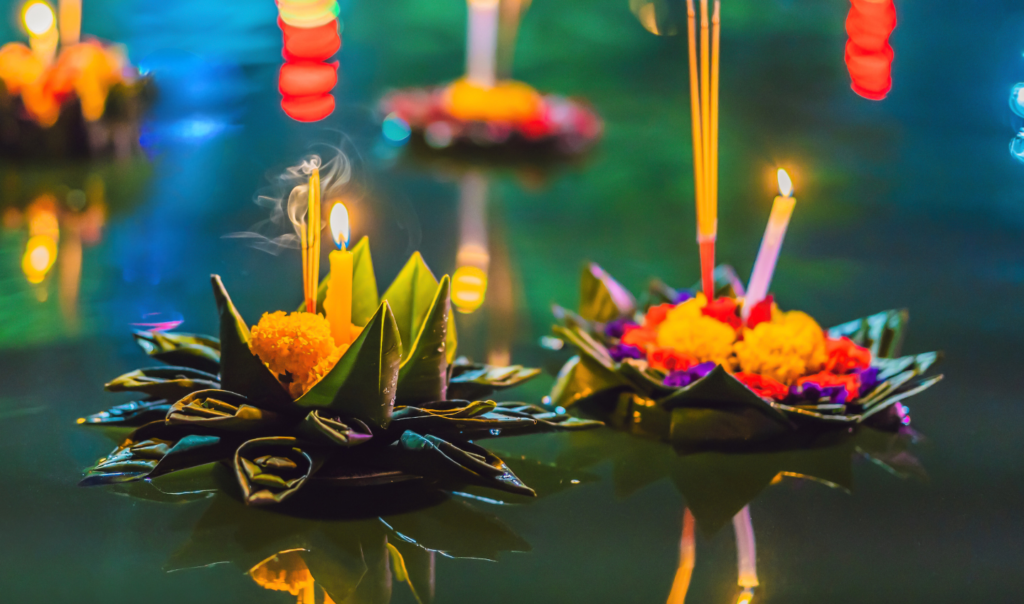
The Loy Krathong Festival involves floating a โ€˜krathongโ€™ (a small floating lantern). This is an act of paying gratitude to the goddess that personifies all bodies of water and apologising to her for polluting the waterways.

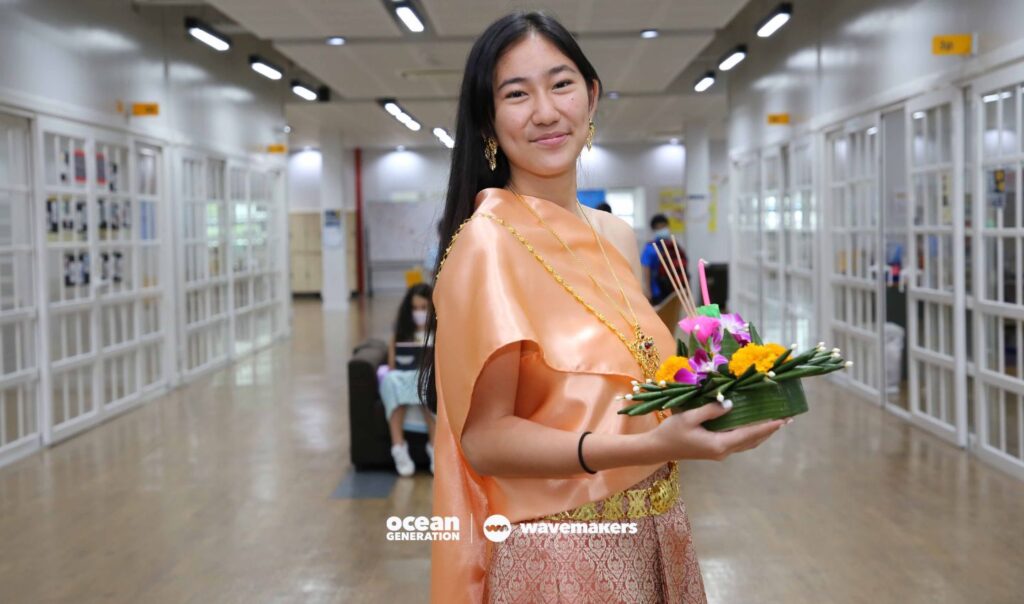
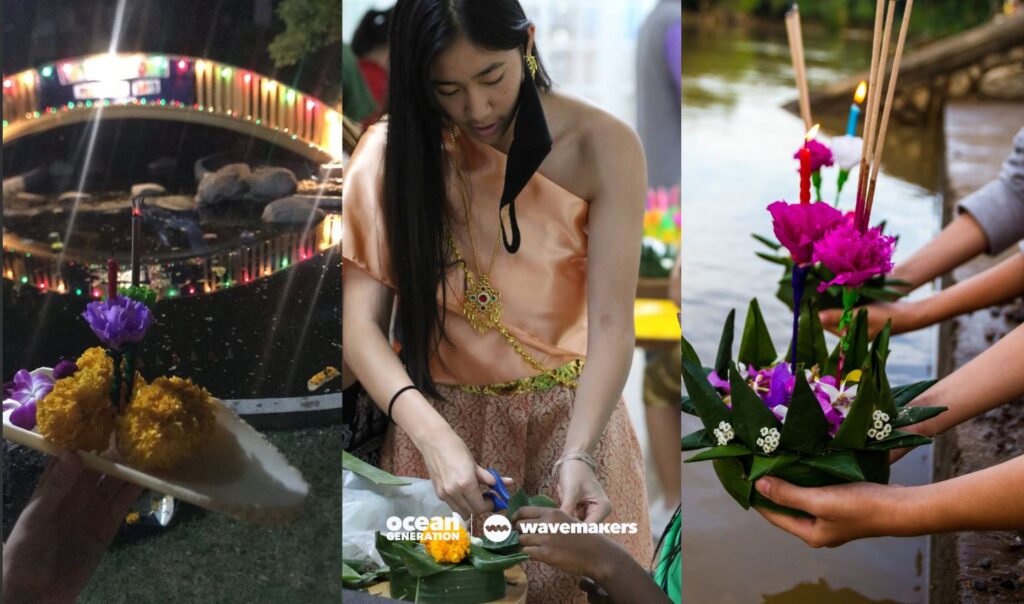
Each year, I celebrate Loy Krathong dressed in my traditional Thai dress, making the krathongs and sometimes teaching younger students to do the same. Iโ€™ve floated them in a river, swimming pool, pond and even virtually with my school class through a website.  

Thaliand's Loy Krathong Festival involves floating a krathong
Photo credit: Natthanicha Luengvoraphan

This tradition has been ongoing since the 14th century and with a growing population, the Bangkok Metropolitan Administration (BMA) reported collecting 640,000 krathongs in 2023. With this vast amount, the environmental damage to the waterways cannot be overlooked. 

The materials krathongs are made of make a huge difference

Traditionally krathongs are made using a banana tree trunk, banana leaves, flowers, and candles. In the past, plastic and styrofoam were popular materials but since have reduced in numbers due to awareness of their adverse environmental impacts.ย ย 

Materials that do not decompose have numerous impacts on wildlife, human health and economic costs. Aquatic animals can mistakenly ingest these materials or become entangled in them, leading to injuries. Microplastics and chemical leaching can lead to health issues from making their way up to the food chain.

The economic repercussions include the expense of clean-up efforts and the impact on tourism. Polluted waterways could reduce the appeal of natural sites, potentially deterring and disappointing tourists.ย 

Recently, bread krathongs appeared with the idea that they would leave no waste, as fish would consume them. However, when excessive amounts of bread krathongs were floated, they ended up rotting as not all the bread was consumed. Since then, there has been an increase in the range of feasible creative alternatives.ย 

Traditional krathongs are made using a banana tree trunk, banana leaves, flowers, and candles. Wavemaker Story, posted by Ocean Generation
Photo credit: Natthanicha Luengvoraphan, Wavemaker

How is the tradition of the Loy Krathong Festival becoming more sustainable? 

BMA reports that 96.75% of the krathongs were made with environmentally friendly materials in 2023, a 1.05% increase from the previous year. In recent years, there has been a huge experimentation of materials people have brought to celebrate with. Some examples include ice, coconut shell, and cassava which take a short time to disintegrate. 

Technology and innovation can be used to our advantage in allowing people to participate in events like Loy Krathong Festival without physically floating krathongs to reduce environmental impact.

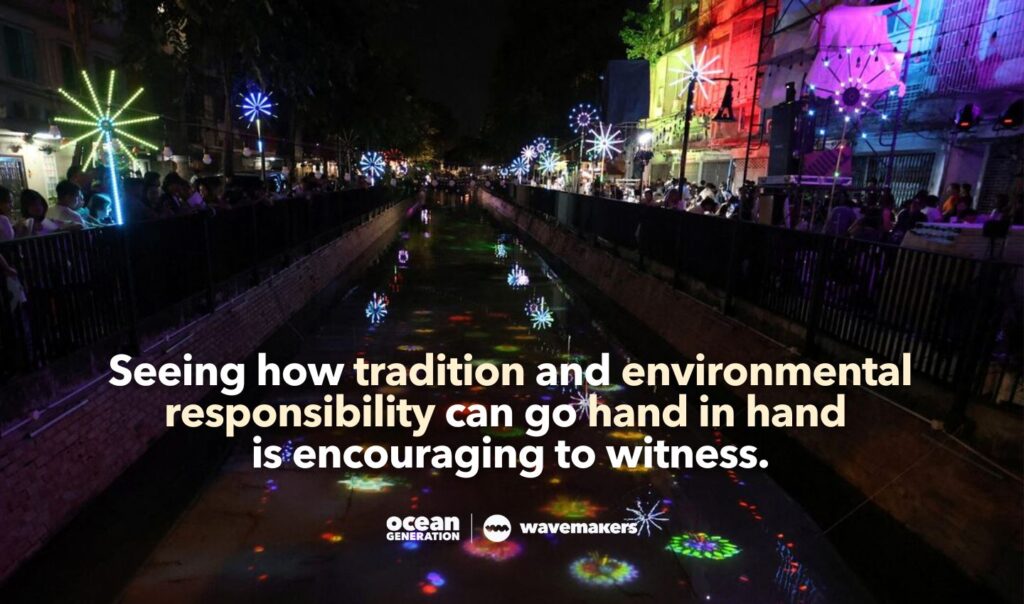
In 2023, a technology known as projection mapping allowed visitors to doodle their krathong design on paper. These were then projected onto a river in Bangkok where 3,000 digital krathongs were floated. There are also multiple online platforms where people can write out their wishes and watch an animated krathong float across the screen within the comfort of their own homes.

For those who still want to continue the tradition in its original form, people are embracing the practice of floating one krathong per family or group of friends to reduce the number of krathongs that need to be collected. 

Experimentation and exchange of ideas can create a ripple effect, leading to more impactful solutions that enable more people to help continue tradition responsibly while enjoying it in new and innovative ways. 

Seeing how tradition and environmental responsibility can go hand in hand is encouraging to witness. Itโ€™s inspiring to see how people are becoming aware of their environmental impact, striving for greater sustainability through creativity and innovation.

This is just one example of a tradition that demonstrates how cultural practices can adapt to modern environmental challenges. As we continue to innovate and integrate sustainability into various customs, it is clear that we hold power and capability in honoring both heritage and the health of our Ocean. 

Loy Krathong Festival is a tradition that demonstrates how cultural practices can adapt to modern environmental challenges
Photo credit: Natthanicha Luengvoraphan

Thank you for raising your voice for the Ocean, Ferra!

Connect with Ferra via LinkedIn. Learn about how to submit your own Wavemaker Story here.

Why is the sound of coral reefs important? Explained.ย 

Subscribe

Monthly: Impact in your inbox.

OceanGeneration-Join

We asked 45 students to design clothing inspired by the Ocean

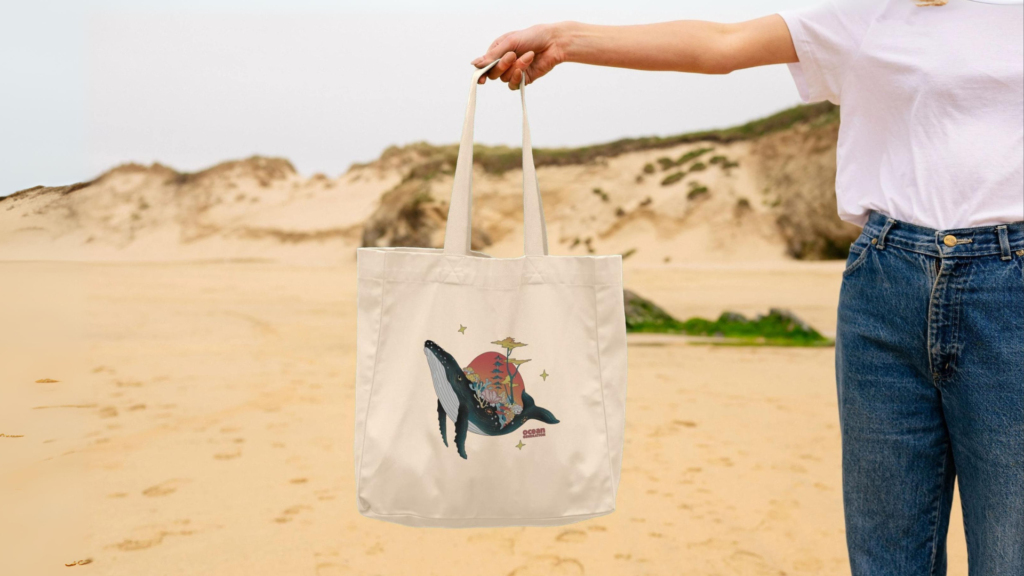
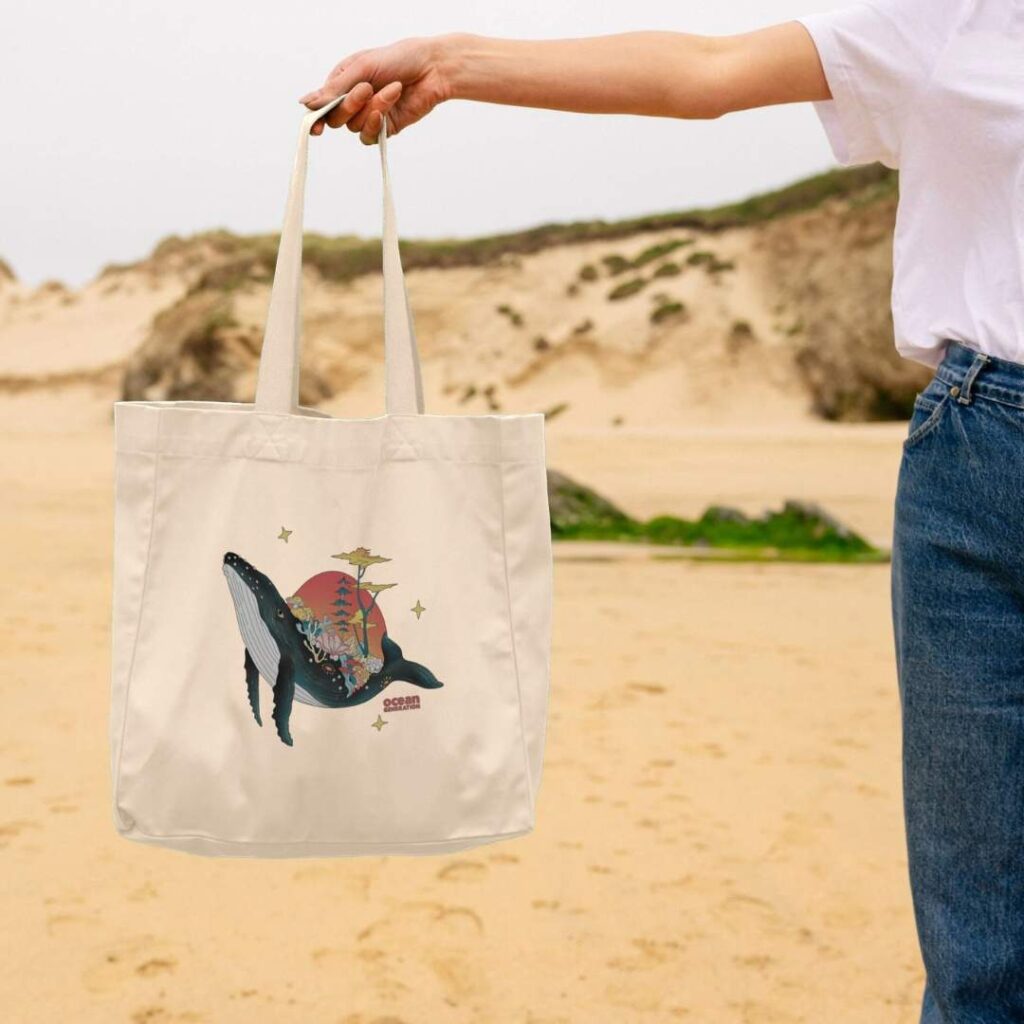
Woman on the beach, with an Ocean-friendly beach bag sold by Ocean Generation. Whale beach bag. Ocean Generation's clothing products are all sustainable, using organic cotton and 100% renewable energy to manufacture the items.

Behind our Ocean-themed design challenge for illustration students 

It was March 2024. Our Youth Engagement Lead, Gemma, was standing in front of 45 MA Illustration students at the University of Edinburgh โ€“ and she had a challenge for them. 

The challenge? Soak up the Ocean science sheโ€™d be delivering in our Wavemaker workshop and then, bring it to life through new designs for our sustainable apparel store, inspired by the Ocean.  

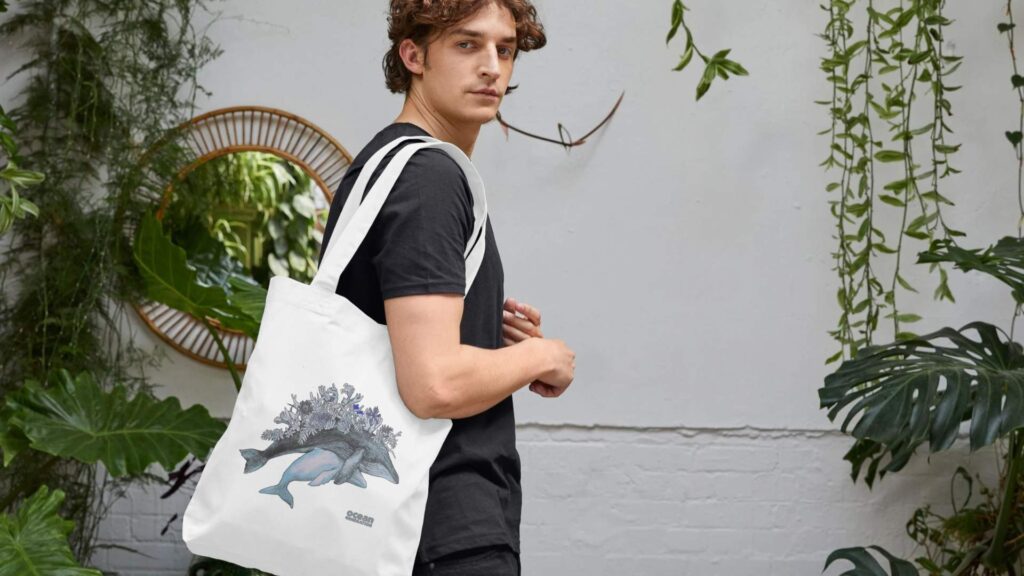
Organic cotton whale tote bag, perfect for Ocean lovers. Man carrying a tote bag with a whale design on it. Ocean-friendly clothing is sold by Ocean Generation.
Mother and calf whale fall tote bag by Jingyuan Liu. Get yours here.

Live design brief meets Ocean conservation 

The Live Design Brief โ€“ created in consultation with the Illustration Programme Director, Amy โ€“ asked the students to โ€˜re-introduce the Oceanโ€™ to the Ocean Generation community

The challenge provided the students tangible substance of what it means to be strategically creative, meet the requirements of a live client brief and deliver a project thatโ€™d be used in the real world. 

What started as an educational Wavemaker workshop resulted in a collection of sustainable clothing inspired by the Ocean โ€“ designed by students.ย ย 

The students had the opportunity to engage with Ocean Generation at multiple points along their design journey; reflecting the client relationship theyโ€™d have when working in the industry.  

How the Wavemaker collection came to life 

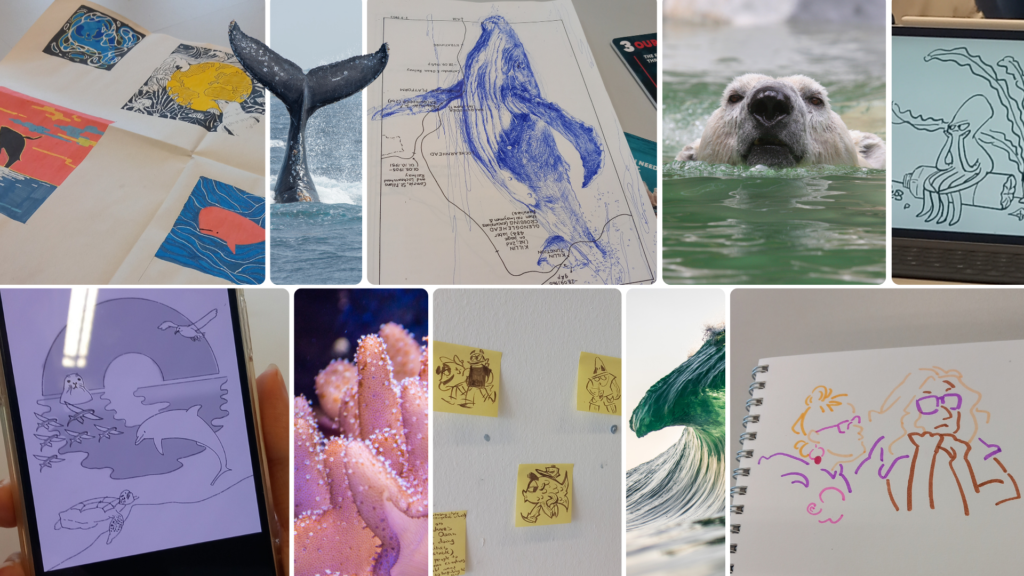
BTS of the design process for Ocean lover clothing, designed by students at the University of Edinburgh as part of Ocean Generation's Design Challenge.
Behind the scenes: Ideation session with the students.

STEP 1: Students participated in our Wavemaker Workshop and learned more about the Ocean. 

STEP 2: Gemma and Amy (MA Illustration Programme Director) led an ideation session to get creativity flowing. 

STEP 3: Students pitched initial ideas to Gemma and Amy. 

STEP 4: Students submitted their first drafts for feedback from the Ocean Generation Team. This allowed for client feedback, concept iteration, and facilitated project management skill-building.  

We were so impressed with their initial sketches. Many of the students had done extra research around the Ocean, to inform their work. 

STEP 5: Students submitted final designs to be used on sustainable clothing inspired by the Ocean

STEP 6: The most difficult job yet โ€“ choosing the winners!  

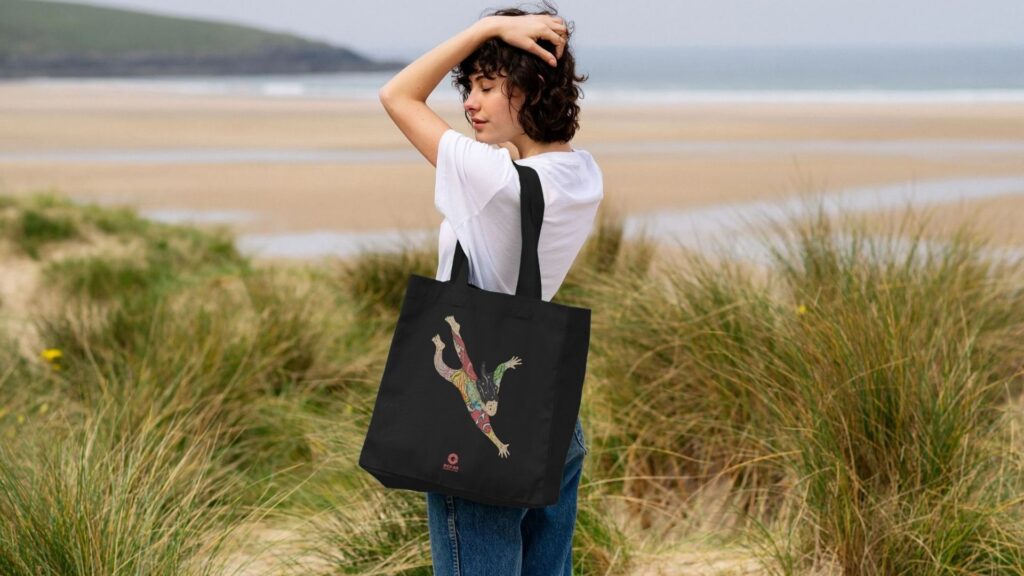
Woman on the beach, with an Ocean-friendly beach bag sold by Ocean Generation. Beach bag perfect for Ocean lovers. Ocean Generation's clothing products are all sustainable, using organic cotton and 100% renewable energy to manufacture the items.
Ocean Girl tote bag by Donger Liu. Get yours here.

What did the students learn before designing the collection?  

Why is the Ocean important?

Students learnt about the importance of our Ocean: How it provides us with every second breath we take, covers 70% of our blue planet and gives us the fundamental resources we need to survive.ย 

We discussed 5 Ocean Threats caused by human action. Think climate change, pollution, coastal infrastructure development, resource extraction and daily Ocean use. And zoomed in on the problem of plastic pollution. We explored incredible Ocean solutions that brilliant Wavemakers across the world have come up with, to help tackle pollution.ย 

We also talked about some of the amazing creatures in our Ocean and what they provide our world with. For example, whale falls.ย ย 

What is a whale fall?

A whale-fall is another name for the death of a whale. Soon after a whale dies, it sinks to the Ocean floor. It provides an essential marine ecosystem as other animals feed on the remains. 

Over 21 marine animals rely on whale-falls to survive. The incredible contribution of whales served as inspiration for two of the final designs are now featured in our Ocean-themed clothing store.  

What stories inspired the sustainable collection?

Gemma had some interesting discussions with students as they developed their designs. 

One of our whale-fall designers, Jingyuan Liu, told us how her design was inspired by the news of a whale mother passing away and her calf using its body to hold up its mother and prevent her from sinking.

This really highlighted the connection between humans and Ocean creatures โ€“ each caring for each other, and experiencing grief for our loved ones.  

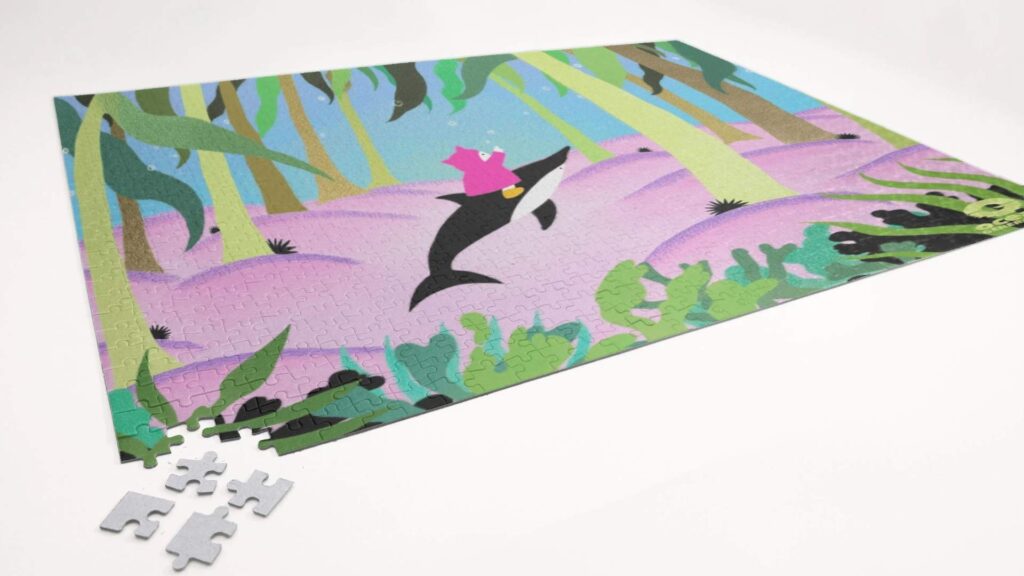
Seaweed forest puzzle by Shiyan Huang. Get yours here.

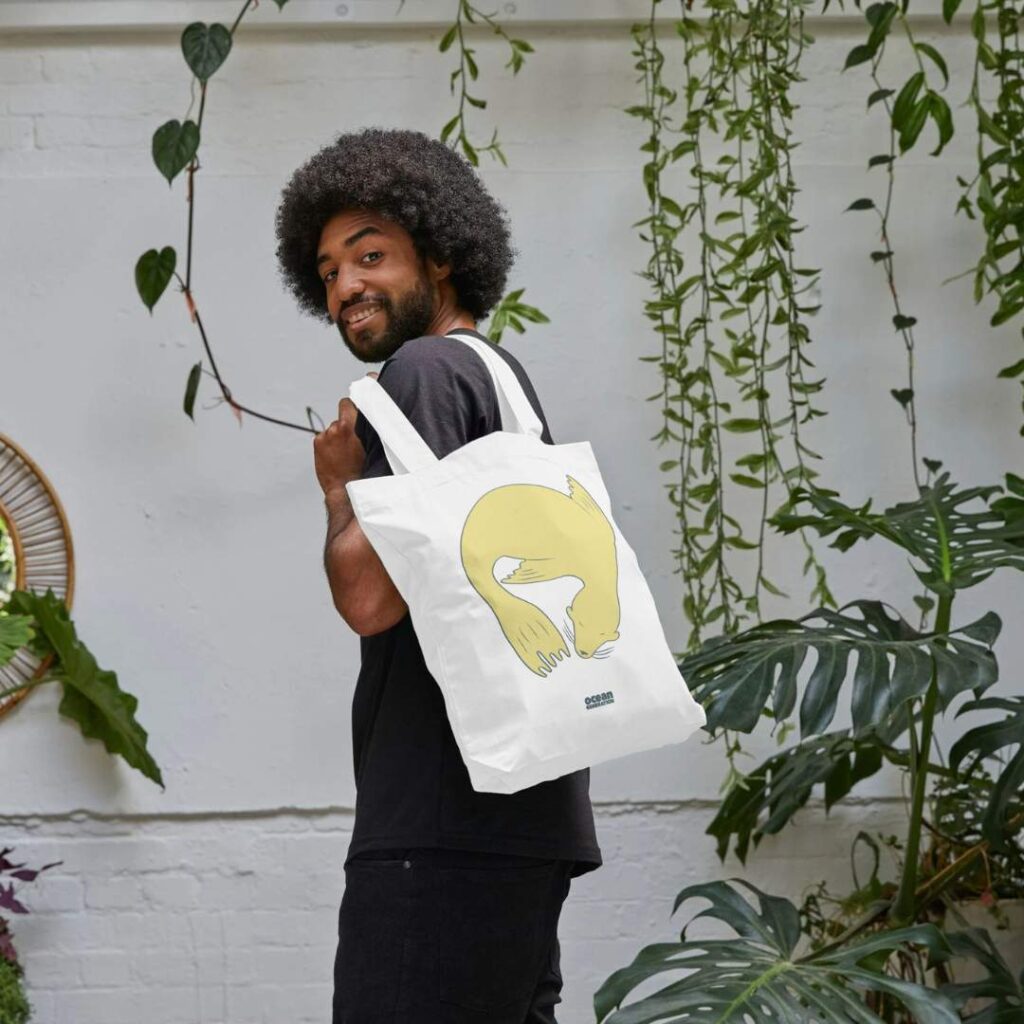
Sarah Stegall‘s seal design was inspired by a visit to the beach in La Jolla, California and the group of seals she saw basking in the sunshine.

The experience reminded her that it was the little things in life, like enjoying the sun or observing seals enjoying the sun that can have a lasting impact on us. If we donโ€™t take care of the natural world around us, weโ€™ll begin to lose those little moments in life.ย 

Clothing inspired by the Ocean, for Ocean lovers ย 

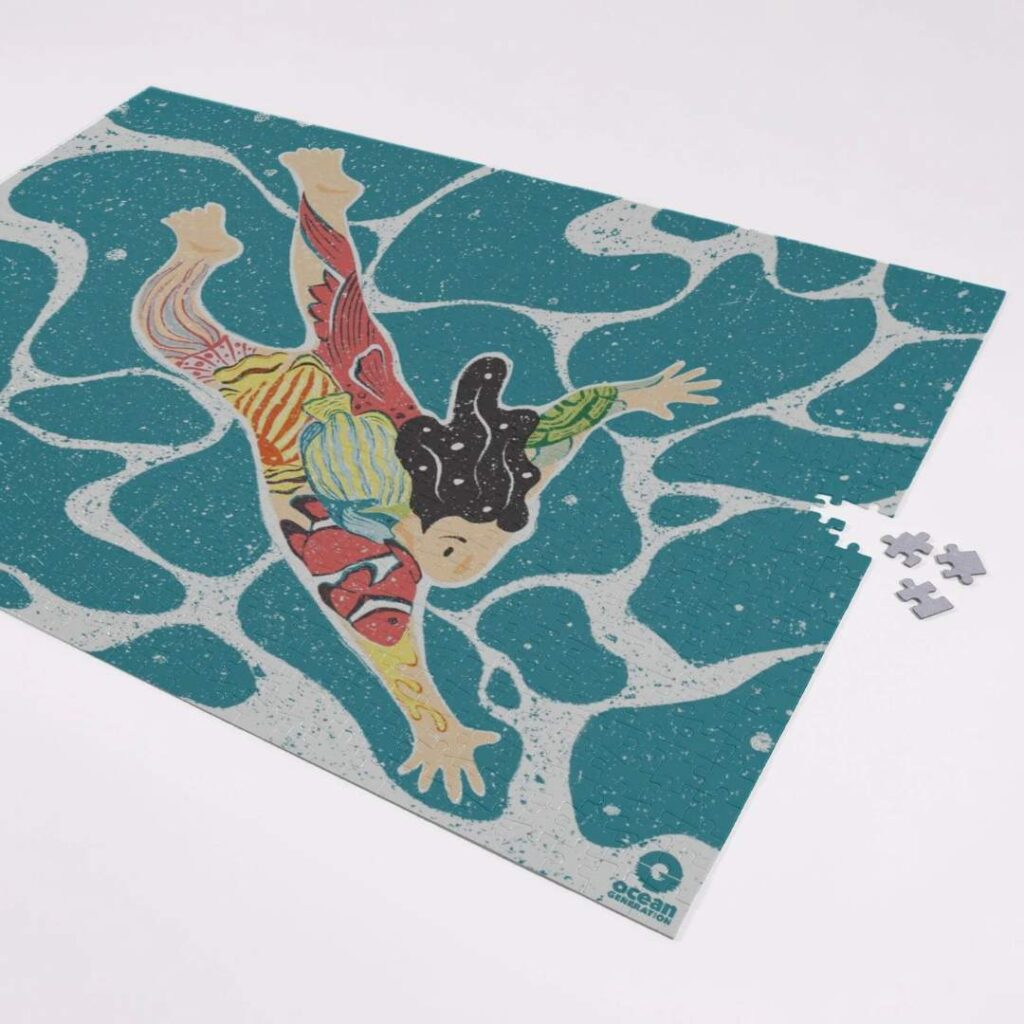
Weโ€™re so excited to share the Designed by You: Wavemakers edition. The collection features 5 designs by 4 graduates of the MA Illustration programme at the University of Edinburgh. You can now purchase these designs, which will support our Ocean education charity.

This is just the beginning for projects like this at Ocean Generation. Weโ€™re exploring more ways to facilitate live briefs with different organisations and universities.ย ย 

Book us to deliver a project like this  

We offer live briefs in various creative pursuits across the UK, from illustration to theatre and filmmaking to game design.

If you are interested in bringing an experience like this one to your college, university or youth group, please get in touch here.

Why is the sound of coral reefs important? Explained.ย 

Subscribe

Monthly: Impact in your inbox.

OceanGeneration-Join

The power of water and the science of passive coolingย 

The science of passive cooling: A Wavemaker Story posted by Ocean Generation

When interests collide: My love of water and fascination with ancient architecture.ย 

I have always been fascinated by, and attracted to, water.

My parents would vouch for the fact that I immediately seek out the nearest body of water whenever we have the opportunity to travel… whether that be the warm Caribbean Sea, the stunning beaches of the Hamptons, or the cold glacial lake water in the Adirondacks in Upstate New York. And as a child, they could never get me out of the bathtub!

My natural curiosity and desire to learn has led me to study various subjects of interest in STEM disciplines, and through my university studies I have discovered a genuine passion for ancient architecture and the associated technology and building techniques.ย 

Iโ€™m a huge fan of interdisciplinary research (i.e. combining strategies and information from across disciplines), which leads me to introduce an unlikely connection to our Ocean, or more correctly water, that I discovered while researching the “Scirocco rooms” of Sicily, Italy.

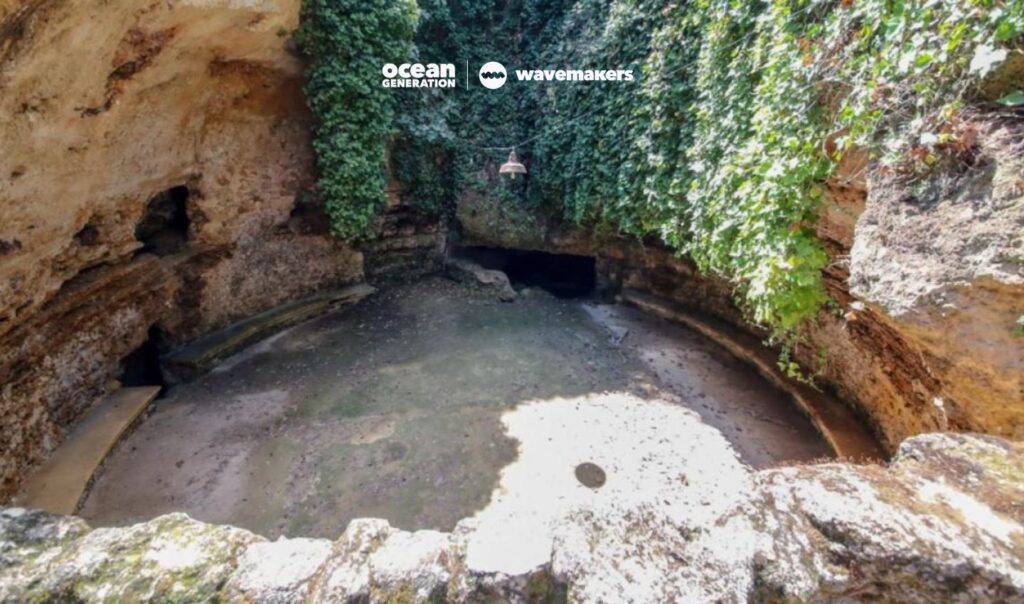
Scirocco Room, where the passive cooling force of water was used.

How water was used to cool scirocco rooms hundreds of years ago.ย 

The “scirocco rooms” are not rooms in the commonly understood sense, but rather man-made, underground caves. From the art historical perspective, they are important social gathering spaces.

Scirocco rooms were mainly constructed and used in the city of Palermo and rely on ancient technology to facilitate passive cooling.ย 

During the summer, the dry and sandy Scirocco Winds from the Sahara Desert in Africa blow across to Sicily and send temperatures skyrocketing … to upwards of 40ยฐC! Hence the need for a naturally cooled space, especially before the invention of air conditioning. These “rooms” were lavishly decorated in the 16-19th centuries and used as an escape from the sweltering heat of the summer months.

What is passive cooling anyway?

It is the process of naturally cooling the air flowing through a space without the use of external power or energy. So, the natural cooling properties of convection currents, properties that are hugely amplified in the presence of water, created a comfortably cooled space.ย 

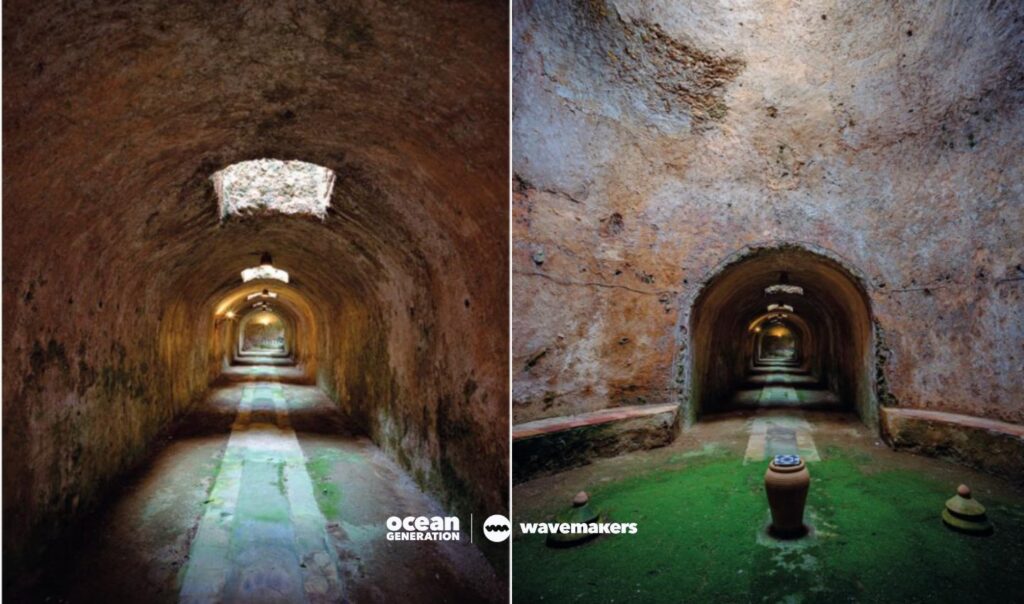
View leading to the scirocco rooms, where passive cooling was used
Views of the tunnel leading to the scirocco room. On the left is the base of the โ€œwind-towerโ€ and on the right is the qanat (Arabic for โ€˜canalโ€™), covered today.
Image credit: Saeli, Manfredi and Enrico, 2022. “La Camera Dello Scirocco Di Villa Naselli di Gela A
Palermo.” La Camera Dello Scirocco – Periodico di Arte Cultura e Societร .

How passive cooling works in a scirocco room:ย 

  • Water flows from a natural spring across the terrain of Palermo to the scirocco room. Amazingly, the clay terrain naturally filters the water, and when it arrives in homes, farms or scirocco rooms it is sparkling clean!ย 
  • The natural course of the water (flowing entirely due to gravity) is diverted into scirocco rooms through man-made canals designed after the Ancient Persian structure called qanat (process explained later in diagram). ย 
  • The flow of convection currents is enhanced by the evaporation of the water in the canals, cooling the air more and at a faster rate. Itโ€™s like when you hop out of the pool in cool weather, you are instantly shivering.ย 
  • The water is also directed to fountains, pools, and artificial waterfalls. This not only created a pleasant atmosphere aesthetically in scirocco rooms but also made it comfortably cooler for guests.ย 

So, we can see that the power of water, found everywhere around us and flowing naturally through all sorts of terrain, can be used as a sustainable cooling mechanism, thanks to the natural principles of physics.ย ย 

The Ancient Persian technology used to cool scirocco rooms includes qanat (the Arabic word for ‘canal’), to divert water, and “wind-towers”. The “wind-towers” act as the main point of hot air expulsion. These two features are still widespread and regularly used in the Middle East, such as in the city of Yazd in Iran.ย 

Take a look at the diagrams below to see how these “wind-towers” work and how they amplify the convection currents.ย 

Hereโ€™s what I would like you, dear reader, to take away from my exploration:ย 

By sharing my research through various formats, including now through this Wavemaker Story, I would like to encourage all readers to uncover any and all of the  wonderful and exciting connections to our Ocean… however unlikely and niche they may seem… and share this with those around you, because you never know how, or who you may inspire.  

I discovered the amazing power of water in a completely un-STEM-related context. I was able to dive deep into the history and science of the use of water in architecture and find that water tied generations of Sicilians together through this architecture.  

Our Ocean, and water specifically, hold great potential for ecological and sustainable solutions to current pressing issues as in the case of passive cooling. Our ancestors knew this quite well and I believe there is much to learn from pre-industrial societies. 

Passive cooling is cooling the air without external power. A Wavemaker Story posted by Ocean Generation

Thank you for raising your voice for the Ocean, Sana!

Learn about how to submit your own Wavemaker Story here.

Why is the sound of coral reefs important? Explained.ย 

Subscribe

Monthly: Impact in your inbox.

OceanGeneration-Join